Posts tagged "brand marketing"

Part 1: Integrated Communications – the New Maestro of Food Marketing

November 14th, 2017 Posted by Agency Services, brand marketing, branded content, CMO, Integrated Communications, Marketing Strategy, Public Relations 0 comments on “Part 1: Integrated Communications – the New Maestro of Food Marketing”

Is PR ready to move from instrument to orchestra leader?

Perhaps the harshest lesson for anyone in food and beverage marketing is the stark realization that persuasion no longer works. Persuasion was a welcome, business-friendly concept because its DNA was founded in brand-built, self-promotional messaging: here’s our product and why you should buy it.

Cultural shifts and behavior changes have transformed the shape of effective marketing from “talking at” consumers to “helping guide.” Consumers now rule the relationship – thus forcing changes in today’s marketing best practices and the service mix provided by agency partners.

Consumer shifts demand integrated communication solutions

When I first started in the agency business, public relations was primarily the sum of its media relations parts. Editorial media placement defined the marketing PR discipline, springing from its press agent roots in the post World War II rise of global agency companies. As the consumer packaged goods industry grew so did public relations. Its value exemplified in the context of cultivating third party, credible advocacy by a journalistic media source – one that was perceived to be unbiased and thus believable.

  • The marketing PR theory at work then: people in all demographic segments would consume media in print and broadcast forms to engage in the content – news or entertainment – while ads revolve around the perimeter searching (again and again) for attention. Getting your product talked about in the well of content was the ultimate in “intrusive” message delivery; wearing the aura of independent, reportorial endorsement. Controlled message and frequency were never in the equation like advertising, however, extended and cost-effective reach lived within its core proposition.

Mass media lived well with mass communication strategies.

Ogilvy (I was there for 11 years), in an effort to gain greater effective traction on behalf of its consumer branded clients, built an integrated proposition called Ogilvy Orchestration. It was an effort to bring symmetry and alignment between ad, PR, promotion and direct marketing services. While the concept had merit, its execution occasionally misfired due to competition between the various operating companies jockeying for the pole position of strategic client leadership. It was an early form of integrated thinking, yet, more about creating synergy among agency disciplines than a concept built to optimize and leverage consumer behavioral insight on the client’s behalf.

Digital changed the world: the old model lost traction, and a new one arrived

Let’s start by staking a claim: integrated communications – built around consumer lifestyle relevance – is the path forward for effective brand communication.

The consumer, for the most part, is in charge of how, when and where they engage in any and all brand messaging and hence, are in control of the relationships they choose to have with brands. Hence the tools deployed might blend earned media in the form of publicity, or branded content, or social channel conversation, or influencer engagement, or improved forms of advertising built around help over hype.

There’s an old adage, if the only thing you sell is a hammer then the answer to every problem is a nail.

So true. The Internet has facilitated consumer control over media channels and consumption. So there is easy avoidance of anything that walks and talks like traditional marketing. This condition ushered in a new marketing paradigm and tool kit – a decidedly less transactional model founded in relevance to consumer lifestyle interests, passions, needs and concerns.

Along with it, the current digital media eco-system literally demands a more conversational, straightforward and authentic form of communication. I would argue that PR brains are well suited to this task given the history of focus on editorial sensibility around “educating” versus the conventional solution leaning into cinematic salesmanship.

Today, brands must become partner, coach and guide to their audience as an enabler of their lifestyle goals. It is in this method of marketing reciprocity that more meaningful relationships between brand and consumer can be formed. It begs and answers the strategic question: in what ways can the brand improve the customer’s life?

At Emergent, we appreciate the shift to mattering and deeper meaning, rather than singularly advancing product features and benefits. The mattering construct requires businesses to fully operate in the customer’s best interests – which historically was a core principle that sat underneath the value proposition of public relations.

Implications to the planning model and agency

We believe integrated communication is a fundamental requirement for effective marketing strategy. Agencies that understand and can execute this fully will remain a vital and valuable resource to clients.

That said, it requires some modifications in operating behavior from the typical PR model of fielding tactical teams of publicists and creators of editorially-sensible material.

Integrated communications involves assembling an orchestra of expertise: part management consultants, part behavioral research experts, part brand strategy planners, part creative and producers of relevant content in a variety of media forms.

So, for clients and agencies looking to leverage integrated communications in earnest, the talent mandate must answer the call for integrated thinking. Inevitably, this will redefine the skill set requirements for firms who expect to provide the highest levels of value to their clients.

Integrated thinking informs integrated plans, which leads to successful integrated execution.

In Part 2 we’ll take a closer look at the elements of the new integrated marketing tool kit.

Looking for more food for thought? Subscribe to our blog.

Bob Wheatley is the CEO of Chicago-based Emergent, the healthy living agency. Emergent provides integrated brand strategy, communications and insight solutions to national food, beverage, home and lifestyle companies.  Emergent’s unique and proprietary transformation and growth focus helps organizations navigate, engage and leverage consumers’ desire for higher quality, healthier product or service experiences that mirror their desire for higher quality lifestyles. For more information, contact Bob@Emergent-Comm.com and follow on Twitter @BobWheatley.

Emergent Answers the Healthy Living Chasm

October 30th, 2017 Posted by brand marketing, brand strategy, consumer behavior, Consumer insight, Emergent Column, Food Trend, Growth 0 comments on “Emergent Answers the Healthy Living Chasm”

Bridging the divide during historic change in food and beverage…

When we launched Emergent, it was based on an overwhelming body of research and marketplace evidence that food and beverage brands are in a state of transformation and thus, in need of new, fresh, refined and more relevant business-building solutions.

Of all the issues creating change, from the demand for transparency and clean labels and fresh foods — healthier lifestyle is the dominant driver that is impacting the consumer’s desire for improvement in the food and beverages they prefer.

Cultural shift makes healthier all-inclusive

Historically, the food industry’s approach to ‘healthier’ was an addition-by-subtraction model based on removing so-called bad ingredients like sugar, calories, sodium and fat; AKA the ‘diet foods’ business. For consumers, though, this often meant sacrificing taste and eating satisfaction. Which they did. For years. This was bound to be problematic because it existed in conflict with the embedded human desire for great taste and indulgent food experiences. Guilt only goes so far.

However, pervasive changes in global food culture caused the concept of healthier to shift. The good-for-you proposition began to look more like addition by addition. Healthy was restaged to focus on real, fresh, authentic, higher quality, less processed foods – more so than food science wizardry. Healthy became inclusive, lifestyle oriented and user friendly.

  • The root cause of change: consumers connected the dots between the quality of what they put in their bodies, with how that fuels what they’re able to do, and hence, their ultimate happiness and wellness.

As consumers became more engaged in higher quality food choices, it resulted in the widespread premiumization of many food and beverage categories. At the same time, media consumption habits shifted to social and digital channels controlled by consumers rather than brands.

We believe an agency devoted to mining this insight and bringing fresh thinking to the table is needed to offer meaningful guidance in the midst of this sea change.

New implications to the food system are reshuffling the industry:

  • Large cap CPG brands have experienced share and volume declines in core legacy categories. Consumers are moving away from anything perceived as highly processed or made from ingredients they don’t understand.
  • New emerging brands built on higher quality, fresh and real food ingredient solutions have grabbed the spotlight to reinvent everything from frozen meals to grain-based snacks.
  • Food retail shopping behaviors have shown a significant shift to the perimeter of the store as consumers increasingly look for fresh, real food products over center store packaged options. They’re also increasingly shopping more frequently for meal solutions over pantry stock-ups.
  • Meal kit solutions have taken share in food, by virtue of offering menu solutions derived from high quality fresh ingredients, married to easy preparation steps. Convenience meets culinary inspiration and taste satisfaction.

Time for transformation

We know that new, emerging, purposeful brands are gaining traction and attention in kitchens across America. So we visibly witness the dawn of a true food renaissance taking place around us.

  1. People are coming back to the kitchen, looking to exercise their creativity and control over preparations, freshness and quality of ingredients.
  2. We’ve entered a period where transparency, health and wellness, safety and authenticity drive purchases more so than the legacy stalwarts of price and convenience.
  3. We know the founder’s backstory and commitment to a real mission beyond the product itself is a critical component of the new brand marketing playbook.

We‘ve operationalized our understanding of what these changes mean and how to create traction in a fast-changing business environment.

Emergent’s value proposition

We’ve developed a proprietary planning model that reflects this understanding; one that demands a new approach to how brand relationships with consumers are formed, and thus, how effective brand communications should be created.

  • We are experts in this space; our services are aligned with answering these challenges.
  • We help legacy brands challenge conventional strategies and re-stage to optimize today’s conditions and help new brands accelerate their growth. We understand the consumer and how they think, how they behave and how they consume information.

If your marketing communications plans look exactly the same as last year’s, the time may be right for fresh thinking. We exist to help brands and businesses navigate and grow in the midst of transformative changes in purchase behavior. We can help you take the leap to increased relevance and alignment with this new marketing paradigm.

Looking for more food for thought? Subscribe to our blog.

Bob Wheatley is the CEO of Chicago-based Emergent, the healthy living agency. Emergent provides integrated brand strategy, communications and insight solutions to national food, beverage, home and lifestyle companies.  Emergent’s unique and proprietary transformation and growth focus helps organizations navigate, engage and leverage consumers’ desire for higher quality, healthier product or service experiences that mirror their desire for higher quality lifestyles. For more information, contact Bob@Emergent-Comm.com and follow on Twitter @BobWheatley.

 

Cheese is cheese is cheese

Cheese is cheese is cheese, or is it?

October 24th, 2017 Posted by brand marketing, brand strategy, Culinary inspiration, food experiences, food retail strategy, Insight, shopper behavior, storytelling 0 comments on “Cheese is cheese is cheese, or is it?”

Inspiring craft of the world’s longest standing savory solution

For whatever reason, the powers that be decided years ago that a portion of Emergent’s client pedigree would include helping grow and develop cheese brands. Our culinary roots and passions have surfaced time and again to help guide products that – on one level, look to be a commodity and on another, is anything but.

Today, cheese sits in the same refrigerated dairy foods segment alongside yogurt and butter, as the second most frequently purchased category at food retail.

  • Yet when planning in commodity food categories, how do you find the path to uniqueness, separation and own-able distinctions? Brands are doing business today in an environment where direct assertions of “better than brand B or C” or self-declarations of superior quality simply won’t work.

Meanwhile, cheese consumption has increased; and people love the rich, savory and varied flavor profiles cheese delivers more than ever. In fact, it is this creation complexity and nuance that makes cheese making such an inspiring process to observe – where seeing and tasting is believing – and differentiation is borne, in part, through experiencing the ingredient and craftsmanship stories.

Consumers care more than ever about the backstory on products and brands they’re interested in. The tale surrounding cheese making and the influence of terroir, dairy management, milk quality, craftsmanship and creativity exercised by experienced cheese makers. The cheese making backstory offers a rich tapestry of narratives on product creation and authenticity.

We created a “cheese immersion experience” for a topflight group of food writers on behalf of Schuman Cheese at their creamery in Turtle Lake, Wisconsin. The mostly New York-based media visited cows at the dairy and saw up close time-honored cheese making practices and innovation steps. The look of astonishment on the faces of these writers was only equaled by the consistent comments of “I never knew how complex it is to produce higher quality cheese,” and “people just don’t understand what goes into that wheel of Parmesan.”

That consensus among the writers and their inspired stories were an outcome of quality time with, and passionate storytelling by, Schuman’s lead cheese maker, Christophe Megevand and fourth generation family member, Allison Schuman. A story, which if left untold, could have easily relegated a great brand into a commodity position.

Commodity category? Not if you’re willing to challenge conventions.

For a very long time, the leading market share in dairy aisle cheese has been held by price driven store brands, implying by definition that cheese is cheese is cheese. We worked with a leading brand in this ‘high velocity’ part of the store, Sargento Cheese, to help them overcome the impact of commoditization on their business prospects.

Working in partnership with the Sargento executive team, we started to disrupt category conventions; first, through redefining the category typical ‘all-things-to-all-people’ consumer audience. We collaborated on segmentation research that narrowed the focus to a food savvy shopper we called Food Adventurers. This is a heavy user persona passionately involved with food experience, cooking, and concern about the quality of the ingredients they use. Further, we built a premiumization platform that engaged highly respected artisan cheese makers for new product innovation. This new strategic approach informed a full reset covering brand positioning, packaging, unique products and communications.

Our new, reenergized strategy for marketing focused on a consumer who is naturally interested in cheese quality and responded positively to the brand’s close alignment with their passions and priorities around the kitchen and table. We built new digital channels of communication, created content with celebrity chef influencers; sponsored culinary events that further restaged perceptions of the brand; and constructed a significant new profit story told to the trade.

The outcome was a dramatic performance lift and led to share gains over rival Kraft.

New era for cheese is now developing

Things have changed lately as consumers flock to the perimeter of the grocery store in search of higher quality, more authentic food experiences. The supermarket Deli is home to solutions for culinary inspiration (recipes), entertaining experiences and higher-quality snacking.

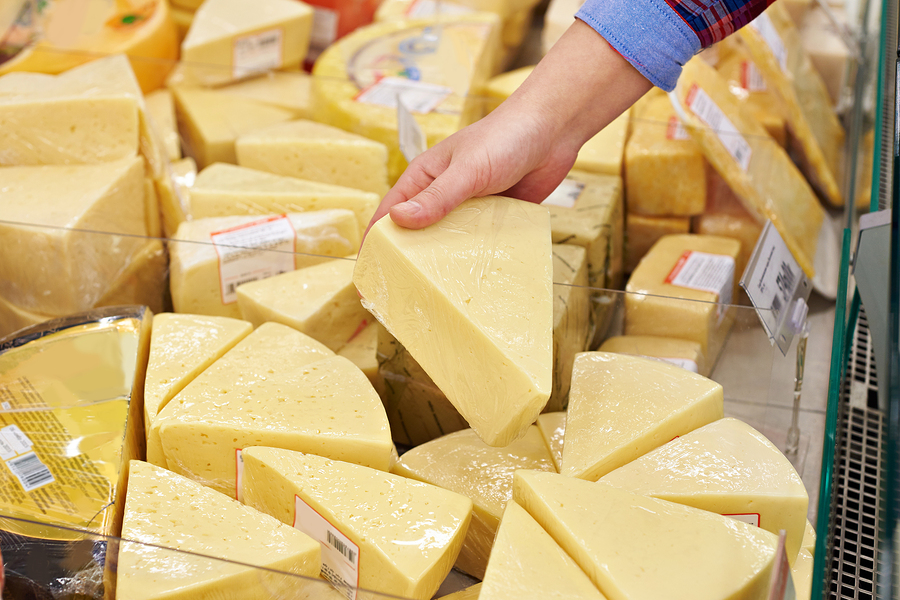
As retailers respond to consumer interest in better and more varied flavor experiences, the Deli cheese case, like the wine department, increasingly offers a treasure of variety. But as you survey the cheese case, the blur of similar looking wedges and blocks suggests commodity conditions reign even here.

  • So, the strategic push for differentiation and own-able distinctions are a challenge we relish as marketing thinkers and creators.

In the previous mass media era, food brands could be established and built with a good, memorable jingle or tagline flourish. The world has indeed changed as people step further towards demonstrable evidence of quality commitments and know-how that transcend the conventions of hype-over-help communication.

Now, truth and validation become the precursors to building consumer trust, the essential ingredient in any brand/consumer relationship. Fortunately, new media such as social channels and digital video help facilitate the transition to help-over-hype.

Commodity is a real thing for any agricultural product category but only becomes calcifying if you let sameness invade the context in how brands are presented. The stories of family involvement, craftsmanship, mission and ingredient integrity can create emotional moments of belief.

Emergent has a track record of creatively and strategically mining differentiation and value in commodity businesses. Building a narrative that sits underneath product creation and the team leaders who help inspire differences and bring them to life is part of an eco-system of solutions that offer a sense of true distinction.

Looking for more food for thought? Subscribe to our blog.

Bob Wheatley is the CEO of Chicago-based Emergent, the healthy living agency. Emergent provides integrated brand strategy, communications and insight solutions to national food, beverage, home and lifestyle companies.  Emergent’s unique and proprietary transformation and growth focus helps organizations navigate, engage and leverage consumers’ desire for higher quality, healthier product or service experiences that mirror their desire for higher quality lifestyles. For more information, contact Bob@Emergent-Comm.com and follow on Twitter @BobWheatley.
Brands: Mastering the Sea of White Rectangles

October 17th, 2017 Posted by brand marketing, Brand preference, brand strategy, branded content, consumer behavior, Consumer insight, Digital marketing, Healthy Living, shopper experience 0 comments on “Brands: Mastering the Sea of White Rectangles”

Harnessing the power of humanizing differentiation

When we first started working for Serta® mattress brand, our wonderful client arranged for us to tour the mattress factory. We saw firsthand the great care taken to arrange the inner combinations of coils and surrounding layers of material to create the right balance of comfort and support when sleeping. They were proud of the efforts made to study spine alignment, blood circulation and how pressure points impact the quality of sleep.

Naturally, they wanted to highlight that understanding, material expertise and tech in marketing communication.

For our part, we also invested heavily in studying the purchase experience and shopping environment: the sleep products store where mattresses met the people who will ultimately spend a third of their lives atop their selections.

We were struck by the commoditized conditions at retail; an environment we referred to as the “Sea of White Rectangles.” Brands and models all looked the same, were presented in similar fashion with similar claims regarding what existed below the fancier furniture-like case fabric. Equally, we learned that consumers loathed the experience of bed shopping, and in some cases described it in used-car dealer metaphors.

Together with our client, we fashioned a new roadmap based on what happens on the other side of improved sleep. The emotional benefits and real-world lift related to getting more out of a good night’s rest. The impact that improved sleep has on creativity, work productivity, personal relationships, mental attitude and general happiness. Yes, sleep quality and sleep deprivation hits you in ways you may not even realize.

We worked to cast this in real human terms – real people stories – and how better sleep also improved your day, your happiness and your life. It wasn’t the nighttime rest imagery so typical in the bedding business – it was the next day’s improved experience that truly mattered.

Rather than the coils or support-giving design or temperature-regulating materials, Serta’s brand differentiation was elevated through the tangible, human outcome when sleep quality is markedly improved.

Commoditization can command the business until disrupted

Sameness exists in so many product categories because we’ve come to a place where technologies and formulas are often very near parity. The real distance between one product and another in its category has been narrowed, slimmed down and parsed.

Pet foods are a great example of similar formulations, comparable language, packaging approaches, and claims around nutritional efficacy. The passion, love and relationship with pet parents and pets, and the desire to add value to the quality of their lives (mutually beneficial) is another matter entirely.

And others:

  • Car designs and features within their utility, performance or luxury classes.
  • Mobile phones and their screen tech, cameras and apps.
  • Foods and their labels, ingredients and nutrition.

In virtually every product category you find, the capabilities and technologies are within close proximity to one another. But still companies fall in love with the efforts they make to install quality at every level, to source ingredients with great care, to craft solutions that deliver on taste or user experience. Yes, all of this matters, however, when looking to mine true differentiation

Consideration must be given to humans, and their personal experiences with the product. It’s a vital part of the strategic discussion, often punted in favor of showcasing the latest tech wizardry. That’s great if you’re designing ads *for* the company’s engineers (but even they need a good night’s sleep). Each and every one of us is an emotional being who thinks with their heart first and mind second. As we’ve conveyed before: People are feeling creatures that think, not thinking creatures that feel.

Communication, brand, experience, shopping environment must be viewed through the lens of how people feel; and the changes that can occur in the quality of their lives when your brand gets the opportunity to be involved with them. It’s here where the entire brand proposition will be separated and elevated from everything else competing for share of mind, stomach or wallet.

Casper Casts a Different Story

Meanwhile back in the bedroom, sleep category disruptor Casper came along to reassess every aspect of bed marketing, including the retail sea of white rectangles retail paradigm, by-passing it entirely.

With an eye towards disrupting the current go-to-market model, Casper made changes in product design, e-commerce sales, extensive guarantees, and communication founded on lifestyle help over hype. Casper pushed community building and social conversation rather than the normal efforts to market “at” people.

Casper’s highly topical e-zine, VanWinkle, and investment in social channel engagement are examples of building relevance with their core customer base. They cultivated brand ambassadorship and harnessed incredibly powerful consumer reviews to influence purchase. Casper is humanizing the bed business, and in doing so, came out of left field to capture significant share.

At Emergent our approach to client businesses begins first with an effort to understand category conventions and behaviors. From there we work to enhance uniqueness and differentiation based on blending essential product truths with insight to consumer passions and interests.

Are you ready to take on the battle against sameness?

Looking for more food for thought? Subscribe to our blog.

Bob Wheatley is the CEO of Chicago-based Emergent, the healthy living agency. Emergent provides integrated brand strategy, communications and insight solutions to national food, beverage, home and lifestyle companies.  Emergent’s unique and proprietary transformation and growth focus helps organizations navigate, engage and leverage consumers’ desire for higher quality, healthier product or service experiences that mirror their desire for higher quality lifestyles. For more information, contact Bob@Emergent-Comm.com and follow on Twitter @BobWheatley.



Emotion and brand strategy

Psst Marketers – Time To Get Intimate

September 21st, 2017 Posted by brand marketing, brand strategy, consumer behavior, Consumer insight, Culinary lifestyle, food experiences 0 comments on “Psst Marketers – Time To Get Intimate”

Considerations As You Enter Planning

Recently on an episode of “Master Chef,” a home-cook contestant became emotional when presenting his dish to rave reviews. With tears welling in his eyes, he shared the backstory…his cultural heritage which influenced the flavors; the technique learned from family struggling to stretch their food dollar; the pride (and frankly, relief) of successfully honoring his family and the ingredients by coalescing all of those experiences into his dish — all on a plate, for others to enjoy — to be shared.

Celebrity chef and judge Aarón Sánchez comforted the 20-something contestant saying knowingly, “Food is very intimate.”

Intimate.

Yes, the sharing of something very personal; meaningful; even emotional.

As food marketers, many of us get sucked into the vortex of textbook “product” features and benefit-selling forgetting, or consciously rebuffing, the most important consumer insight of all. Just like our young Master Chef cook, people care deeply about food.

Understanding this powerful relationship between food and cook has moved beyond the anecdotal. Tapping into our purchasers’ emotions is no longer just one of the tactical options in the Creatives’ bag of tricks. It’s actually a new way of managing your brand and going to market.

Marketing — We’ve Been Doing It Wrong!

Most important for today’s brand managers and marketers is understanding our “consumer targets” are, first and foremost, people: who are feeling creatures that thinknot thinking creatures that feel.

We’ve known tapping into emotion is an important and powerful persuasive force in brand communication. Now we know why — because it connects most readily to the sub-conscious where decision-making occurs in the blink of the eye — and with the deepest conviction of one’s own “gut feeling.”

So, if most decisions and actions are created by the sub-conscious part of the brain and in an instant, why do marketers continue to focus on analytical messaging that assumes people make considered, rational decisions? Any factual product features or benefit will be evaluated — in the end — against how the consumer feels about the brand or product.

After all, “the heart wants what the heart wants.”

It’s All About the Touch-Points

Understanding the dominant role emotion plays in decision making should have a profound impact on how we go to market — especially in the food business, which is intrinsically an emotion-rich category.

The marketing goal is to connect to what your brand and product means to your consumer and how it helps enable in their lives.

Culinary inspiration is often a great place to start because it immediately looks at food through the emotion-based lens of experience: the preparation and enjoyment of eating; and the social dynamics between people sharing time in the kitchen and around the table. For some, food might mean taking pride in being a good moms like our young contestant, honoring tradition by sharing the legacy of time-honored family recipes and techniques.

So, as you step into planning, ask yourself what are the intimate, personal and emotion-rich touchpoints connecting your consumers to your brand.

Here are some important questions to consider in planning:

  1. Do we have insight into the consumer’s passions and concerns around their lifestyle and how the brand and product sits in service of their needs?
  2. How can the brand be an enabler of their lifestyle desires?
  3. What are the emotional links between the consumer’s self-interests and the brand?
  4. How can the brand demonstrate it cares about the same values as our consumers?
  5. How can we tap into the real feelings about the experience taking place around the product?

Understanding these key insights is how we at Emergent develop effective outcomes that are transformational for our clients.

Looking for more food for thought? Subscribe to our blog.

Bob Wheatley is the CEO of Chicago-based Emergent, the healthy living agency. Emergent provides integrated brand strategy, communications and insight solutions to national food, beverage, home and lifestyle companies.  Emergent’s unique and proprietary transformation and growth focus helps organizations navigate, engage and leverage consumers’ desire for higher quality, healthier product or service experiences that mirror their desire for higher quality lifestyles. For more information, contact Bob@Emergent-Comm.com and follow on Twitter @BobWheatley.

 

Wine and food marriage

Wine and Food – a marketing power couple

September 14th, 2017 Posted by brand marketing, consumer behavior, Culinary inspiration, Food and wine, food experiences, storytelling 0 comments on “Wine and Food – a marketing power couple”

Consumer-centric strategy wins every time…

Wine is a unique business characterized by literally thousands of competing brands all packaged and presented similarly. Where marketing is often built around vineyard and winemaker stories, sprinkled with a dose of influencer reviews from a narrow cadre of respected bloggers, writers and wine-centric publishers. Unlike the beer world where some larger brands can afford to spend heavily on consumer pull, for the most part, wine is a trade push story built around trial in on-premise channels while courting volume sales in the off-premise (liquor stores, supermarkets and specialty).

Brand awareness and equity is just a completely different conversation in the wine category. Here, consumer reviews and experience are likely to be crucial to fueling word-of-mouth. In the super-premium end of the category, mainstream marketing tactics can often hurt more than help by diluting the perception of “discovery,” uniqueness and artistry.

That said the wine business is also rich in storytelling material around terroir, viticulture and oenology. Yet despite the differences in such distinctions as soil condition, microclimates and the styles of winemaking, a pervasive “sameness” exists in the presentation of brands at retail.

In the end, wine leans into a very self-reverential form of communication. We have a saying here at Emergent: the brand that gets closest to the consumer wins. If you work backwards from that premise with wine, it doesn’t take long to see the storytelling value of drawing upon consumer experience and context with these brands.

Most often, that setting is about the marriage of wine and food.

Early in my agency career, I had the honor and privilege of representing Chateau Ste. Michelle winery at the time, a boutique vintner of premium wines in what was an emerging industry in Washington State.

Baptism by wine…

For a home chef like me, working with Chateau Ste. Michelle winery was a dream assignment – an opportunity for an immersive education about wine making from the masters of this unique artisanal industry. Initially, our focus was on telling the Washington Wine Story. The wine-growing region of Washington State roughly parallels the latitude of the winemaking areas in Bordeaux, France – so we worked to draw similarities in climate and soil conditions that would favor the creation of exceptional wines, especially their Cabernet Sauvignon.

It was a form of flag wave in a business preoccupied with Napa Valley notoriety.

Then something extraordinary happened that provided a real-world lesson in consumer relevance driving business outcomes.

Ste. Michelle’s owner, the U.S. Tobacco Company, decided to grace its small winery operation with a unique and unexpected parent-company “gift.” Ste. Michelle was to become one of nine title sponsors of the Statue of Liberty Restoration, an enormous public/private partnership enlisting some of the world’s largest corporations as primary contributors.

The question came in from the management team at Ste. Michelle, what are we to do with the Statue of Liberty Restoration sponsorship among all of these Fortune 100 companies? These are organizations with deep pockets to spend leveraging the connection! How would this be made viable for the wine business? Was there any path that would net a benefit to the winery and come at an affordable cost?

The outcome of a considerable team planning effort was a unique and innovative idea to produce a cookbook based on the immigrant experience and the cuisines they brought to this country from other lands. Wine and food is already married. A culinary approach would be consistent with the brand’s imagery and resonate with the consumer’s experience.

We started to build on the concept – the cookbook could be made available free for a donation to the Statue of Liberty fund. It could be purposed as a store level promotional incentive for wine buyers to take the brand, along with displays promoting the book offer. We could use the book launch as an innovative platform for media outreach.

Chateau Ste. Michelle – “Tastes of Liberty”

To this day, I am still struck by the courage and tenacity of Ste. Michelle’s management team led by then president Allen Shoup and chief winemaker, Bob Betz. The cookbook was to be done first-class in keeping with Ste. Michelle’s premium image – so a commitment was made to coffee table quality. The risks were palpable given the book would be offered free for a $25 donation to the Restoration Fund.

“Tastes of Liberty” literally swam in gorgeous, emotion-generating food photography and began with a very human anthology of the immigrant experience at Ellis Island. While wine pairings were present, every effort was made to assure the book would not be just a brand advertisement. It was to be editorial and faithful to culinary inspiration from cover to cover.

Wine buyers loved the unique idea and execution. They were astounded at the value of the ‘free-with-donation’ offer. Equally so, editorial media were awestruck at the quality of the recipes and the way it was presented. One magazine did a six-page, center-spread story on it. It was a successful venture in many ways and the risks Ste. Michelle took were amply rewarded as the brand secured national distribution.

While a case study example of integrated execution, the light bulb moment here is wine and food’s relevance to people and to their experience with the product. Culinary wasn’t in the background, it was a primary agenda with great care taken to assure the taste experiences matched well with characteristics of each varietal.

Yet today, so many wine brands only nod to food with a recipe tab at their web site. Going deep into culinary unleashes the magic of what happens when consumer experience and brand are aligned.

Yes you can (and should) talk about your soil, your French oak barreling, but taste done within the marriage of wine and food elevates this experience to the dinner table. And to a place consumers respect and recognize emotionally.

In the end, “Tastes of Liberty” was a storybook effort by a team of collaborating players on both agency and client sides. And evidence, once again, of what can happen when imagination, consumer insight and strategy coalesce.

Looking for more food for thought? Subscribe to our blog.

Bob Wheatley is the CEO of Chicago-based Emergent, the healthy living agency. Emergent provides integrated brand strategy, communications and insight solutions to national food, beverage, home and lifestyle companies.  Emergent’s unique and proprietary transformation and growth focus helps organizations navigate, engage and leverage consumers’ desire for higher quality, healthier product or service experiences that mirror their desire for higher quality lifestyles. For more information, contact Bob@Emergent-Comm.com and follow on Twitter @BobWheatley.


Archives

Categories