
Posts tagged "brand strategy"

Mining for Growth: The Consumer’s Relationship with Food

March 2nd, 2018 Posted by Agency Services, brand marketing, brand strategy, branded content, CMO, Culinary lifestyle, Digital marketing, food experiences, Healthy Living, Marketing Strategy 0 comments on “Mining for Growth: The Consumer’s Relationship with Food”

Marketing and the day’s main meal

Cultural shifts and changes impact how consumers treat eating occasions. This condition becomes even more important as people no longer build their schedules around mealtimes. The script has flipped and thus mealtimes are arranged to facilitate the daily schedule.

In this new world order that puts time and where it’s spent at a premium, distinct functional requirements have surfaced around the consumer’s objectives for breakfast and lunch. Breakfast now orbits the purposeful necessity of energy needs and is often governed by habit and routine. It’s also subject to elimination at times. Whereas lunch often falls victim to another evolving behavior – snacking. Like the start of the day, lunch serves as another fuel-stop to drive the personal engine, often while navigating a complex schedule and a fluid set of time priority constraints.

The dinner bell singularly chimes as a culinary and social oasis…

Dinner continues to hold steadfast as the clear winner in time devoted to food thinking, planning and engagement – offering a unique opportunity for brands to become enablers and participants in a personal and social culinary journey.

  • Dinner is a food-forward rite where the meal and menu serve as a means to elevate enjoyment, self-esteem, creativity, exploration and social engagement.

Breakfast, lunch and snacking reside in a practical, efficiency zone. The consumer’s brain-time investment is just different than dinner. In the evening, according to The Hartman Group’s Transformation of the American Meal report, the experience around food and preparation takes on a higher level of priority and added meaning.

What does the consumer aspire to do with dinner?

Hartman reports to fulfill their expectations for:

  1. Good food – nutritious and delicious
  2. Good cooking – skillful, personalized and often from scratch
  3. Good company – enjoyable moments and warm conversation

So, the logistics around dinner are on another level entirely for food sourcing, creativity, time spent and energy invested by home cooks and their helpers. Simply stated, dinner is less routine, not snack-ified and works to satisfy the yearning for shared food adventure.

As a marketer could you find more fertile territory for engagement than the one meal occasion where inspiration and help are clearly needed?

Dinnertime is a clear pathway to relevant engagement

Dinner is rich connection territory and we’re not just talking about flavor profiles. Dinnertime is an open field for resonance exploration and relationship building for both CPG food and foodservice.

When the day has been too mentally and maybe even physically taxing, outsourcing the evening meal is on the agenda. That said we know from secondary studies that people prefer home-cooked meals when they can do it and believe those meals are universally healthier – as home cooks are able to control ingredients, preparations and portions.

However, when scheduling overload collides with evening mealtime needs, restaurant and other “do it for me” solutions hold sway. Meal kits sit in an interesting position as low-risk enablers of culinary exploration, while also making it easier to deliver a high-quality meal with less effort mentally and at the stove.

Ordering food for delivery or visiting a restaurant shifts the balance of time investment from culinary work to social interaction – an important component of the evening mealtime experience.

The eco-system of needs and requirements for the evening meal is a place where brands can play a pivotal role. Key direction: help make dinner meal planning and execution more enjoyable.

Areas to leverage strategically:

  • Health and wellness – key to lifestyle preferences across the board. What’s the bulls-eye? Helping people bridge their interests between healthy ideals and indulgent desires. Now that higher quality food experiences have become the new healthy, the door is open to blending these two universal human needs.
  • Palate planning – for the most part dinner has increasingly become a just-in-time mini-shopping event as people, often coming from work, stop at the store to shop for menu ingredients. Right there is a moment of uncertainty that can become more purposeful with the right menu ideas and curated shopping lists.
  • Social connection – the social milieu around dinner is an interesting pastiche of enlivened senses, warmth, close attention and enjoyment that enables sharing and conversation. The dinner table is more than a piece of furniture. It’s a place where memorable moments and personal connection are served right alongside the main course.

If effective brand communication is dependent entirely on its relevance to consumer interests and passions, then imbuing your brand with greater meaning becomes paramount in making marketing investments work.

Knowing this, dinner is an important moment and opportunity where need and fulfillment are open territory for brand helpfulness. Also vital to note is the significance that food culture informed strategies play to secure consumer engagement in social channel and content marketing outreach programs.

  • Said another way, it is often the absence of cultural resonance and connectivity that dooms brand communication to the vast pile of ignored messages.

It’s our job here at Emergent to monitor these cultural and consumer-insight conditions so we’re able to respond strategically and creatively for the brands and businesses we represent. If your strategic plan isn’t feeding and exploring these important moments of real-life consumer connection…then you’re potentially skipping the marketing meal that offers the greatest opportunity for engagement and brand growth.

Is it dinnertime yet?

Looking for more food for thought? Subscribe to our blog.

Bob Wheatley is the CEO of Chicago-based Emergent, the healthy living agency. Emergent provides integrated brand strategy, communications and insight solutions to national food, beverage, home and lifestyle companies.  Emergent’s unique and proprietary transformation and growth focus helps organizations navigate, engage and leverage consumers’ desire for higher quality, healthier product or service experiences that mirror their desire for higher quality lifestyles. For more information, contact Bob@Emergent-Comm.com and follow on Twitter @BobWheatley.

 

WILL SOCIAL CHANNEL SHIFTS DRIVE BRANDS TO GO DIRECT?

February 23rd, 2018 Posted by Agency Services, brand marketing, CMO, Content Marketing, Digital marketing, digital tools, food retail strategy, Food service, Social community, Social media, social media marketing 0 comments on “WILL SOCIAL CHANNEL SHIFTS DRIVE BRANDS TO GO DIRECT?”

Brands look to better manage their own destiny

As we’ve stated many times here at Emergent, the brand that gets closest to the customer wins. Yet a form of strategic separation now descending on the food marketing universe has made it more challenging for brands to manage how that consumer closeness is achieved. These same conditions help contribute to the collapse of traditional media marketing models (about scale and control) often deployed by legacy brands to build and maintain consumer relationships.

As a result, we believe what’s ahead for CPG food may well include a large helping of direct-to-consumer outreach efforts. E-commerce growth has already redefined the business landscape, giving consumers a comfort level with buying products from home.

Retail isn’t going away, online or off, but we think a measurable percentage of the business overall may indeed move to direct-to-consumer platforms.

Meantime escalating brand participation in the “walled garden” of rented audiences in major social channels, such as Facebook, YouTube, Instagram and Twitter, has also conveyed relationship control to these platform intermediaries. On any given day, the decisions made by these social media giants can be a good thing or bad as their policy changes impact what brands can and cannot do on their platforms.

  • Brands, now forced to reckon with the shift of business to e-commerce, are finding the complexity of cross channel marketing and online engagement has already worked to snuff out the last embers of mass media’s flame. Disappearing with mass media’s grip is the brand’s ability to efficiently leapfrog various forms of retail or other digital gatekeepers to capture consumer brand equity and preference.

Algorithm alarm bell – now what?

Food and beverage companies working to implement their brand-building strategies in social channels find themselves challenged once again, as the behemoth community aggregators like Facebook, Instagram and YouTube adjust algorithms and feed policies making it harder to organically scale audience attention and reach.

In January, the tide turned (the second time since 2016) as Facebook announced yet another round of changes that favor posts from friends and family while diminishing organic post distribution from brands and publishers. Larger, mega-influencers – who must use Pages rather than personal Facebook accounts – will face a similar audience squeeze.

More regulated content policies put greater pressure on brands in social channels to up their shareable post quality game. We believe though, these restrictive conditions will add more value to building direct consumer relationships. This means, thoughtfully reconsidering how best to connect with consumers and deploy tools that sit outside the control of social channel policy moves, through owned channels like Blogs and email (e-newsletter).

Consequently, we believe the model for food and beverage brand building may change in the next three to five years. Pepsico currently projects their annual e-commerce sales to be north of a $1 billion across direct, retailer-owned and pure play (Amazon) e-commerce channels.

Of note, many of the new and emerging brands now grabbing the marketing spotlight in food, got their start in the direct-to-consumer space, where they built a loyal fan following before venturing into retail channel distribution.

  • A classic example: in the personal care category, online brand Harry’s disrupted the legacy razor blade industry by answering consumer frustration over runaway price increases. They successfully constructed a direct-to-consumer subscription model that helped Harry’s deliver a more affordable, high-quality alternative. The new Harry’s brand story, alongside rival Dollar Shave Club, helped end Gillette’s dominance.

As consumer contentment with buying online continues to expand in adjacent businesses, Harry’s recently secured added equity investment to fund another bellwether expansion. This time into other personal care, household and baby products categories that may naturally fit into a subscription model.

Bottom line: selling directly allows the brand unfiltered and unfettered access to consumers. As such it enables a direct flow of conversation without the unexpected shifts that are occurring in third party social channels due to conflicting business interests and priorities.

Behavior changes occurring behind the curtain

We see the shift to e-commerce as an outcome of evolutionary progress – meaning anything that adds measurably to consumer convenience and satisfaction is going to get its day in the sun.

During the last decade consumers spent 12 percent less time shopping, according to Jared Koerten, senior food analyst with Euromonitor International. “Consumers are spending less time shopping (while) looking for efficiencies and ways to save time,” he said. The result is fewer conventional shopping trips while online ordering continues to accelerate.

E-commerce and the digital communications environment will continue to be a major focus of brand marketing strategies. Consumers see the value in reallocating their spare time from shopping trip to other passions and pursuits. Be that as it may, other changes are occurring in the digital universe that impact how closer consumer relationships are incubated.

Emergent’s guidance on optimizing social channel strategy:

  1. Social algorithm changes enhance the valuable role of smaller (nano) influencers and the content they create, while amplifying the need to ensure that influencer relationships are truly founded on aligned interests and subject matter relevance.
  2. Social channel policy changes that depress organic distribution and engagement will necessitate yet again, more pay-to-play activity to boost posts.
  3. There will be diversification of outreach strategies to include more investment in direct paths of communication through Blogs and email.
  4. Rise of User Generated Content as a key component of social media marketing strategy. This tactic helps sidestep the policy changes and hits the right notes on authenticity and value to brand community participants.
  5. In case you’re wondering what form of content ranks highest in shares on social channels: Infographics.

Social channel policy changes and the dynamics of e-commerce may favor a new look for brand marketing that leans in on going direct. With it comes great responsibility in how these interactions are managed – so it doesn’t appear to be just a transactional proposition.

Help over hype – always.

Looking for more food for thought? Subscribe to our blog.

Bob Wheatley is the CEO of Chicago-based Emergent, the healthy living agency. Emergent provides integrated brand strategy, communications and insight solutions to national food, beverage, home and lifestyle companies.  Emergent’s unique and proprietary transformation and growth focus helps organizations navigate, engage and leverage consumers’ desire for higher quality, healthier product or service experiences that mirror their desire for higher quality lifestyles. For more information, contact Bob@Emergent-Comm.com and follow on Twitter @BobWheatley.


2018: Time for Real-vertising in the Go-to-Market Plan

January 10th, 2018 Posted by Agency Services, brand marketing, brand strategy, CMO, Consumer insight, Content Marketing, Culinary inspiration, Food Trend, Healthy Living 0 comments on “2018: Time for Real-vertising in the Go-to-Market Plan”

The Four Conditions and Traps Impacting Food, Beverage and Lifestyle Brands

Last year was, if anything, another period of transformation for the food, beverage and lifestyle business as new and emerging brands took the spotlight for innovation and growth. In 2018 the impact of these conditions will require a shift in thinking and planning, as brands, both new and legacy, navigate in a business environment controlled and managed entirely by consumers.

At Emergent we are obligated to stay at the forefront of these cultural changes; providing guidance and strategic leadership to our clients and business community on how best to traverse the unprecedented pace of evolution in consumer preferences and behaviors.

  • In this article we will unpack four conditions impacting the future of food, beverage and lifestyle brands in the year ahead.
  • And flag four traps that, if left unattended, could dilute desired marketing outcomes.
  1. Product narrative IS the marketing

The single most important insight we can provide on marketing and communication is the requirement of story behind the product. Consumers want to know everything – to peer behind the curtain and go back stage to see how things work. That means we’ve entered the era of real-vertising: honest, open communication around ingredients, sourcing, sustainability, quality standards, craftsmanship markers, and product creation providing the litmus test of what should be at the center of brand and business communication strategies.

How does this play out in the plan?

  • All messaging and content must work in aligned fashion with social channel integration and community building.
  • Consumers believe the opinions of other people – especially those of friends and family members – as they are more relevant to them and operate in their best interests, ahead of a brand’s own published material.
  • Thus, aggregation and repurposing of User Generated Content (UGC) will be critical in the brand communication eco-system.
  • Video is by far and away the most preferred and shared type of content. No surprise as it is one of the most engaging and entertaining forms of communication in the toolkit.
  • The role of influencers and earned media continues to grow because of the trusted source factor that defines what works vs. what doesn’t.
  • Digital channels allow for amplification (some of it paid distribution) and repurposing of earned and influencer content, so earned media becomes a more measurable asset in the arsenal.
  1. Higher quality is the new healthy

We’ve been saying this for some time as a forecast of further evolution in food culture. It’s now a verified reality borne out in the marketplace. Examples keep piling up of higher quality fresh products and more innovative versions of legacy brands, displacing the latter while the former gains more shelf space. The premium, artisanal treasure hunt marches on!

What’s driving this? Consumers are demanding higher quality food experiences. Cleaner labels, real food ingredients, fresh products, less-processed options secure greater share position for the very reason people believe they are healthier and thus will contribute to their well-being and happiness.

  • Indulgent and healthy are no longer polar opposites, and often coalesce together as accepted experiences in a healthy lifestyle. That said, there is a trailing requirement for real food over anything that appears to be overly processed.

For legacy businesses this condition recommends a wholesale rethinking of product platforms, formulations and supply chain in an effort to upgrade and bring greater premiumization to the innovation table.

Related to the previous point about importance of product narrative, if there isn’t a compelling story to tell about ingredients, sources and quality, then there’s risk now to brand relevance. Saying, “but we’ve always done it this way,” or “it’s difficult to change our supply chain commitments” is simply going to put the business in conflict with consumer preference. New upstart, high quality businesses are advancing across a broad swath of categories from staples like mac and cheese to the meat case.

  1. Meal kit is the instrument of food adventure

We predict the meal kit business will continue to consolidate and evolve – and that it’s likely food retail will get invested in the business. The fundamental premise of a food kit is consistent with consumer preferences. Consumers are looking for fresher, higher quality meal experiences featuring ingredients with a backstory, and menus that deliver low risk experimentation with new flavors and cuisines.

We also forecast continued improvements to food kit business models making them less onerous on expensive subscriptions, providing greater ordering flexibility and ease of preparation for those who want less challenging menus.

It is food-adventure-in-a-box that gives consumers an attractive meal option and step-by-step instructions on how to execute. That said, as food retailers move into this space with fully prepared, semi prepared or scratch cook alternatives, the advantage of being able to decide a menu at a moment’s notice, we believe, will be extremely attractive to a significant segment of the consuming public.

Simply said, many households don’t plan ahead for dinner and are making preference decisions at 5 pm. It’s a form of impulse meal buying that, if available at an attractive price, will help food retail gain additional shopper traction.

Could this presage more mergers of food retail with food kit operators? Perhaps, so.

  1. Snacking is the universal meal occasion

Call it what you will – mini-meal, fuel up or reward – snacking is a predominant behavior across all day parts and is influential in the foodservice channel as well. Snacking starts early and goes late as consumers both young and old graze their way through the day.

Some of this behavior is functional and related to recognition that the human body will periodically experience lagging energy levels requiring replenishment. People now recognize the connection between food and performance, thus a compelling reason to look for hand-held options that deliver energy-enhancing protein in meat, veg and dairy forms.

  • Snacking crisscrosses indulgent and good-for-you needs with portions that seem manageable in a healthy living view. (I’m snacking on almonds as I write this).

With added pressure for performance in work, school and outside pursuits, functional snacking is likely to be a major opportunity in the year ahead for innovation. We expect retailers will devote more in-store real estate to brands in this space.

Avoiding traps that take wind out of the sales…

Trap #1 – the inauthentic mission

There’s no question that consumers look for brands with similar beliefs and values. Operating with a mission that transcends commerce itself is now a marker of a brand’s cultural relevance.

In many instances new and emerging brands are built alongside a mission designed to benefit others and contribute to making the world a better place. Authenticity couldn’t be more important.

Consumers are able to sniff out posers in relatively short order. Mission is not philanthropy. It is not something that’s bolted on to the marketing plan as a campaign theme because it’s popular now.

A real, human-relevant, and unselfish purpose is a purpose – and in the long run devotion to it will indeed maximize financial performance. Absence of real beliefs here is a trap.

Trap #2 – marketing over meaning

Want to build a closer connection with core customers? Then imbue the brand with greater meaning based on relevance to their lifestyle passions and interests. Consumers can’t be viewed as walking wallets nor should the marketing plan stray towards looking at the customer relationship as purely transactional.

The brand’s voice gets added value when its connected to the consumer’s interests, be that their love and relationship with a pet, passion for outdoor lifestyle adventures, or desire for creativity in the kitchen.

When the conversation with consumers begins with what’s relevant to them, then marketing no longer looks like traditional marketing. Instead it becomes valued and useful. Conversely overt selling is a trap and path to disconnection.

Trap #3 – trust is at the center, or not

Lack of consumer trust is perhaps the most significant destroyer of businesses over time. Instead, brands built on earning trust gain competitive advantage in the marketplace.

If trust creation is not a core component (active not passive) of the marketing plan it’s time to step back and reassess. Brand relationships today are taking on the give and take characteristics of human relationships. No lying or deception allowed.

To earn trust means putting the consumer’s welfare and wellbeing at the forefront of strategy. Not doing so it a trap.

Trap #4 – do you really know me?

It’s easy to think that as long as the business is devoted to making a quality product and standing behind it, then all is well. Yes, high quality is required. However, there’s more complexity now in building sustainable relationships with consumers.

This goes beyond knowing what flavors they prefer or their patterns of shopping behavior. It’s vital to understand the whole human, their desires, wants, needs, interests and concerns.

Today there are more tools than ever before that permit a closer look at customer lifestyle interests. Making the investment here to get close and gain greater understanding of wants and needs beyond product use, is the link to more engaging brand communication.

Too many emerging brands sidestep this important insight research requirement because the demand for building basic go-to-market infrastructure gets first priority. Yet the very thing that sits at the core of long-term success is neglected: consumer insight and relevance.

Brands are built on the back of mattering. Basing communications on hunches and assumptions about what’s meaningful and valued puts the marketing plan into a blind spot. Avoid the irrelevance trap by mining insight.

The year ahead will be a tug of war between competing channels and sources of higher quality, unique and differentiated food and lifestyle experiences. The winners in this battle for share of spend will fall to those who put the consumer first – and by virtue of doing so reap the benefits of deeper connection.

Looking for more food for thought? Subscribe to our blog.

Bob Wheatley is the CEO of Chicago-based Emergent, the healthy living agency. Emergent provides integrated brand strategy, communications and insight solutions to national food, beverage, home and lifestyle companies.  Emergent’s unique and proprietary transformation and growth focus helps organizations navigate, engage and leverage consumers’ desire for higher quality, healthier product or service experiences that mirror their desire for higher quality lifestyles. For more information, contact Bob@Emergent-Comm.com and follow on Twitter @BobWheatley.


Wild Idea Delivers Fresh Engagement and New Meaning

November 29th, 2017 Posted by brand strategy, branded content, Content Marketing, digital tools, Insight 0 comments on “Wild Idea Delivers Fresh Engagement and New Meaning”

A Turkey that shows its marketing intelligence…

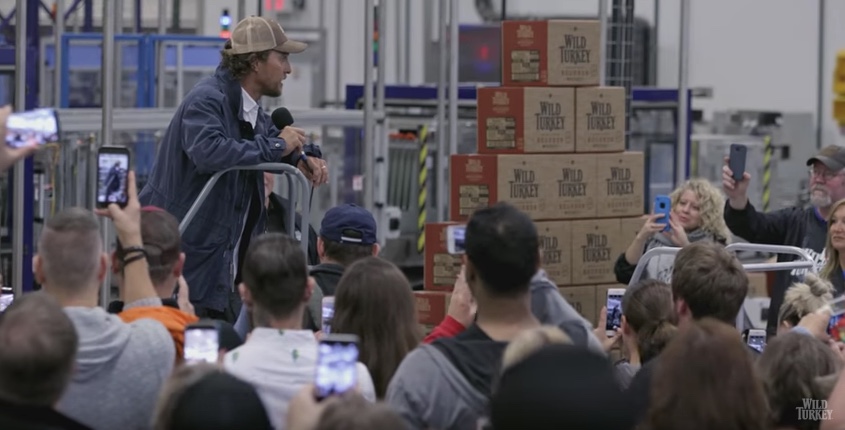
Awhile back we took note that actor Matthew McConaughey had signed on with the Wild Turkey brand as marketing and creative director. Seemed at first like a bit of a stunt, however if their latest venture is any example, this pairing has inspired some relevant thinking served with effective outcomes.

So often in the adult beverage and spirits category we see the same tale told about distilleries and barreling, liquid aging and founder legacy. You can almost write the pitch from brand to brand and interchange the names; it’s an old saw of sameness laced with differing graphic elements.

  • But marketing has evolved in the face of seismic changes in how consumers behave and how their relationships with brands are built. Authenticity counts – as we heralded in our last post. So, how does this play out in the real world with Kentucky bourbon? McConaughey and his colleagues at Wild Turkey mine the zeitgeist of deeper connections and meaning with an inspired idea to bring fresh turkeys at Thanksgiving to nearly every household in their headquarters town of Lawrenceburg, KY.

Two hundred and fifty employees fanned out to bring 4,500 Butterball®-donated turkeys to homes – while a video crew captures the adventure in real time with McConaughey ringing doorbells. Local families opened their front doors in astonishment as the Hollywood moment unfolded in front of them.

First, the video is surprising and engaging. McConaughey himself is humanized in his role as the deliveryman of holiday cheer and thanksgiving. The reaction of people experiencing the moment was emotional, and we get to participate with them in their amazement at the generosity and celebrity touch.

The video itself is simple and captures the experience as it occurs. There’s no overt brand messaging in the traditional sense. But there’s more going on here than meets the marketing eye. It’s engagement and mattering when so much of what passes for marketing misses this objective.

We witness straightforward, honest, entertaining and emotional communication with real human value at its core. Just brilliant. This will do more for the brand than a 100 of the bottle beauty shot ads with a glowing amber pour. It’s inspired thinking that honors how marketing has changed in the era of relevance to consumers and their lives.

Additionally, Wild Turkey also donated 50,000 Thanksgiving meals to Share our Strength and another 580 turkeys to the town’s food bank. The entire project served as a launch pad for their “Friendsgiving to End Hunger” campaign aimed at securing additional matched donations to the charity partner. Here’s the sign-up landing page.

Watch the adventure here:

Perhaps we could call this approach real-vertising. It’s unexpected, honest, authentic and told in real-people terms. The Turkey distribution is a worthy cause and backed by extensions that help others in true need. Great thinking. A higher purpose served.

As someone who has never been much of a bourbon drinker, I feel compelled to go out and purchase a bottle. And that’s saying a lot for someone who considers himself more of a creative critic and creator than marketing target.

Hats off, Wild Turkey!

Looking for more food for thought? Subscribe to our blog.

Bob Wheatley is the CEO of Chicago-based Emergent, the healthy living agency. Emergent provides integrated brand strategy, communications and insight solutions to national food, beverage, home and lifestyle companies.  Emergent’s unique and proprietary transformation and growth focus helps organizations navigate, engage and leverage consumers’ desire for higher quality, healthier product or service experiences that mirror their desire for higher quality lifestyles. For more information, contact Bob@Emergent-Comm.com and follow on Twitter @BobWheatley.

The Power and Influence of User Generated Content

November 27th, 2017 Posted by Agency Services, brand marketing, brand strategy, change, CMO, consumer behavior, Consumer insight, Content Marketing, Food Trend, Social community, Social media, User Generated Content 0 comments on “The Power and Influence of User Generated Content”

UGC has greater influence on purchase behavior than brand-built

Marketing food and beverage brands these days can feel a bit like playing darts with the lights off – trying to hit the mark of engagement when unsure of the path to this goal. A recent global consumer study sponsored by Stackla and conducted by Market Cube, helps illuminate the pathway to delivering the kind of content that resonates with consumers. Turns out it is stories created by their contemporaries, friends and family that matters most.

The old era of interruption-style, one-way marketing has been dethroned. We now live in a content-driven world. In an effort to reach increasingly elusive consumers, brands have become self-publishers and active participants in their own social channel communities.

  • People tend to tune out and avoid anything that looks or sounds like conventional marketing, so it is vital that new thinking be applied when designing brand building content strategies.

That said consumers have also become more savvy and sophisticated in assessing the credibility of content based, in part, on the source of that information.

What kind of content is most influential to purchase decisions?

  • Eighty-six percent of consumers believe that authenticity is important when deciding about brands they will purchase, according to the study.
  • Yet 57 percent of consumers think that less than half of the brand-produced content out there is truly authentic.

What does authentic mean to consumers?

User generated content is seen as three times more authentic when it comes from friends, family and other consumers rather than content produced by the brand itself or through the voice of a celebrity spokesperson. (We think use of celebrities can be deemed credible if great care is given to genuine and natural connections to the brand, and when organic and believable messaging tone is achieved.)

People choose to believe other people like themselves first because there’s a perceived higher threshold of honesty and integrity than company-built material. Which, in the eyes of the beholder, may be seen as serving only a transactional agenda.

Here are some highlights from the research:

  • What kind of content is most authentic? Created by consumers: 60 percent. Created by brands: 20 percent.
  • 52 percent of people say they post on social media at least once a month about products they’ve purchased.
  • 39 percent of consumers say they post about food and beverages at least two times a month.
  • 76 percent of people will post on social media (mostly Facebook) after a positive experience purchasing a food or beverage product, or dining out.
  • 70 percent of the time consumers can identify an image created by a brand rather than a consumer.
  • 20 percent of consumers have un-followed a brand on social media because they thought the content was too corporate and self-serving.
  • Authenticity matters to 90 percent of Millennials, 85 percent of Gen-Xers and 80 percent of Boomers

User generated content is a highly intrusive, credible and effective form of engagement because it respects the consumer desire for honesty and integrity above all.

The litmus test for success here comes back to a fundamental understanding of what people believe. Building trust is paramount in brand communication. The voices of users and family members work more effectively here because it flows from a desire to be helpful; it’s not self-serving. For brand-created content, the aforementioned tone and spirit should be factored into messaging to help assure it conveys a human, real and believable approach that doesn’t come across as a hard sell.

The testimonial voices of happy consumers can be one of the most powerful and persuasive of tools at your brand’s disposal. So help them tell their story. Encourage this behavior in your social channels. Feature the voices of your fans and ambassadors. It’s the equivalent of a laser-guided dart hitting the bulls-eye of engagement.

The five-point UGC checklist:

  1. Create rewards for fans that share photos, videos and experiences
  2. Offer incentives for users who share content in their own networks
  3. Develop promotions and contests to solicit content and amplify distribution
  4. Embed UGC content in your email campaigns
  5. Integrate shared authentic customer experiences at your web site

Looking for more food for thought? Subscribe to our blog.

Bob Wheatley is the CEO of Chicago-based Emergent, the healthy living agency. Emergent provides integrated brand strategy, communications and insight solutions to national food, beverage, home and lifestyle companies.  Emergent’s unique and proprietary transformation and growth focus helps organizations navigate, engage and leverage consumers’ desire for higher quality, healthier product or service experiences that mirror their desire for higher quality lifestyles. For more information, contact Bob@Emergent-Comm.com and follow on Twitter @BobWheatley.

Part 2: Orchestrating the new 360-degree brand building solution

November 16th, 2017 Posted by Agency Services, brand marketing, CMO, Digital marketing, Integrated Communications, Marketing Strategy, Public Relations, Transformation 0 comments on “Part 2: Orchestrating the new 360-degree brand building solution”

How integrated communications planning operates

Marketing is no longer a department. Every aspect of how an organization collectively sees itself, thinks and behaves impacts their ability to get and retain customers. As consumers gained control in their relationship with brands, and cultural shifts placed more importance on brand integrity, transparency and beliefs, a new marketing model has evolved with it.

Now, a more holistic and comprehensive approach to business growth and development is required. In today’s consumer-driven climate, an organization’s higher purpose matters at least as much as the quality and benefits of the product itself. The entire ecosystem of business strategy to brand communication and experience must be optimized for relevance and resonance to consumer interests and needs.

Moreover, placing the consumer at the center of business strategy means that every aspect of how the company operates, creates products, sources its ingredients, behaves in the marketplace, and communicates, must be adjusted to align with how consumers’ lives can be improved through relevant brand touchpoints.

In this article we detail the eight elements of effective planning and communication in the age of consumer control. Together these ingredients form the recipe for brand-to-consumer engagement, conversation and mattering.

1. Business analysis linked to higher purpose guidance

We have entered a new era where company behaviors, as well as the DNA and creation of the product itself, is more directly impacting business growth outcomes. As a result, the client and agency team must collaborate to help guide business strategy, considering that all aspects of how a company operates will inform marketing results. Marketing and Communications simply cannot be isolated from the rest of the business plan – or brought in later to “ice the cake.”

The marketing ecosystem partners must be able to evaluate and bring context to operations, product creation and innovation, brand strategy, consumer insight and relevance. Equally important is providing strategic guidance on establishing the company’s mission and higher purpose. It is higher purpose – a real human-relevant mission that goes above and beyond the commercial intent of commerce – that becomes the blueprint to direct all aspects of business and go-to-market planning.

2. Importance of insight research and message testing

How can you possibly expect to support consumer aspirations if you haven’t peeled the onion to get as close to customer lifestyles as possible – and we’re not talking just about purchase behaviors. What’s going on in your core users’ lives? What do they want, care about, or dream of? How do you answer the call to deep understanding of what they value? How do you know what will resonate unless you pressure test the various ways to present a brand’s bona fides in relation to your customers’ specific needs?

3. Multi-channel outreach strategies

Mass media is gone. The ability to aggregate eyeballs went with it. Communication today is more narrowly focused on engagement in smaller communities where consumers participate, typically online or via experiential. So now, the portfolio of communications tactics must build from a seamless integration of medium and message in social, content, earned and paid, dialed into platforms and communities where potential fans and ambassadors reside.

It’s here where we find one of the strongest cases for higher purpose strategy. To the extent a brand is able to marry itself to a consumer passion point and become an enabler of it, the door opens to defining where the brand can participate and contribute in relevant ways. This is what Clif Bar® brand does as a focused supporter of outdoor adventure sports enthusiasts, or what Bosch home appliances does to inspire and enable culinary passions of home chefs.

4. The fundamental aspects of emotion and meaningfulness

Analytical, fact-based outreach is not respectful of the human condition. We are emotion-based beings and respond accordingly. There’s more intrinsic power in emotional forms of connection than will ever exist in messaging that’s a rational recap of data, facts and figures.

The human brain isn’t wired for this kind of disciplined analysis outside of the classroom. People care about their relationships, values, meaning, purpose and beliefs. Want to build a closer rapport with consumers? Then imbue your brand with greater meaning for your customer, beyond the product itself.

Video, by definition, is an emotionally-evocative medium. Stories of personal experience and transformation can be powerful in reaching people’s hearts – where the action really is.

It probably bears mentioning here that purchases are actually symbolic gestures – a demonstration telegraphing what purchasers want the world to believe about them and their values. So, aligning the brand with cultural cues for consumers to gravitate to is mission critical.

5. The importance of disruption and differentiation

“Similar” and “familiar” are two words that consumers typically use to define the competitive set in most product categories. The messaging around a product’s technical distinctions are often comparable from one brand to another; reflecting the sameness in formulas, recipes and ingredient decks. Packaging formats are often similar among competitors, as is messaging.

In many cases you can exchange brand names between competitors at the shelf and the stories are relatively interchangeable. Pet foods are a textbook example of sameness in how brands present themselves and their nutritional story.

Uniqueness often requires disruption (challenger brand thinking) of category norms and accepted traditions. Doing the unexpected and purposefully violating category conventions are vital to standing out. With so many voices vying for attention, different truly matters. Ownable distinctions remain the Holy Grail – especially in commodity businesses. Increasingly important are consumer- and culturally-relevant cues speaking to their desires for authenticity, company standards and real food ingredients.

  • We helped a client of ours, Schuman Cheese, create the first and only trust mark in their category, a seal that independently verifies product authenticity and integrity. (Research confirms that honesty and truth count towards brand preference).

6. The power of social proof

The voice of the satisfied user is the most powerful form of marketing. Building and investing in communities of brand/product fans is a precursor to facilitating their engagement, reviews and endorsements. Their voices are far more credible than anything a brand can construct on its own.

Helping consumers tell their stories and share their experiences is the most important path to cultivating word of mouth, a form of user-generated communication that breathes truth because it comes from the hearts and mind of people without profit motive.

Far too often, we find brands engaged in social channels with self-promotional content. Social is first about conversation and second about sharing. Content that is intrinsically valuable and useful to the brand fan community is vital to securing their attention. Creating the opportunities for fans to build and share their own content is integral to creating the proof of benefit brand stewards covet.

7. Relevance is the precursor to engagement

Understanding core consumer wants, wishes, dreams and concerns will direct the creative inspiration needed to build branded content that is worthy of consumer consumption. People care about their own lives and interests first. Brands that become a reflecting pool of the users’ interests and desires put themselves in a position to earn their attention, trust and even loyalty.

Far too many marketing campaigns are self-reverential, self-promotional efforts designed to present product features, benefits and technology achievements. While this information will always remain of note, it cannot be the first consideration in how stories are constructed.

Yeti® brand builds video stories of adventures and experiences with real people who fish and hunt. Is it focused on their cooling tech? No. It’s focused on the users and their stories. This less transactional, less selfish form of outreach is the path to creating lasting relationships.

Brands are built now on the basis of their ability to gain trust. And trust, at its core, is founded on providing lifestyle help rather than product hype. When looking for brand recommendations, people believe friends and family first as we fundamentally think they have our best interests at heart, and will be honest. Companies that respect this more empathetic form of relationship building will prevail in the marketplace – because they are able to earn and retain trust.

8. The most under-leveraged marketing asset of all: employees

Marketing is often so pre-occupied with product packaging, presentation and in-market support aimed at the end consumer, that another equally important stakeholder audience gets the back seat. Or in some cases, no seat.

Employees are one of the most import assets a brand can deploy in the marketplace. Their passion and enthusiasm underneath an organization’s mission and higher purpose can be an essential building block of belief.

How an organization views this audience – as a partner or a cost to be managed – will impact marketplace performance. If you equip employees with the brand’s tellable tale and provide opportunities for them to engage people beyond the office walls, you’re able to leverage a dedicated, enthusiastic and credible population of ambassadors.

Bring them into social channel platforms as content co-creators. Provide the tools, resources and training to tell stories that underscore the company’s commitment to higher standards, integrity, assurances of quality and the lengths the organization will go to hear and be responsive to users.

Integration forms the backbone for brand success!

Each of these steps and tools form the basis of integrated thinking – from aligning business strategy to higher purpose, to building consumer relevance in every aspect of brand communication – delivering a 360-degree, holistic answer to real integrated marketing.

This method respects the need to bring symmetry and synergy to all areas of company operations, behaviors and communication in service of the consumer. When this happens, trust breaks out because the consumer is, indeed, at the center of the company’s effort and the conversation.

Ironically, this approach will create improved business results, more so than the typical path of looking at consumers as “targets” for marketing to persuade.

Looking for more food for thought? Subscribe to our blog.

Bob Wheatley is the CEO of Chicago-based Emergent, the healthy living agency. Emergent provides integrated brand strategy, communications and insight solutions to national food, beverage, home and lifestyle companies.  Emergent’s unique and proprietary transformation and growth focus helps organizations navigate, engage and leverage consumers’ desire for higher quality, healthier product or service experiences that mirror their desire for higher quality lifestyles. For more information, contact Bob@Emergent-Comm.com and follow on Twitter @BobWheatley.

Archives

Categories