Posts tagged "brand marketing"

behavioral science helps us understand how people make purchase decisions

Let’s Unpack the New Alchemy of Brand Growth

July 22nd, 2020 Posted by brand marketing, brand messaging, Brand preference, brand strategy, consumer behavior, Consumer insight, Emotional relevance, engagement, Growth, Marketing Strategy, Navigation 0 comments on “Let’s Unpack the New Alchemy of Brand Growth”

Sustainable sales tied to behavioral science

Early 20th-century Philadelphia department store magnate John Wanamaker was famously quoted, “Half the money I spend in advertising is wasted; trouble is, I don’t know which half.” His expressed exasperation has stood the test of time and remains relevant today. Are you confident your marketing investments are firing on all cylinders? Are you sure the levels of engagement you expect are being achieved, especially in an era of extreme uncertainty when consumer attitudes and behaviors are shifting?

What Wanamaker didn’t have access to in his day were the significant achievements in insight into consumer mindset, an outcome of modern behavioral science. Now, we have a litmus test and series of steps that can be applied to design marketing programs that help erase the sense of gambling that can accompany consumer outreach investments.

  • In this article we will map the journey to more effective marketing communication, a path that helps resolve Wanamaker’s dilemma.

The trouble begins at the front door of strategy when brands focus their messaging and tactics on themselves, their product features and benefits – and not on the aspirations, needs and wants of the consumer. Moreover, unless understanding of how people operate is factored in, the entire effort becomes more ‘luck of the draw’ than an informed, assured path to sustainable business growth.

The most important insight to consumer behavior that drives business results

Recent studies, including a report from Google on mastering consumer engagement, can be summarized in one over-arching conclusion that impacts how strategy is best formulated: Human beings consistently function on a predictable track to reduce or avoid taxing their brains. Researchers call this “releasing cognitive burden,” meaning people sidestep messaging that is perceived as complicated or too risky.

Marketing that is designed to help consumers with their DNA-driven efforts to make decisions easier and friction-free will lift the doubt – and help bring assured victory to outreach efforts. This is especially meaningful at a time when every single dollar spent on consumer outreach needs to perform like 10.

Understanding this path of least resistance, helps explain why emotion is more powerful than analytical storytelling to motivate outcomes and purchase behaviors. The remarkable processing that goes on underneath our cognitive radar is a form of editing that helps us preserve mental energy. The sub-conscious brain has greater influence over purchase decisions than we give it credit.

The recipe for engagement and improved outcomes

Three primary strategic components should be considered in planning, and three tools can be applied to ‘load the deck’ in your brand’s favor.

  1. Message simplicity and clarity

What is the consumer-relevant problem you solve and how do you solve it? Consumers prefer brands that help them, that provide utility and are useful. The caveat here is a tendency for brands to complicate this communication with lengthy explanations of technology and formulation advantages. On the one hand it might be presented as reasons to believe but in reality, this just stresses the consumer’s brain so they ignore it.

Moreover, this approach puts the brand in the role of story hero, which embeds an immediate disconnect for the consumer. People see themselves as the hero of their life journey and the brand’s role should be positioned as their guide and coach.  This consumer perspective needs to be respected alongside the requirement to keep communication simple and crystal clear.

2. Power of social proof

Trust is an essential element of creating a relationship with consumers and moving from consideration to purchase. How trust is created has changed as consumers grow increasingly skeptical of promises and claims made by businesses. In sum, people believe other people first.

Social channel conversations and reviews are a primary driver of trust. This is why consumers will research product reviews and examine social channels to measure the veracity of what brands claim about their product attributes and benefits. The confidence they acquire from the endorsement of others works to simplify decision-making.

3. Authority bias

Alongside the importance assigned to consumer voices in social channels are the words and opinions of respected experts and influencers. Note the word respected here is extremely important. We have ample evidence that certain classes of influencer have grown less effective when they perform more like paid endorsements rather than authentic, independent guidance.

Editorial media, physicians, chefs/food experts, health and wellness gurus and others of similar credential can be enlisted to help educate consumers on the guardrails of how to define excellence and reliability. These views and opinions work as a form of believable shorthand to help remove risk and create comfort in moving consumers along the funnel.

Tactical tools to deploy alongside the strategic components

Behavioral research also confirms that human beings resonate to a small collection of tools that can work to help close the sale.

  • Scarcity – we are hardwired for preference of anything that is in short supply and acquires greater perceived value because it is not abundant.
  • Speed – a newly minted desire borne of the Internet age is our requirement to have needs satisfied quickly. If you can move from transaction to front door fast, that advantage helps close the deal.
  • FREE – this is still a magic word. Engrained in our cultural heritage is respect for the concept of free. If you can include a bonus with purchase or some other value can be attached to the transaction at no cost – such that the word FREE is in the offering, it’s a compelling incentive.

The new age we are in and role of beliefs, values and mission

Another important strategic consideration is the emergence of shared values and mission as a component of preference. Research also confirms that consumers want their purchases to be a symbolic “flag” of their beliefs and what they think is important.

Higher purpose matters. Your ability to weave deeper meaning and a belief system into your brand promise and presentation is vital to sustainable growth. This is an evolutionary change that has been underway in earnest for more than five years. The pandemic has pushed the momentum under this cultural shift even further.

Prestige, wealth and other more materialistic attributes have fallen away while people now believe that brands have a role to play in making the world a better place. At a more personal level, they want to know how brands are acting in their best interests and helping them in tangible ways to achieve their life goals.

The rise of the “B” Corp is evidence of how this can play out when companies design their business to operate in service of others around issues of importance such as hunger, poverty and the environment.

Having a great product is table stakes now. Imbuing your brand and business with a higher purpose is a defining characteristic and quality consumers want. It is another piece of evidence that the company has a moral center, high standards, a value system, and thus can be trusted.

  • All of these strategies and characteristics at a very human level operate as trust creators to ease the buying decision and dilute risk. This matters because human beings don’t want to burn mental calories with heavy analysis of information in order to get to a reliable decision to buy.

Your ability to remove risk and create trust is job one to build business. If you would benefit from guidance on how to bring these tools together for optimal impact and effect, please use this link to start a conversation about how we can help you do that.

Looking for more food for thought? Subscribe to the Emerging Trends Report.

Bob Wheatley is the CEO of Chicago-based Emergent, The Healthy Living Agency. Traditional brand marketing often sidesteps more human qualities that can help consumers form an emotional bond. Yet brands yearn for authentic engagement, trust and a lasting relationship with their customers. Emergent helps brands erase ineffective self-promotion and replace it with clarity, honesty and deeper meaning in their customer relationships and communication. For more information, contact Bob@Emergent-Comm.com and follow on Twitter @BobWheatley.

Avoid consumer disconnects

How to meet your consumer face-to-face, heart-to-heart

July 14th, 2020 Posted by brand advocacy, brand marketing, brand messaging, Brand preference, brand strategy, branded content, consumer behavior, Consumer insight, Content Marketing, Emotional relevance, engagement, Growth, Healthy lifestyle, Higher Purpose, Insight, Navigation, Social community, Social media, storytelling 0 comments on “How to meet your consumer face-to-face, heart-to-heart”

Defining the new path to brand relevance and attraction

You can’t afford marketing that fails to connect. Too often brands inadvertently embed their communication with disconnects because the story is constructed upside down. It’s rowing against the current of behavioral science that informs us about what draws people in, or conversely, repels them.

Every food, beverage and lifestyle marketer, every day, needs their outreach activity to engage and endear consumers to their respective brand. We know the ultimate goal for any business is to get and keep a customer, so strategic communication is job one. With consumers in full control to accept or bypass brand messaging intended for their eyes and ears, engagement remains elusive and, thus, is more precious to your business than gold.

What is the secret to message resonance?

  • What are the rules governing how relationships and ultimately brand advocacy are created? We will answer these key business-building questions soon in this story. First, we need to examine the failure to engage because too many brands are missing the mark and don’t realize it.

Head-over-heart fact-based storytelling is a fast track to “strike three, you’re out!”

Human beings have a remarkable ability to embrace the experiences and stories of their contemporaries. People care about other people, more so than ‘caring’ about a specific product feature. Yet brands and businesses are too often pre-occupied with telling their story of better technology and related formula benefits, believing this is the information that will attract an audience and build sales.

To understand this, we should explore what the brand’s role is in users’ lives. Every day of every week of every year in the consumer’s life, people operate as the heroes of their own life story. Unfortunately, the vast majority of brand communication places the product at the center of the story arc, competing with consumers for the coveted hero role. The consumer recognizes their rightful role in the story has been hijacked by the brand, and they move on trying to find a respectful guide who will help them on their path to a better and more fulfilling life.

  • Yes, the brand’s role is expert guide and coach. The brand relationship must be built on a foundation of reciprocity, activated by the brand’s ability to contribute to the users’ efforts to overcome obstacles and achieve goals on their journey.

Analytical arguments of “25% faster” or “15% more protein” do not, cannot, form the basis of engaging brand storytelling. To draw consumers close, emotion is required, and relevance, based on a holistic understanding of the customer’s aspirations, desires, concerns and needs, is necessary.

Emotion captures attention

Awhile back we represented the leading pet food brand in the raw food category. They made high quality kibble and wet foods but the raw segment of their product line was seen as the most nutritionally desirable. As we spent time getting closer to their best raw food users, we uncovered amazing stories of transformation and change for pets who had health issues and behavioral challenges. Once introduced to the nutritional density of a raw food diet, these pets’ lives were dramatically altered for the better.

We created video vignettes of these testimonials, featuring non-scripted interviews and a short documentary-style approach to tell their transformation stories. The tears literally flowed as pet parents described the difficulties their furry family members faced, and what happened when a dietary change helped reverse health problems and adjusted the trajectory of their pet’s life.

  • No amount of communication about quality food ingredients, proprietary recipes, or high protein levels would come within a country mile of creating a more compelling and powerful proposition for this brand.

Further evidence of this same phenomenon came to life in a different way years earlier when I led the Friskies pet food account while at Ogilvy & Mather in Los Angeles. We created a novel campaign aptly titled: the Search for the Friskiest Cat in America. Using a variety of integrated communications and package graphic tools, we moved the news to cat owners about the opportunity for their feline to win $10,000, a trip to Hollywood for a celebrity judged final event and a coveted place on the cover of the annual Friskies cat calendar.

The idea caught fire. Consumer entries showcased oil paintings of a frisky moment, videos, poems, even screen plays. The stories shared by people about the animals they loved were nothing short of amazing; emotion-packed, authentic, fun and entertaining. By the way, the brand went to the number one category share position for the first time in 20 years.

What did we learn? We tapped a vein of emotional relevance as thousands and thousands of people shared their stories of wacky cat behavior and why their pet deserved the “friskiest” accolade. We also learned how incredibly important these bonds and relationships were to people, as seen by the lengths people would go to demonstrate it.

The tragic human experience writ large

Perhaps the most powerful story we’ve ever encountered came from a mother who had lost her teenage daughter to carbon monoxide (CO) poisoning in their home. It served as powerful motivation to families to protect themselves and their loved ones from this invisible and dangerous household hazard. No amount of logical, fact-based communication about the CO threat and its presence in the home would come anywhere near the heart-breaking loss this family experienced. They felt a calling to share their story when they understood what a pervasive problem it is in homes and that 90% of American families weren’t aware of it.

The family championed our client’s product, the world’s first household CO detector, as the instrument to help other families avoid their fate. Human beings work very hard to prevent loss or risk of injury when they know what the threat looks like and what the outcomes can be at a human level. It was the mother’s personal story, grieving for the accidental loss of her daughter that made it real and credible. Her call to action: “If there had been a carbon monoxide alarm in our home, this could have been avoided. Don’t say it won’t happen to you.” People listened and thousands of lives were saved as a result.

The heroes of these stories are people and their experiences. Not recipes, or formulations or ingredient wizardry. In each instance the brand was a guide or coach to help the consumer along their path. This is what draws people closer.

Emotional resonance comes in different flavors

  • Home cooks who are spurred by creativity and food adventure experiences in the kitchen or backyard.
  • Amateur athletes and fitness buffs who search for inspiration and guidance on their quest for improvement and self-fulfillment.
  • People whose health and wellbeing are transformed by changes to their lifestyle and mental attitude through improved eating/drinking and exercise regimens.
  • Outdoor adventure enthusiasts who are drawn to the dramatic stories of shared lifestyle experiences from people their mountaintop passions.
  • The growing chorus of people whose higher purpose and mission is to improve the world around them, addressing racism, hunger, poverty, social injustice and climate change.
  • Every product category, viewed through the right strategic lens, can secure this sweet spot of emotional relevance.

It may seem counterintuitive to focus on the consumer’s journey and need more so than the product technology. However, it is a proportional measurement of how fully a brand becomes immersed in this deeper meaning and then operates as a partner to improve the consumer’s life, that impacts the ability to create and sustain an authentic relationship.

Your four-step plan to brand engagement and growth:

  1. Make the research and study of your consumer’s lifestyle, ambitions, worries, interests and experiences a top priority. To know them is to love them.
  2. Build a strategic platform around your company’s higher purpose and mission that bears relevance to what consumer’s care most about. Your brand’s goal is to improve their lives.
  3. Construct messaging, content and invite users to participate with their own stories that bring your purpose and mission to life. People want to be part of something that’s greater than themselves.
  4. Listen and improve. The more you know about them and their needs, the more powerful this dynamic relationship becomes.

Emergent has created a proprietary process called Brand Sustainability Analysis to help clients determine or refine their unique higher purpose and true north. If it’s time for a fresh perspective and help on defining your path to sustainable growth, click here to start a conversation.

Looking for more food for thought? Subscribe to the Emerging Trends Report.

Bob Wheatley is the CEO of Chicago-based Emergent, The Healthy Living Agency. Traditional brand marketing often sidesteps more human qualities that can help consumers form an emotional bond. Yet brands yearn for authentic engagement, trust and a lasting relationship with their customers. Emergent helps brands erase ineffective self-promotion and replace it with clarity, honesty and deeper meaning in their customer relationships and communication. For more information, contact Bob@Emergent-Comm.com and follow on Twitter @BobWheatley.

Pet parent bond drives pet food category growth

Pet Food Industry Resilience in Face of Pandemic and Change

July 8th, 2020 Posted by brand marketing, brand messaging, Brand preference, brand strategy, change, consumer behavior, Higher Purpose, Pet care, Pet food, Pet food marketing, Pet nutrition 0 comments on “Pet Food Industry Resilience in Face of Pandemic and Change”

Pets in catbird seat of household spending priority

By Robert Wheatley

While the earth-shaking intensity of COVID-19 and a global pandemic has upended lives, businesses and careers, it has elevated the importance of family pets as important companions in a rocky and uncertain life journey. Witness the stampede to shelters and pet rescue centers as people have swept up stray dogs and cats to join the family during stay-at-home orders.

Even now the pet industry is forecasted to grow by 4 to 7% this year despite lock downs and recessionary trends. Pet food is a strong, maybe recession-proof, business that is likely to retain its momentum for the very reason pets are meaningful players in the health and wellbeing, and possibly sanity, of their owners.

The marketing game plan for pet brands may shift towards the emotional dynamic of the human/animal bond more so than nutritional specsmanship, a fact-based common feature of brand communication during the last 10 years. Now more than ever, there is a concerted need for insight and understanding of how pet parent attitudes and needs are changing as a result of the pandemic.

History shows pet food to be a unique industry forever grounded in a growing, visceral enthusiasm for furry creatures who over time have moved from the barnyard to the backyard, to the living room and now are often found at night in the bedroom cozying up with their owners. The genesis story of this cultural evolution is fascinating and was set in motion by an unexpected world-class crisis event.

Who is making the pet food?

It was 2007 when the pet food world was turned on its head, disrupted and capsized with news of surging pet fatalities traced to tainted Melamine ingredients from China. Remarkably, it wasn’t the poisoned food or pet deaths that caused a complete industry shake-up. As the crisis unfolded, media working to trace the Melamine source determined that one company in Canada, Menu Foods, was manufacturing more than 100 different brands of pet food.

Instantly the tens of millions spent in brand advertising and equity building for some of the largest industry players was rendered inert. Brand reputations, constructed on years of claims about carefully formulated, created foods, were upended as the perceptions of food-making craftsmanship took the torpedo of outsourced – and apparently unsafe – production.

Almost immediately web sites sprang up around the “truth about pet food” as attention turned to deconstructing what exactly was inside the little brown nugget known as kibble. The largest and most popular foods were primarily grain-based products, a relatively inexpensive ingredient that flew against the marketing imagery of meat being the top nutritional anchor.

A new theme emerged as smaller boutique pet food brands making higher-quality pet foods suddenly got their day in the sun. Pet parents everywhere learned that dogs and cats are primarily carnivores, and their ancestral diets were closely linked to consumption of meat and fish proteins.

The definition of a high-quality pet food was restaged to a new recipe paradigm. The idea of ‘dogs-descended-from-wolves’ made intuitive sense to consumers as they resonated to the idea that pets aren’t grain (corn) eaters.

Dawn of the grain-free juggernaut

Sales of emerging premium brands like Wellness, Nature’s Variety, Merrick and Champion Petfoods’ Orijen brand shot up as pet parents began to upgrade the food they served to Fido. They started to pay closer attention to product labels, ingredient statements and sources. Orijen became the first brand to telegraph the percentage of meat protein in their formulation, under the story that more meat protein was indeed better and compatible with the nutritional needs and eating anatomy of dogs and cats.

The race was on to embrace grain-free as a category with marketing activity now devoted to focus on higher quality and so-called ‘human grade’ meat, poultry and fish ingredients inside the bag. Driving the grain-free momentum was a continued premiumization of the entire pet food industry. Pets were increasingly valued family members and food quality emerged as a symbol of investing in the health and wellness of four-legged, furry children – mirroring the healthy eating trend at the human dinner table.

As a business segment, grain-free pet foods emerged as the top volume growth producer at retail. Not lost on brands in every segment of the market, most companies joined the rush to create their versions of grain-free foods given the nomenclature had become a reference standard for healthier diet.

As evidence mounted that growth was to be had in the grain-free segment, Petco became the first big box retailer to fully re-set their stores, shifting prime in-store real estate to featuring the growing high quality brand players, while mass brands were pushed to the back of the shelving bus.

Investment followed to play in the quality end of the pool

The volume business ‘cheese’ was moving in pet food and naturally, investment followed as equity capital got involved among emerging brands such as the Catterton Partners acquisition of raw food category leader Nature’s Variety.

Large cap strategic players made their moves when grain-free superstar Blue Buffalo was snapped up by General Mills; JM Smucker bought Big Heart Brands gaining the Natural Balance business in the deal; and Nestlé landed Merrick Petcare to operate alongside their established Purina Petcare business. Testimony to the vast changes in consumer behavior and brand preference, Proctor & Gamble got out of the pet food business entirely, selling their limping Iams business to Mars Petcare, makers of Pedigree.

Super premium pet foods were once the exclusive province of independent pet retail. However, premiumization trends are now impacting the channel traditions as higher-quality brands show up in mass and grocery retail to meet the demand for better quality pet foods. There’s ample evidence that consumers are undeterred at higher average price points. General Mills made quick moves to use their clout in moving Blue Buffalo to supermarkets. While the Blue Buffalo business has suffered declines as independent retailers reacted negatively to the channel move, the grocery volume has more than offset the losses. Pet food has become a balance sheet darling for General Mills to tout during their quarterly reports to the Street.

Growth of pet food sales in e-commerce has been nothing short of phenomenal as people cut down on shopping trips and show interest in no-contact purchasing via online stores like Chewy and Amazon. Industry watchers anticipate there will be more consolidation as pet food continues to show its resilience in an otherwise shaky business and retail environment.

What lies ahead in pet

One key area of vulnerability in pet food is supply chain as the meat processing industry was felled by hyper-spreading of the virus in employee-packed plants. Stability in the sourcing of protein ingredients will be vital to industry health in the coming months.

On another front, in July 2018 the industry was upset by a report from the FDA that implicated grain- free foods as a potential contributor to Dilated Cardiomyopathy (DCM), a potentially fatal heart disease in dogs associated with low Taurine intake, an important amino acid. The FDA felt persuaded to list brands that were under review in their research, and the media firestorm around it created a wave of consumer and veterinary concerns about safety and which foods could be served with confidence.

The industry responded first by working collaboratively with the FDA on their investigation, while also creating new “wholesome or ancient grain” versions of their foods for pet parents who wanted the option. More recently, peer-reviewed research from third-party sources has been published that concludes the onset of DCM conditions is not diet related but mostly hereditary.

While many brands have experienced real setbacks in their grain-free business, it is expected the new information on DCM, as it works its way to consumers and retailers, will help restore confidence and close the chapter on safety concerns.

Marveling at the human/animal bond

With pets front and center, playing an important role in family life while people spend more time at home, it will be interesting to observe if pet brands make the emotional relationship a centerpiece of their marketing efforts. More insight research is needed to understand the nuances of this significant pet / pet parent relationship and how it has changed during the pandemic.

Alvarez & Marsal, along with partners Emergent Healthy Living brand marketing firm, Brand Experience Group  (BXG) insight research company, and Starcount social media listening agency, are approaching legacy and emerging pet brands with an insight proposal.

The pandemic research project combines quantitative and qualitative methodologies to discover the changes delivered by COVID 19 to pet parent attitudes, concerns and purchase behaviors. It is the intent of the research to reveal a new understanding of where the pet food business should navigate over the coming months and the next few years.

For more information on the project, contact Wes Arens at Alvarez & Marsal, warens@alvarezandmarsal.com or Mike Bambrick at BXG, mbambrick@brandexperience-group.com.

About the author: Robert Wheatley is the CEO of Chicago-based Emergent, The Healthy Living Agency. Emergent helps CPG, retail and lifestyle brands erase ineffective self-promotion and replace it with clarity, honesty and deeper meaning in their customer relationships and brand communication. For more details on Emergent’s pet care experience and credentials, click here to view or download an overview.

Looking for more food for thought? Subscribe to the Emerging Trends Report.

Bob Wheatley is the CEO of Chicago-based Emergent, The Healthy Living Agency. Traditional brand marketing often sidesteps more human qualities that can help consumers form an emotional bond. Yet brands yearn for authentic engagement, trust and a lasting relationship with their customers. Emergent helps brands erase ineffective self-promotion and replace it with clarity, honesty and deeper meaning in their customer relationships and communication. For more information, contact Bob@Emergent-Comm.com and follow on Twitter @BobWheatley.

Appetite appeal

Everipe Stands on a Moment of Extraordinary Relevance

June 12th, 2020 Posted by brand marketing, brand messaging, brand strategy, change, CMO, Consumer insight, Emerging brands, Emotional relevance, Growth, Insight 0 comments on “Everipe Stands on a Moment of Extraordinary Relevance”

Right for the times we are in and when it truly matters

Perhaps the single most important emotional revelation coming out of the pandemic and surrounding events is the complete loss of control experienced by people, now buffeted by an unseen disease and historic events. The conditions have taken charge of our everyday lives, challenged our cultural norms, and affected our behaviors and personal priorities. 

We now have overwhelming evidence that people want to reassert control in their lives in meaningful ways. In our recent article, Health is the New Wealth, we started a discussion around the one thing consumers can actively participate in controlling that helps correct the imbalance and uncertainty they’re experiencing: health and wellbeing matters. 

The pandemic amplifies the health and wellness issue exponentially as people work to protect themselves by investing in their immunity thresholds through better eating and healthy living. This has influenced the purchase patterns and brand preferences for millions and ushered in an era of incredible innovation brought by entrepreneurs who, right and left, are reinventing legacy categories and creating new ones with better ingredients while serving a higher purpose to boot. Every so often we come across a new brand that has relevance written all over it because it so squarely hits the touchpoints of what matters to people now.

Everipe lands at precisely the right moment with precisely the right solution

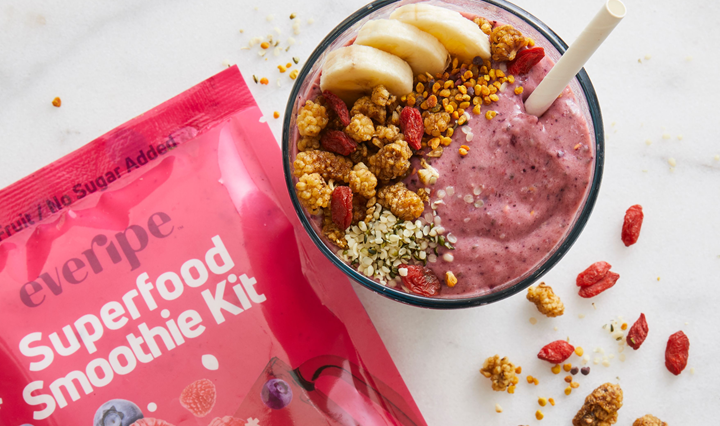
The pandemic has locked families into homebound consumption occasions and a need for healthy beverages that are pantry ready and convenient. Imagine this: a shelf-stable, super-food smoothie developed using freeze-drying tech to perfectly preserve real fruit ingredients. Freeze-drying removes moisture while also concentrating the flavor profile. 

Then add super-food ingredients to enhance nutritional density. Make it easy to do – just add water, juice or dairy and some ice to a blender. Make it at an affordable price point. And oh by the way, eliminate the hassle of building a homemade smoothie from scratch while fresh fruit ingredients go from ripe to fuzzy in a matter of days. 

Everipe is right for the moment we’re in. We interviewed founding partner Kerry Roberts to learn how the company is handling the pandemic and what they see in the future ahead. Here’s our Q&A with Kerry and some related observations from Emergent.

1.   In the last 60 days much has changed for emerging food and beverage brands. How has the pandemic impacted your business and what changes have you made in how you go-to-market?

Kerry Roberts: “These last couple of months have managed to pull the rug of ‘business normal’ out from under us as company leaders, parents, and partners.

Everipe, is a direct-to-consumer, shelf-stable superfood line of good-for-you smoothies. We suddenly found ourselves relevant for these functional benefits overnight, and for reasons we never could have crafted in a strategy deck. We were incredibly lucky to have planned a launch with Amazon in March that was expedited with Amazon’s emerging business team given the need for nutritious (easy to ship) pantry foods – and so we have seen that channel immediately exceed our expectations. At the same time, we’re seeking out additional E-commerce channels with launches in past weeks on Zulily, Walmart.com and we’re temporarily pausing any plans to pursue brick and mortar.”

Emergent: Ready-to-drink smoothies have been around for a while, but many of them are higher in sugar and the taste isn’t quite on a par with fresh-blended versions. Making smoothies from scratch is time consuming, like baking a daily cake. Frozen fruit ingredients can be expensive and there’s only so much room in the freezer to start anyway. 

Everipe hits so many appropriate buttons from great taste to convenience to nutrition delivery to satisfying at a friendly price – you just know this is going to catch fire. My oldest daughter, who is a smoothie fanatic, loves them. The innovation here is timed, positioned and packaged correctly. 

2.   What specific changes have you implemented in your sales and marketing strategies?

Kerry Roberts: “Consumers in the early stages of quarantine were shopping under duress and it was important to recognize that they were not wired for aisle-browsing discovery of new brands and their messaging. 

As we thought about consumer motivations and how they had shifted on-a-dime in our category from things like energy and weight management to home delivery and shelf-stability, we immediately adjusted our messaging.

Instead we focused on pantry storage, clean ingredients and free delivery – which sound functional at face value, however they all ladder up at present, to safety.

Tactically, in addition to seeking out expanded e-commerce distribution, we’re also leaning aggressively in on our own direct-to-consumer channel, offering a deep trial discount and tripling our digital Ad spend to introduce a captive audience to Everipe.” 

Emergent: Right here you are witnessing the one great lesson that feeds trial and development of a new brand: put the consumer first at all times. Listen carefully to what they are saying, how they are behaving. Be cognizant of the environmental conditions they find themselves in. Work to understand the nuances of what they care about and plan backwards from there.

Relevance and resonance are the twin engines of growth in food and beverage businesses. You can’t have either without an acute understanding of what drives consumer behavior. 

The “if you build it they will come” approach just won’t work. Everipe understands the consumer comes first. Period.

3.   How do you think investors are reacting to the COVID-19 situation and how does that impact their interest in brands like yours?  

Kerry Roberts: “Everipe has not taken on funding as yet and as we think about the coming months, we’re conscious that dollars may tighten as Venture Capitalists and funds work to support their own portfolios through a recession. 

That said, I feel this year presents an incredible opportunity for founders to create a story around how they navigated these challenging times – how quickly they pivoted, how strategic they reacted, and how they set their brand up to weather what may become a lengthy recovery. 

With no shortage of incredible product ideas, I think investors look to invest in founders as potential teammates. While this may not be an easy time to champion an emerging brand, the chance for founders to showcase your character and intellect is probably as poignant as it’s ever going to be (at least I hope this is as tough as it gets!)”

Emergent: We are reminded once again that it is the strength and skill sets of founding partners and creators that imbues brands with “difference.” It is rare that you find a CPG experienced marketer like Kerry Roberts at the controls of building a new brand like Everipe. More often than not founders don’t hail from the marketing discipline. Yet, how a new brand is packaged and presented can have enormous impact on scale and staying power. 

Knowing your skill sets and capabilities can help owners identify the blind spots – and brand building can be one of them. This is why Emergent is a resource for emerging brands. Consumers are emotional creatures. They do not make analytical, fact-based decisions concerning the brands they care about. 

We know that both the stories and the words used to convey the value proposition are of great importance in creating a strong brand right out of the gate. It’s a highly specialized area of expertise not always “owned” by the owners.

Kerry’s presence at Everipe gives them a significant advantage, because she understands the emotional fabric and character of what a brand consists of and how vital it is these days to design it with higher purpose and deeper meaning.

4.   How will the economic uncertainty and lifestyle impacts of the pandemic influence consumer priorities and behaviors?

Kerry Roberts: “I reflect on the spotlight placed right now on wellness, particularly immunity – and health as the only currency that really matters and I am hopeful that the connection between how we fuel our bodies, and how we feel, (and heal), becomes more appreciated. 

At the same time, I worry that in a recession, consumers may not have the resources to invest in healthier options. As a startup with lean margins we understand this friction. I hope that the leadership for making truly clean foods more accessible continues to extend to, and include, big CPG businesses who have the resources to make those changes.”

Emergent: As we’ve said, “Health is indeed the New Wealth.” The pandemic and related events have made the home a more important safe zone; making and consuming food at home more desired; and investing in our health and wellbeing a top priority. There is no greater calling now for the food and beverage industry to acknowledge this will not be achieved through incrementalism in formulation adjustments, but in reinvention of legacy brands to answer the desire for higher quality, shorter ingredient decks and improved nutritionals. 

Six years ago we reported on the seismic move in food and beverage preferences to fresh, locally sourced, higher quality food and beverage choices as people fully connected the dots between what they ingest and the quality of their lives. This single event has created a shift in consumption patterns, food and foodservice retail strategies, and changed the very definition of what better-for-you eating is about. The pandemic has only heightened the shift.

Better-for-You is what the consumer cares about. It is what they want. A panicked blip in sales of boxed mac and cheese should not be interpreted as a lasting return to highly processed food consumption. 

If we indeed care about the health and wellbeing of our users, we owe it to them to advance the creation of healthier products and new food and beverage experiences like Everipe.

5.   What advice can you offer to the founders and investors of new emerging brands that will help assure their continued growth? 

Kerry Roberts: “I wish there was a pandemic playbook! If I might offer any advice it would be: 

  • To think carefully about any aggressive plans for rapid expansion and instead to first ensure that existing partners and channels are well cared for, and cash is managed. 
  • To double down on listening to and serving your consumer, employees and partners. Your most efficient marketing efforts right now may just lie in how you listen to and treat people.
  • To get comfortable with the discomfort of not having a crystal-clear road map. Exercising mental muscles for making the best decisions with available information, while the ground shifts underneath you, will position us all well as an uncertain future unfolds.”

Emergent: Following the true north and optimal strategic game plan in these uncertain times requires that new and emerging businesses pay close attention to consumers – and continuously dial how the brand and business behaves to serve their needs. What people want now is greater control over their lives and to invest in their own health and wellness. This is the path.

To the extent the brand lives in service of improving customer wellbeing, the opportunity for continued growth is achievable. The brand’s role here is as expert guide and coach on the consumer’s life journey. That principle should sit at the foundation of business decisions, marketing messaging and how the offer is presented to all stakeholders. 

Too often we see a form of brand narcissism unfold when the business celebrates itself and is in love with its formulation first, over its relevance to fulfilling consumer needs. Business is now built on reciprocity and that requires a less self-centered operating philosophy. 

Everipe is on a journey itself

As much as we speak about the consumer journey to fulfillment, meaning and purpose, so too Everipe is on a path to revolutionizing the smoothie and healthy beverage category. It will not be easy. Nothing of any real value ever is. Kerry’s comments are evidence of a remarkable sense of self and values that operates as guardrails for their decisions and provide a litmus test for their judgments.

We see great opportunity ahead. When food retail distribution re-emerges as a channel for their growth, we believe the evolving center store will become more of a curated location for higher quality, healthier choices. Everipe will likely be a star in that environment.

If your brand and business is on the hunt for fresh ideas, and improved brand storytelling, we’d love to talk with you.

Editorial note: Emergent would like to express our deepest appreciation to Kerry Roberts for participating in this story and helping to inspire and educate other brands now trailblazing a new healthier frontier in food and beverage.

Bob Wheatley is the CEO of Chicago-based Emergent, The Healthy Living Agency. Traditional brand marketing often sidesteps more human qualities that can help consumers form an emotional bond. Yet brands yearn for authentic engagement, trust and a lasting relationship with their customers. Emergent helps brands erase ineffective self-promotion and replace it with clarity, honesty and deeper meaning in their customer relationships and communication. For more information, contact Bob@Emergent-Comm.com and follow on Twitter @BobWheatley.

It’s About Storytelling – Not Story-YELLING

May 24th, 2020 Posted by brand marketing, brand messaging, brand strategy, branded content, Consumer insight, Content Marketing, Digital marketing, Emotional relevance, Growth, Higher Purpose, Marketing Strategy, Public Relations, Social media, social media marketing, storytelling, Transformation 0 comments on “It’s About Storytelling – Not Story-YELLING”

The five essential guideposts to successful brand communication

In a recent article about the COVID-19 disruption of conventional marketing strategies, an industry contemporary weighed in to say change is here. He opined that the latest digital media platforms must be deployed as relevant vessels to convey the product sales-building message. The story was a remarkable resurfacing of a fundamental mistake now driving an unnecessary (and unwanted) wedge between many brands and their users.

You can no longer game your way into someone’s heart and head. When every media form or channel is viewed as a pipeline for pushing messages designed to interrupt and snare people who are trying to consume useful content, the product messaging gambit represents a form of marketing denial about how brand relationships are created.

  • A classic (but now worn) example of this is the misuse and abuse of social channels, treating them as yet another promotion broadcast medium with some begrudging two-way conversation sprinkled in.

We simply can’t look at marketing outreach as “persuasion” any longer, a type of digital bullhorn to broadcast product features, dressed up to look like a more educational piece of publishing. People see right through it. Moreover, they won’t stand for it, sit for it, hear it, consume it or engage with it.

When marketing dollars become precious and every one of them needs to perform more powerfully, it only stands to reason that dialing into cultural context to enhance message effectiveness is important.

Brands must become trusted sources and resources

The relationship brands build with consumers must evolve.

Consider how real, human friendships are created and nurtured. And how real friends communicate with each other. There’s a difference between telling and yelling in both conversational context and messaging construction.

The great brand storytellers know who the hero must be – it’s the consumer and not the brand. Yellers see things from the polar opposite angle, casting the brand and product as hero of every message. The brand’s role should be depicted as trusted guide and expert that operates in service of improving the consumer’s life.

Impactful stories show how the brand fits into an idealized narrative around the consumer’s aspirational lifestyle. As we conveyed in an earlier article, Health is the New Wealth.

Five guideposts to effective brand communication

  1. Relevance

Effective stories always follow a basic element of human truth. If brand relationships must operate more like human friendships, then what people fundamentally need should be factored into the communications messaging platform. People want to:

  • Feel safe
  • Be loved
  • Be valued
  • Inspire others
  • Be successful

Stories should address what’s relevant to user needs and desires.

  1. Social influence

Leveraging trends is important. People follow them, talk about them, share with others and through this process ‘collective wisdom’ forms to validate the acceptability and popularity of cultural developments. Whether that’s adopting new tech platforms like Zoom, TV programs such as the runaway success of Tiger King, use of e-commerce channels to shop, or a surge in home baking, emergence of new trends is not to be overlooked in content calendars.

Stay-at-home is one of the most compelling, dynamic and influential trends of all-time. It presents a treasure trove of opportunity for guidance and conversation on topics ranging from how to re-set the home for work and learning, to spending more time with the kids, to exercising culinary muscles.

  1. Reciprocity

People are hard-wired to recognize, appreciate and reciprocate when experiencing self-less, useful and helpful behaviors. When brands stop looking at customers as walking transactions and see them as real people who need support, the entire dynamic of the consumer-to-brand relationship starts to change.

  • Unselfishness is an admired human characteristic that when added to the brand voice and outreach, paves the way for a respected and trusted relationship.

Educational experiences that help improve expertise and knowledge can be a wonderful way to hone the brand’s role as expert guide and coach.

  1. Emotional intelligence

A lot has been written lately about the value of Artificial Intelligence (AI) and no doubt there are areas where data can be applied to improve decision-making. Targeted media selection would be a prime example. But it can also be a false god. The brand’s goal isn’t to be the one that measures but rather the one that matters.

Imbuing your brand with deeper meaning and higher purpose is the on-ramp to emotional forms of communication. When emotional connections take root between a consumer and brand – the relationship crosses a chasm from habit to ritual. Jasmine Bina, respected brand strategist and noted author recently published on the topic, saying “it only makes sense that when our daily habits are prevented, we hold on even tighter to the rituals that define us.”

Deeper meaning is a matter of perspective. Pet food brands transform when they understand they are not in the pet food making business. Instead they are selling an instrument of love for furry family members and a perception of elevated health, wellness and longevity. Bina quotes noted neurologist Donald Calne: “The essential difference between emotion and reason is that emotion leads to action while reason leads to conclusions.”

What are the emotional catalysts in your business that will cause people to pause, feel emotionally involved and act?

  1. Authenticity

People yearn for the real and more authentic brand voices that are less formulaic and more credible – in part because the brand communication is human and conversational. People want to believe. To do so, though, they need to trust first and it’s harder for people to trust companies over the experiences and opinions of other consumers.

This may be the most important endorsement there is for social community building. It is when the voices of outside, third parties are enlisted that the requirement for authenticity is really served.

Authenticity and trust are siblings. Authentic means real, true and is less about false prophets, theater, artifice and magic. If the consumer were with us when we build stories they would say, “just talk to me like a person and remember it’s about me, my life and search for meaning and purpose, and not about you and your secret sauce and technical prowess.”

The obvious question then is how the brand comes to play. Messaging must be framed around consideration of the brand’s values, positioning and purpose. Which begs the question, what is the brand’s deeper meaning and higher purpose? Once that is correctly defined, the right messaging flows because it’s embedded with authentic, trustworthy, human characteristics.

So, my friend…examine your brand messaging strategy.  Is your brand supportive and telling – or self-involved and yelling?  Which friend would you rather have?

When this process is dialed in correctly, the outcomes can be transformational for engagement levels that lead to sustainable business growth.

Emergent stands ready to help you create powerful, meaningful and relevant brand stories. Use this link to let us know if you would like to discuss further.

Looking for more food for thought? Subscribe to the Emerging Trends Report.

Bob Wheatley is the CEO of Chicago-based Emergent, The Healthy Living Agency. Traditional brand marketing often sidesteps more human qualities that can help consumers form an emotional bond. Yet brands yearn for authentic engagement, trust and a lasting relationship with their customers. Emergent helps brands erase ineffective self-promotion and replace it with clarity, honesty and deeper meaning in their customer relationships and communication. For more information, contact Bob@Emergent-Comm.com and follow on Twitter @BobWheatley.
Social Channels Deliver a Rapt Audience

May 11th, 2020 Posted by Agency Services, brand messaging, branded content, Consumer insight, Content Marketing, Digital marketing, Higher Purpose, Social community, Social media, social media marketing, storytelling 0 comments on “Social Channels Deliver a Rapt Audience”

A remarkable pandemic-authored condition

Don’t miss this chance to truly connect with your users.

The stay-at-home orders continue to shake-up every aspect of life including behaviors around social channel screen time. Your brand users and shoppers no longer go on-line. Instead they now live on-line. Kitchens, for their part, have become erstwhile home offices and educational centers to accommodate work and digitally-enabled classrooms for the kids.

  • How are you responding to this development?
  • How does his impact your social strategy?
  • What moves are you making to fill the need and address the opportunity for engagement?

We will answer these questions shortly, but first a little texture on what’s happening.

The blurring between work, education and leisure has spawned a behavior shift – social channels have moved from an occasional choice to a routine necessity as people seek  information – and guidance – and community – and social contact – and entertainment.

Has there ever been a time when your brand was presented with a near captive audience looking for useful content? The answer is unique to the pandemic, a historic first that is transforming life, health, commerce, time, attention and all the behaviors associated with it. This is precedent setting and now offers an unusual opportunity for brands and businesses to be of greater service and value, knowing that consumption of content is likely to be much higher and therefore more valuable than ever before.

  • A recent survey from Tin Man showed social channel use had risen 50% by the close of April 2020. Sixty percent of the population is on Facebook at least once (or more) a day and 27% are in Instagram. Daily screen time averages are up 50 to 75%.

Frequency and media choice = positive outcome

According to a social media report from Co-Schedule, brands that publish 16 or more social posts a month got almost 3.5 times more traffic and 4.5 times more leads than businesses that publish less often. Further, we observe video takes on added importance as a business generating medium with 64% of viewers more likely to buy a product online after viewing.

Your optimal social strategy

First and foremost, this is not the time to withdraw, go silent, retreat or otherwise disappear from the social-verse. Yes, messaging strategy has changed but the fundamental desire of people to connect and a need for interaction has never been greater.

The litmus test of sound strategy in social media revolves around this axiom: the brand should live in service of improving the health, wellbeing and happiness of its users. Social channels are not just transactional environments – and especially at this time, shouldn’t be managed as such.

This isn’t the time and place for a consumer hard-sell and we’ve now entered an era where overt brand self-promotion doesn’t produce results anyway. Consumers hold all the engagement cards and have shown themselves quick to tune out when the narrative isn’t relevant to them and their lifestyle aspirations.

We are now doing business in The Relationship Economy, founded on reciprocity and usefulness.

In the same Co-Schedule report, 21 ‘best in class’ examples of great content were profiled revealing one common element that shown brightly through all of them. In every case, the best content provided valuable information, guidance, utility and direction to the readers.

The examples noted were devoid of a strict self-serving narrative, nor grounded in product feature/benefit selling. To ensure the brand stays on the right social content path, follow this guardrail to keep the messaging on course: recognize that the consumer and their needs are always the hero of your storytelling and the role of the brand is to serve as expert guide and coach. Context is everything!

Yes, it is ok to talk about the product or deliver information about a retail promotion, but this should be no more than 30% of your content calendar. Know that the best material you will create is going to be a reflection of the lifestyle needs and aspirations of the people who comprise your fan base.

  • Glossier, a beauty product business built entirely on social channel engagement, is deservedly famous for creating content about their customers’ interests and needs first. They have become wildly successful as a result.

Social proof and community

Social channels are not one-way conversations. The most powerful asset you have is social proof – content created by your community that serves to verify and validate what you want people to believe about product benefits, shopping experiences or the lifestyle you advocate.

Testimonials are like gold. People will believe other people before they will ascribe credibility and truth to statements made by brands and businesses. It is important to encourage conversation, interaction, feedback and discourse from social community participants. You can do this by inviting it and asking questions.

  • An example: people adore their pets and will jump at opportunities to talk about their personal and anecdotal stories around lifestyle experiences, recovery from illnesses, behavior training tips and ideas, and opportunities to share photos and videos of their four-legged family members.

Pandemic specific social content guidance

Consumer culture has changed as a result of this unprecedented event. It has altered preferences and mindset. Here are some points to consider in social content creation.

  1. An empathetic and more human voice is essential in the content you publish.
  2. As a general subject platform, health and wellness is the top concern for people now and thus relevant to the material you develop.
  3. People feel out of control of the world around them. Provide guidance and ideas that help them regain a sense of control. Taking charge of personal health and wellness is how to do it.
  4. Loss of confidence is a thing. Anything you can do to reassure people about the future and give them confidence about improvements in the road ahead will be welcomed.
  5. Your brand should be guided by a higher purpose (a mission that transcends commerce and selling things), deeper meaning and shared values with your consumer. Know this matters and they are paying closer attention to your words and actions.

It’s extraordinary that an event like this could alternatively create an environment where people spend so much extra time online and in social communities. People yearn for contact and guidance, information that provides hope and helps them navigate the incredible changes they have experienced. You are no longer just selling products and stocking merchandise, instead you are in the deeper meaning business and have a much more important role to play in your customers’ lives.

It’s an important calling and comes with responsibilities. That said, it brings forward a unique opportunity to form relationships with your fans and followers that will last well beyond the current crisis. Now is the time to upgrade, enhance and invest in social channel outreach.

Use this link to let us know if you need help building the right social channel strategy, and content that will inform and endear your users.

Looking for more food for thought? Subscribe to the Emerging Trends Report.

Bob Wheatley is the CEO of Chicago-based Emergent, The Healthy Living Agency. Traditional brand marketing often sidesteps more human qualities that can help consumers form an emotional bond. Yet brands yearn for authentic engagement, trust and a lasting relationship with their customers. Emergent helps brands erase ineffective self-promotion and replace it with clarity, honesty and deeper meaning in their customer relationships and communication. For more information, contact Bob@Emergent-Comm.com and follow on Twitter @BobWheatley.

Archives

Categories