Posts tagged "consumer behavior"

How to Counter Digital Marketing Resistance

August 3rd, 2017 Posted by brand marketing, branded content, consumer behavior, Digital marketing, digital tools, Retail brand building 0 comments on “How to Counter Digital Marketing Resistance”

Five steps to engagement and mattering

Food brand communication is going through a period of disruption and change, as consumers step away from conventional media to devote more and more time to mobile screens and social channels. Digital-based outreach in both narrative and video forms is where the action is, assuming you’re intent on fishing where the fish are.

However, the vast majority of communication in food and beverage categories is essentially re-purposed advertising trying to win a nano-second of attention — in an environment where consumers run from content that appears to be a sales pitch.

Just because you’re spending and ‘getting out there’ doesn’t mean your effort is gaining traction or that your communications is delivering the desired effect and business outcomes. It is harder than ever to simply buy fame and attraction. Why?

Dawn of Digital Resistance

A new challenge is rising up to once again confirm and restate the consumer’s master control over brand engagement: digital resistance. Simply stated, the consumer manages what they’re willing to consume — and anything that starts to look like conventional selling, marketing, feature/benefit communication is getting tuned out.

The alchemy of this change is fueled by the sheer volume of marketing activity trying to secure an audience — operating in an environment where consumers direct when, how and where engagement happens. Additionally, consumers have made it abundantly clear they’re interested in content offering help more than hype. Self- reverential brand messaging and product feature/benefit selling are just not cutting it.

Yet the temptation to focus on overt selling runs deep in our business culture. We believe that if we’re not showcasing and pushing product features, we’re being derelict in our responsibilities as marketers.

Ironically this is the very behavior that shuts down the opportunity for a relationship with those consumers we wish to attract.

When communication looks less like marketing and more like coaching and guiding, traction increases.

So how do you connect without overt selling? To provide some context, here’s how marketing conditions have evolved…

We’re Now Doing Business in the Relationship Economy

In the 1970’s we reached the apex of the Industrial Economy where the focus was squarely on specialization in the marketplace, and functionality of products aimed at modernizing your life. Marketing was about tonnage of media spend and persuasion.

In the 1980’s there was a natural evolution of this condition to the Experience Economy where services rose in prominence along with brand experience in pursuit of lifestyle associations. Marketing increasingly took on the guise of cinematic entertainment.

In the mid ’90’s when the Internet truly arrived, with it came the Knowledge Economy and the empowerment of consumers to start managing the relationship with the brands they cared about. This was fueled by the arrival of access to information previously controlled solely by brands and business. Marketing morphed to be more holistic and integrate ad campaigns with promotion and PR tactics.

Today, we’re doing business in the Relationship Economy where consumers are on a mission to secure greater meaning and purpose in their lives. Consumers now fully manage the interaction with any brand they deem worthy of mattering — by “liking,” “following,” “subscribing” and “sharing” — and ultimately buying. It is a transformative business environment dominated by the influence of cultural shifts. Brands that demonstrate an empathy towards the authentic experiences and content consumers now find most compelling (like ethical behavior, honesty and transparency) will fair better in creating true engagement with the audiences they seek to court.

Five steps to meaningful brand engagement:

  1. Deep investment in consumer insight research aimed at fully understanding your core customer’s lifestyle passions, interests, concerns and desires
  2. Marketing strategy which taps into empathy around how the brand and business can truly improve the customer’s life
  3. Messaging and outreach tools founded on building relevant connections to consumers’ lifestyle interests
  4. Embedding your brand with a ‘higher purpose’ that informs your actions and behaviors helping to secure consumer trust – essential for any real relationship
  5. Communication built around content that operates in service of the customers’ interests; designed to mine emotional cues essential to gaining their attention and associating memorable storytelling moments that help endear them to your brand

It’s important to note here the advice of eminent psychologist Antonio Damasio: “We are not thinking machines that feel. We are feeling machines that think.”

Brand relationships operate in similar ways to the rules of personal friendships. As long as mutual respect is honored and the character of communication is focused on help over hype, the door to engagement will be open.


Looking for more food for thought? Subscribe to our blog.

Bob Wheatley is the CEO of Chicago-based Emergent, the healthy living agency. Emergent provides integrated brand strategy, communications and insight solutions to emerging and established food, beverage, home and lifestyle companies.  Emergent’s unique and proprietary transformation and growth focus helps organizations navigate, engage and leverage consumers’ desire for higher quality, healthier product or service experiences that mirror their desire for higher quality lifestyles. For more information, contact Bob@Emergent-Comm.com and follow on Twitter @BobWheatley.

woman and cat

Pet Care Marketing Upended by New Consumer Insight

April 12th, 2017 Posted by Pet care, Pet food, Retail brand building, retail brand relevance, shopper behavior, shopper experience 0 comments on “Pet Care Marketing Upended by New Consumer Insight”

Emotion Outperforms Rational Outreach

Are pet food purchase decisions rational and considered? No. Here’s why…

Ever wandered through a pet store and noticed the similarity in how brands present themselves and their benefits? The focus on ingredients, nutrition advancements, and percentages of real meat-based protein dominate the conversation.

For the most part, these rational arguments in favor of the competing brands are an outgrowth of a long-held, pervasive view that decision-making is largely a rational act.

We know that’s completely wrong.

Examining the latest studies in behavioral economics, neuroscience and psychology reveal we’ve generally constructed pet marketing on the wrong foundation over the last 20 years. Turns out, human beings operate on two brain systems – the ‘effortless’ sub-conscious and the ‘effortful’ conscious and learning brain.

Here’s the headline:

System 1 – The Nonconscious Brain – is actually in charge of our actions and decisions. And the rational System 2 side routinely defers to its non-rational cousin on a daily basis.

Why does this matter? Because fact-based presentations of information and data play almost no role in the purchase decision. We don’t recognize this is happening because, yes, it’s subconscious.

Pet food organizations work overtime to refine and improve their nutrition profiles, enhance the quality of their ingredient sourcing, optimize their formulations for a healthier pet – and then tout the efforts they’re making. Ironically, all of it largely ignored by System 1. Instead this information comes round in the post-purchase environment as a justifier for making the right decision and remaining loyal.

Is the commitment to superior nutrition a wasted effort? No, it is fundamental to brand efficacy and the outcomes for pet health and wellbeing. But this is a different issue from what actually drives purchase.

System 1 has all the fun

Nonconscious System 1 is capable of processing up to 11 million bits of information per second; System 2 just 40. Thus, our subconscious is far more intuitive, smart and capable than we’ve given it credit for previously. Here’s how it operates:

  • Acts without deliberate analysis
  • Generates impressions, feelings and inclinations
  • Exerts powerful influence on choices and judgments
  • Drives the options we choose; originates the actions we take

This news may rankle pet food C-suite executives who pour such energy and investment into the rational argument stream on nutrition and ingredients. However, this does not mean that purchase decisions are subject to mere whim.

Here are six insights that help optimize and influence System 1 conditions:

1. The Exposure Effect

Science proves we have a natural inclination to favor what comes most easily to mind. In fact, we imbue brands that are familiar to us with a host of beneficial qualities. It’s not the features and facts that are driving this, rather it’s the familiarity.

This desire for familiarity prompts planning a holistic, multi-channel media strategy that’s always on and aimed at breeding awareness. To help along this path, it’s important to deploy sticky, memorable phrases and ideas.

2. The Power of Social Proof

We are drawn to prefer products other people like and endorse –whether in a live setting or online. We make positive assessments of brands that are well liked and recommended.

Our depth of affection grows with perceived popularity.

3. The Primacy of Emotion

System 1 responds to emotional communication because it uses emotion. So a surprising, personal, heart-rending story from a pet parent is far more effective than a surprising statistic.

The goal of pet care marketing is to fulfill one of the most important motivations for buying a high quality pet food – the expression of love for your pet. Emotional tugs are far more powerful than rational reasons.

4. Role of Reciprocity and Reward

We are hardwired to reciprocate in the presence of unexpected and magnanimous acts. If we want to ask pet parents to do something, to take action, make a donation, or attend an event – doing something generous and unselfish ahead of the ask will cause reciprocal obligations and behaviors.

Similarly, rewards should be viewed differently. System 1 loves immediate and assured rewards. And rewards that are emotional and social in nature are more motivating than financial.

Case in point – are we motivated by saving 50 cents or being perceived as a smart, caring and sophisticated pet parent?? Are we motivated by the superior nutrition in a bag of kibble or acquiring a path to a healthier, happier pet?

5. Actions more powerful than words

We are impacted by what people and brands do more so than what they say. We place greater stock and belief in actions over words. By tapping into real-world events and experiences, this emotional connection helps make the stories you wish to tell more meaningful

6. System 1 responds to Art

As ad legend David Ogilvy once said: “You cannot bore your customer into buying your product.” System 1 responds positively to artistic expression. So it’s important for brand communications to be clever, interesting and entertaining.

The creative use of words, pictures, sound, style and images can combine virtuously to help make communication compelling and memorable.

System 2 is rarely used

The learning part of our brain isn’t inert. However, it is lazy and allows the subconscious to hold sway over our actions and decisions. Because this is happening outside of our conscious awareness, we don’t really recognize it’s happening.

For example: Was your choice of spouse or significant other truly driven by a deliberate analysis and evaluation of the pros and cons before you took the leap?

Of course it wasn’t. That life-changing decision was based on your feelings, your gut instincts – and that is System 1 at work.

Now we are designing a new go-to-market platform for pet brands that incorporates this new understanding about how people operate. As we respect System 1’s power to drive how people operate, we gain discipline in our marketing approach and confidence in the outcomes of marketing investments.

What do you think?

Looking for more food for thought? Subscribe to our blog.

Bob Wheatley is the CEO of Chicago-based Emergent, the healthy living agency. Emergent provides integrated brand strategy, communications and insight solutions to national food, beverage, home and lifestyle companies.  Emergent’s unique and proprietary transformation and growth focus helps organizations navigate, engage and leverage consumers’ desire for higher quality, healthier product or service experiences that mirror their desire for higher quality lifestyles. For more information, contact Bob@Emergent-Comm.com and follow on Twitter @BobWheatley.

consumer interests and passions

What’s Ahead in 2017: Food Ideology Drives Business Growth

January 17th, 2017 Posted by brand marketing, Brand preference, Human behavior, retail brand relevance, shopper behavior 0 comments on “What’s Ahead in 2017: Food Ideology Drives Business Growth”

Beliefs and Business Now Bedfellows

Nielsen’s recent study, “Unlocking the Millennial Mindset” underscores just how far we’ve come on the continuum from product feature and benefit selling to something akin to religion-style commitments in how brands and retailers come to market. Millennial consumers especially expect companies to behave openly and conscientiously.

  • 81 percent want to know more about how foods are produced
  • 80 percent want access to the behind-the-scenes story on how companies operate
  • 73 percent are willing to pay more for sustainable brands
  • 81 percent are willing to pay more for foods with a health benefit
  • 51 percent check package labels for evidence of social and environmental impact

Pressing on every corner of the food and beverage industry is a pervasive consumer desire for greater meaning, higher purpose and ethical business practices from the brands and retailers they prefer.

Ideology is rapidly becoming the new ‘currency of commerce’ as consumers seek to be a part of something that’s greater than themselves. As a result deeper, genuine values and beliefs match, and in some cases exceed, improved formulas as a choice and purchase driver.

Quick litmus test:

  1. Is your business driven by a profound, visible, human-relevant belief system?
  2. Is your company grounded in and built on a higher purpose?
  3. Does your food or beverage brand have a recognizable soul?

At the root of this purpose-driven phenomenon is cultural change. And nowhere can this be seen in greater relief than the food industry’s passing of the leadership baton: emerging brands with a clear mission and belief system are gaining significant share of interest and engagement over their less ideologically-informed legacy brand forbearers.

Ideology, in fact, has risen to be an essential part of the recipe for crafting an engaging brand proposition; one that will invariably insert the consumer’s interests and passions at the top of go-to-market strategy. Some of these consumer-relevant interests and passions include:

  • Changing the food system
  • Protecting the environment
  • Eliminating hunger
  • Supporting family farming
  • Rewarding sustainable agriculture processes
  • Offering super transparency
  • Improving health and wellbeing

Brands as Enablers of Being Your Best

In essence, brands that contribute to the betterment of people and society, while rethinking industrial food practices that have defined the industry for 50 years, are on the more prosperous path. To be clear, this is deeper than company mission statement stalwarts like treating employees and vendors fairly and responsibly.

Food ideology has more in common with religious principles than it does with garden-variety mission statements.

What’s going on here? The consumer has evolved. What people care about has shifted.

The Marist College Institute for Public Opinion every year publishes the results of a national poll on New Year resolutions. And for the first time in 2017, Being a Better Person rose to number one, edging out weight loss, the perennial winner in three previous polls.

Better person-ship plays a role in how consumers are making brand and retail choices. It is an expression of their profound interest in healthy lifestyle, the environment and doing good for others.

Actions consumers take in brand purchase are now symbolic representations of the values they espouse. When a brand puts beliefs and values at the center of business strategy, it is catering to this notion of improvement in a tangible, meaningful way. The devotion to ideological principles also infers and imbues the brand with markers of higher quality and integrity.

Putting beliefs and values at the center of your business isn’t about just doing good for its own sake! In the end, brands with belief at their core are in alignment as enablers – helping people be, and achieve, their best. The metrics of this approach will continue to play out in share shifts and emergence of new categories. These new categories will arise from innovations; not just in formula or ingredients, but also in brand and business behavior and credo.

The Higher Purpose Audit

So what’s the optimal approach? There’s no one-size fits all solution. Every business is unique and requires a custom-designed approach – whether it’s refinement of a current mission or the development of a new strategy from scratch.

Emergent provides this due diligence in the form of a Higher Purpose Audit designed to assess current conditions in a client’s category, an inventory of brand and business practices and behaviors that may be aligned or inconsistent with the right ideology. We translate that audit into tangible strategies and ideas that will inform brand position, marketing and communication.

The end game: harnessing the requirement of true ideology as a business builder.

Looking for more food for thought? Subscribe to our blog.

Bob Wheatley is the CEO of Chicago-based Emergent, the healthy living agency. Emergent provides integrated brand strategy, communications and insight solutions to national food, beverage, home and lifestyle companies.  Emergent’s unique and proprietary transformation and growth focus helps organizations navigate, engage and leverage consumers’ desire for higher quality, healthier product or service experiences that mirror their desire for higher quality lifestyles. For more information, contact Bob@Emergent-Comm.com and follow on Twitter @BobWheatley.

What's for dinner?

Spontaneous Eating May Redefine Food Industry

July 15th, 2016 Posted by Supermarket strategy 0 comments on “Spontaneous Eating May Redefine Food Industry”
Are you ready to take advantage of ‘right now’ behaviors?

At Emergent, we’re constantly watching and observing behavioral shifts and trend changes that impact the food and beverage business. Case in point: Last-minute meals – not as a tangential or peripheral condition, but a pervasive change as people increasingly act on impulse.

(more…)

Farmer to Supermarket

Trend Watch: Immediacy and Proximity to Invade Food Business

February 16th, 2016 Posted by Brand preference, food experiences, Food Trend, shopper behavior, storytelling, Supermarket strategy 0 comments on “Trend Watch: Immediacy and Proximity to Invade Food Business”
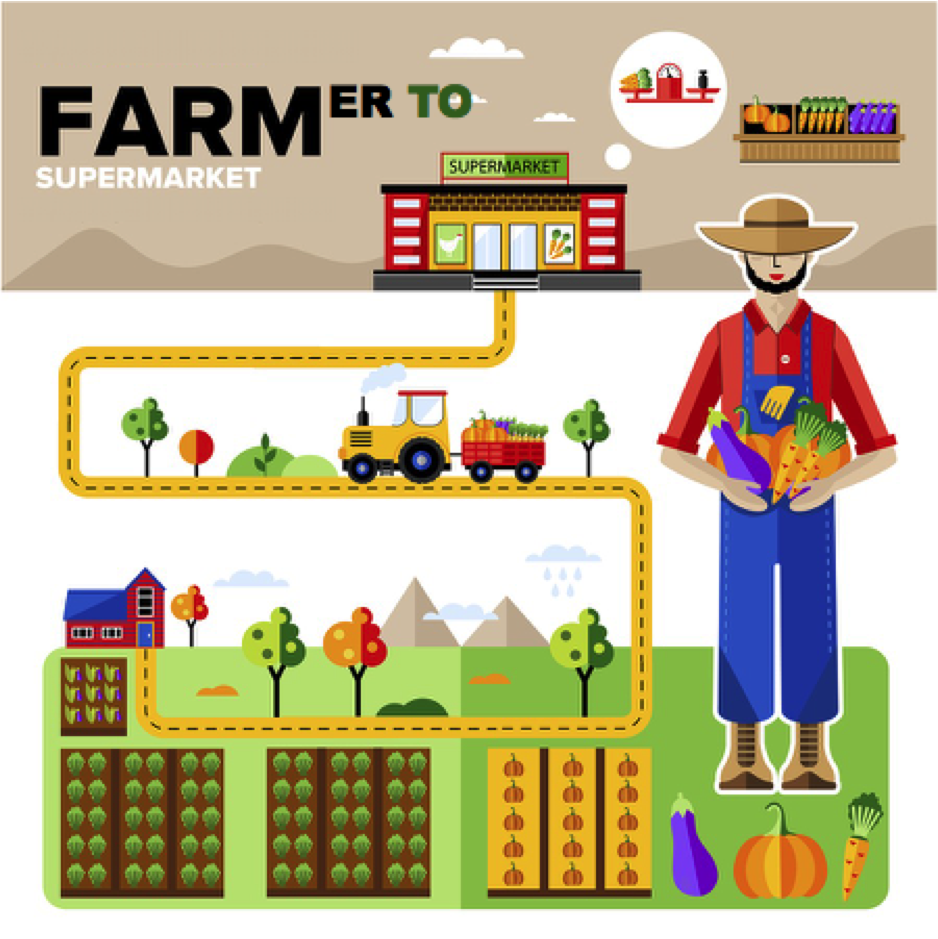
From the food business to the fashion business, a pervasive trend is emerging as the distance between maker and buyer continues to close. For decades in the fashion world, the runway show archetype would play out with designers parading their seasonal lines in front of store buyers who then place orders. Rinse, repeat. In a recent precedent setting departure from New York Fashion Week traditions, Burberry CEO Christopher Bailey recently announced that consumers can order any outfit they like online – straight from the runway show.

(more…)

Part 2: New Food Culture Requires New Brand Communications

October 21st, 2015 Posted by brand marketing, change, Insight, shopper behavior, Uncategorized 0 comments on “Part 2: New Food Culture Requires New Brand Communications”

As the food landscape changes, the equally disruptive media-machine upheaval reaches into and upends conventional CPG brand communications strategies – Where’s Don Draper when you really need him?

(more…)

Archives

Categories