Posts tagged "marketing"

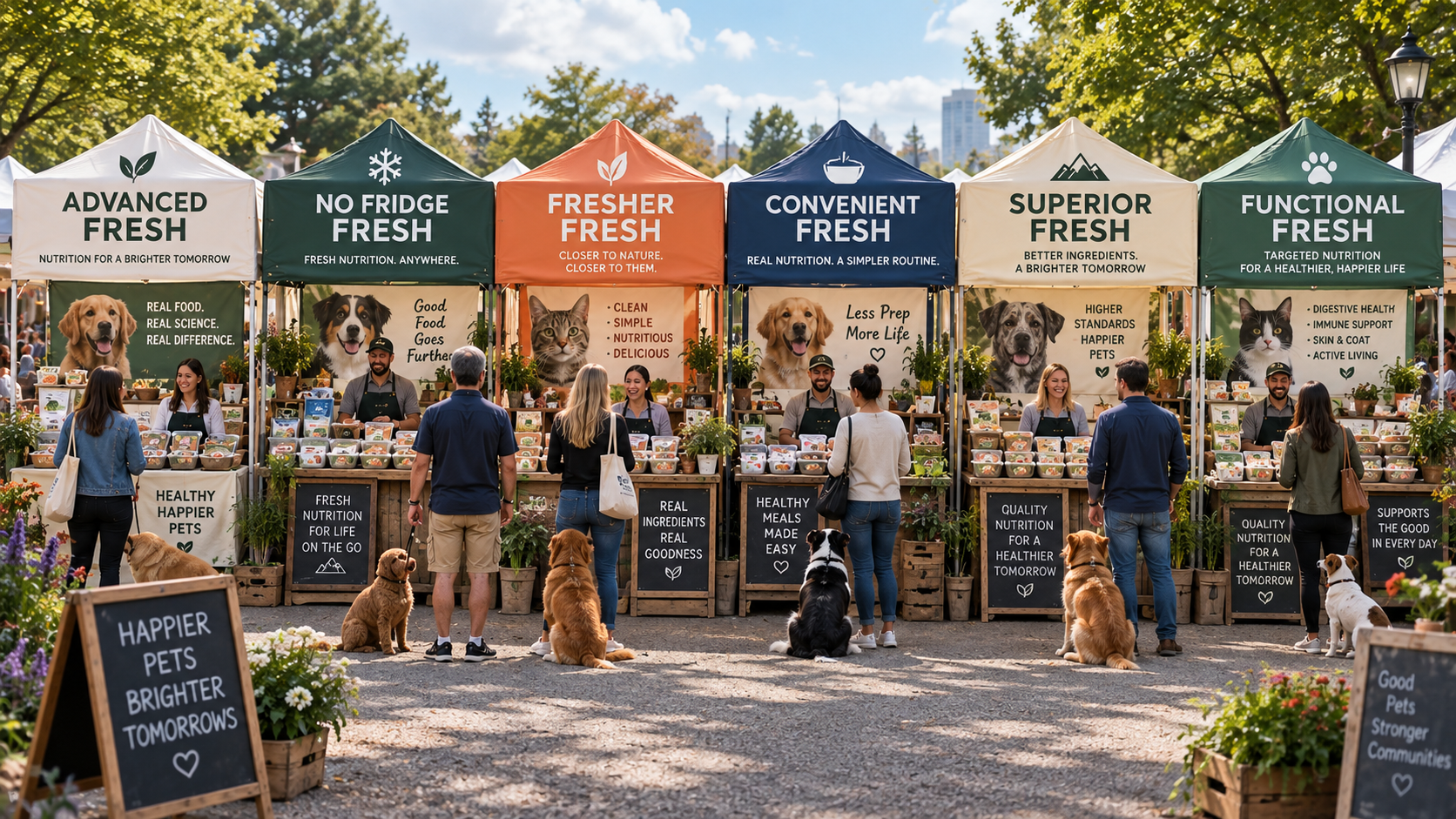
Pet food brands chasing each other into similar nutrition categories

What Happens When All Premium Pet Brands Fight Over the Same Territory?

September 23rd, 2026 Posted by Brand differentiation, brand marketing, brand messaging, Commoditization, Validation, Value proposition 0 comments on “What Happens When All Premium Pet Brands Fight Over the Same Territory?”

Innovation leverage is fading fast…

We are entering a period of uncertainty in the pet industry as underlying strategic challenges and product proliferation – accelerated by the extraordinary impact of AI – are reframing what competitive advantage looks like. Here we will pull apart and examine the forces at work, identify the impacts and launch a conversation about the next threshold of durable marketplace strength. Stay tuned for our recommendations at the end.

Premium pet brands have spent more than a decade expanding by segmenting the market into ever more specialized dietary propositions: grain-free, ancestral/biologically appropriate, raw, fresh, gently cooked, human-grade, limited ingredient, high protein, functional benefits, sustainably sourced, breed/life-stage solutions, probiotics, freeze-dried, etc. 

However, these successful innovations also escalated the competition. The competitors then normalized them, and what began as a meaningful brand distinction increasingly became a category expectation. 

Don’t get me wrong, product innovation is and will remain essential. However expecting product innovation to fuel lasting brand competitive leverage is becoming increasingly unrealistic.

In sum, here’s the strategic challenge we will examine:

  1. When nearly every premium pet food is nutritionally sound and on point, where should competitive advantage spring from?
  2. When the supply of premium pet food solutions outstrips demand and the law of economics flip, what should brands do to build and hold incremental gains?

Simply put, more brands and more SKUs and more innovation alongside enhanced nutritional claims are competing for a finite number of households, pet stomachs, shelf space and dollars. At some point, yet another product improvement stops creating proportional incremental demand. Instead it mostly redistributes existing demand. Slowing pet category growth makes this an imperative issue to confront now.

To its credit, the industry has invested enormous resources to improve what’s in the bag, can or pouch. And it worked. The nutritional quality available to pet parents is extraordinary compared with 15–20 years ago.

But there’s an unintended consequence:

  • The industry’s relentless pursuit of product superiority has produced an increasingly superior and rather closely aligned field of competitors who chase each other into every innovation territory.

Here’s the current essential truth…

High protein isn’t distinctive. Functional nutrition isn’t distinctive. Probiotics aren’t distinctive. Minimally processed isn’t unique. Human-grade isn’t nearly as distinctive as it once was. Freeze-dried isn’t. Fresh is already spreading among brands. Even claims around ingredient quality, veterinary expertise, and science-backed are increasingly shared territory.

Claim proliferation is upon us. According to Innova Insights 2025 launch data, among new products carrying a high-protein benefit, 71% also carried another health claim, 64% had a digestive-health claim and nearly half added a skin-health claim. Gut-health positioning appeared on 31% of global new launches; immune and skin health each appeared on 22%.

Fresh category is the latest expansion arena: 

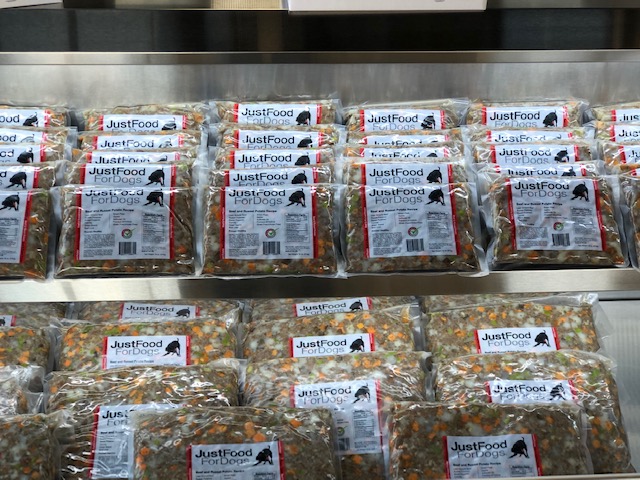
Fresh began by successfully challenging assumptions about what pet food should be. Today fresh/frozen territory includes Freshpet, Farmer’s Dog, Ollie, JustFoodForDogs, Nom Nom and numerous others, while conventional premium manufacturers increasingly offer adjacent, similar formats. Fresh/frozen dog food posted a 24.5% CAGR from 2021–2025 versus 5.7% for the overall dog-food-and-treat category. What was once a category disruption transforms into another highly competitive segment.

The same process occurred earlier with grain-free and high-protein formulations. A claim can be true, important and compelling to consumers—and still have almost no competitive currency if a dozen brands are credibly making the same claim.

“High protein” is valuable but not differentiating.
“Science-backed” is reassuring but without being proprietary.
“Premium ingredients” is meaningful without offering separation.
“Veterinarian developed” forges trust but not ownership.

Pricing aside, what happens when brands prioritize reasons to believe over the more elusive yet critical trusted reasons to choose.

We should note, premium pet category strength continues to be a business driver. APPA reported 41% of dog owners and 38% of cat owners purchased premium food in 2024, both up from 2023.

Packaged Facts similarly found that 70% of dog and cat owners remain willing to pay more for foods offering health-and-wellness benefits. While the demand for premium benefits remains strong, what’s becoming harder is capturing a disproportionate share of that demand when so many brands make comparable benefit claims.

Let’s dive in on the underlying economic mechanism fueling current conditions

  • Innovation → success → imitation → proliferation → normalization → declining differentiation creates a condition where greater marketing investment is required to deliver the same year-to-year growth report card.

When competitors quickly replicate any innovation, the category may expand but without creating durable, sustainable advantage for the innovator.

The strategic competitive question then changes from:

“What can we make that is better?”

to:

“What can we become or offer that competitors cannot easily replicate?”

Where does the next increment of value surface from when most of the new nutritional niches have already been occupied?

Alongside innovation parity, an unseen contributor is helping enable these current challenges.

Ten years ago when premiumization was gaining momentum, the demand for higher quality ingredients, sourcing, manufacturing exceeded the supply. If you went to market with an authentically better product and handled the retail distribution, support and marketing requirements with skill and creativity, you likely saw solid growth and returns.

The red hot premium pet food market attracted more competitors in the same space, so brands began to look for unique needs, gaps and marketplace niches to serve while securing separation. This also worked for a time until most of those nutritional need gaps had been satisfied. 

Meanwhile many traditional barriers to entry in the pet food business have fallen.

Nutrition and science based formulators are readily available to help bring a product vision to life, while co-packers with sourcing expertise can serve as the asset light path to making a product. AI helps quickly build the business and operations plan while direct to consumer models make it considerably easier to get in front of potential customers (Packaged Facts states 39% of U.S. pet-food sales now occur online). The result is more and more new brands entering an already crowded marketplace seeking attention and share of wallet. One trip around the convention hall at SuperZoo helps verify the environment.

  • When supply starts to outstrip demand, the forces of competition begin to shift. Competition turns inward. Brands rush to participate in every corner of novel innovation and you begin to see brand similarity and sameness converge.

This impacts the strategic game plan when category conventions and normalized behaviors keep everyone locked into a cycle that replicates the same go-to-market moves. It simply gets harder and harder to squeeze incremental balance sheet gains year to year when the differentiation of choices narrows. Of note, pricing power also softens when brand distinction is diminished and becomes more trivial.

Prevailing business conditions are demanding improved strategic solutions

Consider the overall industry growth status reported by Packaged Facts: U.S. pet food and treat retail sales is projected to grow just 2.1% in 2026, to $70.45 billion, with a forecasted 3.2% CAGR from 2025–2030. The trend lines show a slower pace with dog and cat food sales rising 14% in 2020, 15% in 2021 and 2022, and 13% in 2023, before decelerating to 3.7% in 2024 and an estimated 2.8% in 2025. 

The supply of premium solutions continues to expand while category growth is moderating. This will simply intensify the fight for new, novel growth solutions. Now is the time to get on this.

So what’s next?

Places where the strategic pet brand building conversation can go:

Proprietary brand meaning—ideas, beliefs, cultural territory, communities and emotional propositions that aren’t bottled up in the formulation. This is a search for a ‘secret sauce’ or true north that may exist inside the organizations’ business structure, operations, behaviors, history, standards and beliefs.

Category creation—not another variant within an existing segment, but identifying an unmet pet nutrition problem that changes how stakeholders will think or behave. When most needs are already met, this is a tougher (but not insurmountable) question overall. 

Authority—owning trust, credibility and belief rather than merely making claims and assertions of performance and outcome. 

Business-model differentiation: experiences, services, retail models, personalization, relationships and other assets that competitors can’t duplicate simply by sending another formula to R&D.

In sum, the product still has to be excellent. Innovation remains essential. But durable advantage will increasingly come from proprietary meaning, authority, community, experience, business model, cultural relevance, category creation or some other asset competitors can’t duplicate by formulating an enhanced recipe and putting another package on the shelf.

An aligned avenue of strategic exploration: industry weaknesses and gaps

When there’s less leverage in products, the challenge to leadership teams is how to create added business value that isn’t easily over-run by competitors. Perhaps it’s time to solve systemic problems the industry faces that other brands elect to ignore or soft pedal.

If you zoom out to 30,000 feet and look at the pet food business there are numerous issues and weaknesses that your brand may be in a position to help solve, and in doing so, to step outside the conventional competition handbook to create a unique story your brand can champion.

A few examples –

  • Sustainability is an enormous hole the industry has talked around the edges of but no one leads at the strategic level to authentically resolve the supply chain (system 3) impacts.
  • While AAFCO standards enforce conformity on nutrition specifications monitored by state and federal regulators, still quality varies without verifiable consumer assurance of exactly what they’re getting. Is transparency really transparent?
  • The conventions of pet retail and product form hold the industry in a commodity-like grip cycle of bags, cans and pouches that present the product in the same fashion brand to brand. At times category conventions beg for fresh thinking.

These are not simple challenges, but one thing is for certain: there is a requirement now for real strategic work to investigate, interrogate and determine what the next roadmap to brand growth will look like. Here are some of the elements worthy of deep dive analysis:

What does the brand currently own?

Which claimed advantages are proprietary versus replicable?

Where has category convergence eroded differentiation?

Which latent brand assets have greater strategic potential?

What consumer/category white space could the brand credibly occupy?

What organizing proposition could drive innovation, communications, retail and go-to-market?

The next growth recipe may not be another recipe at all.

We should begin by answering a harder question: What can your brand credibly own that competitors cannot readily appropriate?

For premium pet brands fighting over increasingly similar nutritional territory, finding the answer may become one of the most consequential growth assignments ahead.

Looking for more food for thought? Subscribe to the Emerging Trends Report.

Bob Wheatley is the CEO of Chicago-based Emergent. Traditional brand marketing often sidesteps more human qualities that can help consumers form an emotional bond. Yet brands yearn for authentic engagement, trust and a lasting relationship with their customers. For more information, contact Bob@Emergent-Comm.com and follow on Twitter @BobWheatley.

COVID 19 and Pet Brand Marketing

Our new monthly column at Pet Age magazine…

January 4th, 2021 Posted by Agency Services, brand advocacy, brand marketing, brand messaging, brand strategy, branded content, Pet food marketing 0 comments on “Our new monthly column at Pet Age magazine…”

Delighted to share the first installment of our new monthly column at Pet Age magazine (Click here to read): COVID 19’s Unintended Gift to Pet Brand Marketing: https://bit.ly/COVIDPetBrandMarketing

Looking for more food for thought? Subscribe to the Emerging Trends Report.

Bob Wheatley is the CEO of Chicago-based Emergent, The Healthy Living Agency. Traditional brand marketing often sidesteps more human qualities that can help consumers form an emotional bond. Yet brands yearn for authentic engagement, trust and a lasting relationship with their customers. Emergent helps brands erase ineffective self-promotion and replace it with clarity, honesty and deeper meaning in their customer relationships and communication. For more information, contact Bob@Emergent-Comm.com and follow on Twitter @BobWheatley.
New concept in pet brand building: kitchens

Will Pet Brands Stop Resisting Differentiation?

October 28th, 2020 Posted by Brand preference, brand strategy, change, Differentiation, engagement, Pet care, Pet food, Pet food marketing, shopper behavior, storytelling, Transparency 0 comments on “Will Pet Brands Stop Resisting Differentiation?”

How to punch above your weight and win

When shopping the aisles of a pet food store you’ve likely noticed an amazing array of new brand players on one hand, and on the other difficulty distinguishing anything truly unique between the options. Blurry at best as the protein percentage wars rage everywhere around you.

Pet care is a robust and growing business that works to float all brand boats. For now at least.

  • More pet-owning households than ever
  • More adoptions from rescue centers
  • More puppies and kittens at home
  • More mouths to feed

Even in the midst of a pandemic and economic recession the growth record is notably positive.

That said what happens when you reach a competitive tipping point as the number of brands multiplies (supply) while vying for a piece of the current volume and dollar pie (demand)? Right there, strategic best practices highly recommend nurturing true brand differentiation in the eyes of the consumer. When differences are marginal though, then what?

Read on…

This challenge gets to the heart of pet care brand conditions, a business personified by its Low Differentiation and High Durability traits among category participants. This is a healthy business ripe for disruption – when the right moves are made.

Understanding pet brand category behaviors

How is it that so many pet brands are holding firm right now?

The size of the pie is expanding. Brands that are similar to each other while exhibiting staying power are all playing by familiar rules – at least until an innovator comes along and changes the playbook.

A landscape of comparable brands with parallel nutritional claims and ingredient stories, arguing for advantage in the margins, is a living example of:

  • A study in brand incrementalism
  • Marginally better quality to the winners in each segment
  • Pricing that stays in the segment frame, forcing choice on other more subjective cues
  • A curious tit-for-tat marketplace where brands monitor and react quickly to copy competitor moves (ancient grains anyone?)
  • Where staying in the competition is more important than distinguishing the brand as a unique star player

Premium kibble is kibble for the most part, although every brand understandably claims to be nutritionally superior to their equivalent price-point neighbor. That said, the language used to convey better or best bears remarkable sameness brand to brand.

Looking for marketplace advantage

When you work hard to create and earn high buyer value, the end result makes competition increasingly irrelevant. Where the pet business is generally a ground game of less differentiated brands, the sweet spot of disrupting category conventions is secured by moving from lower to higher differentiation.

Achieving greater uniqueness can happen when focused sharply on a marketplace buyer segment – a specific type of customer, where the brand strives to be hyper relevant and meaningful to a lifestyle cohort. Take for instance the consumer pursuing a health and wellness lifestyle, where the importance placed on the quality of what you eat is directly related to their perceived quality of life.

Inevitably, this consumer will transfer that same viewpoint to their pet food choices. While one could say wellness is the province of raw food brands, even there, the word raw has been democratized throughout the category in slightly de-tuned versions such as freeze-dried toppers, chunks and kibble inclusions.

Channel as a disruptive idea

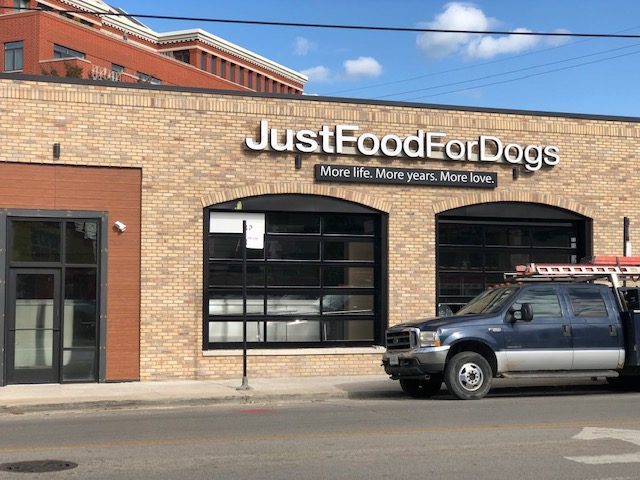
Just Food For Dogs (JFFD) based in Irvine, CA has found a way to re-think the path to market.

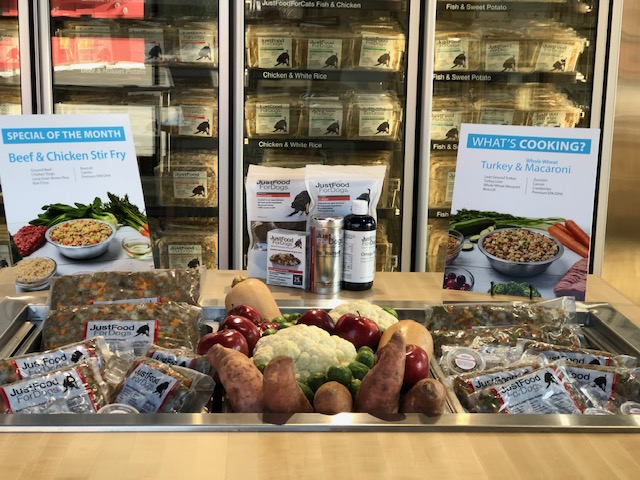
Their model involves free-standing retail kitchens that make fresh pet food on premise, a concept optimized for higher income zip codes where the cost per pound is less important to the perceived nutritional upgrade in a freshly-prepared diet. The opportunities for customization to specific pet needs is remarkable and embedded in this concept.

Company President Carey Tischler explained this is the beginning of a national expansion: “our kitchens are an incredibly effective means of showing, not just telling, pet parents how we are different – and how fresh, whole-food can change their pets’ lives. With nine open-to-the-public kitchens serving pet parents today, and several more kitchens under consideration for 2021, our national expansion is already well underway,” he said.

Human food ingredients re-purposed for pet food recipes

Their Chicago kitchen entry now under construction sits cheek-to-jowl with the city’s largest, most progressive and well-known pet rescue The PAWS Foundation – a virtual mini-industry in moving abandoned or stray pets to new homes. Ahem, that’s new food-seeking pet owners. Across the street is Petco, a retailer that is stocking a shelf-stable packaged version of Just Foods For Dogs pet food.

Is JFFD a retail pet food kitchen company with an aligned packaged business to serve consumers where no retail kitchen exists? Or a packaged pet foods company with a unique retail kitchen extension that serves as marketplace theater and demonstration of their fresh food ethos?

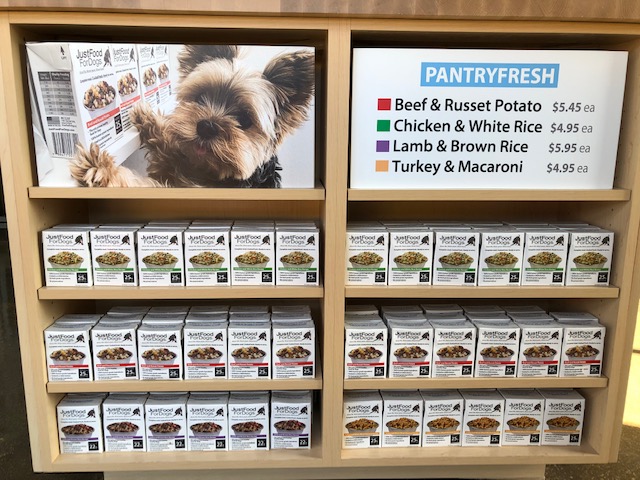
Shelf stable versions of fresh recipes

“We view our business as a direct-to-consumer ecosystem,” Tischler reports, “and manage it as such – with each channel supported by our Certified Nutrition Consultants. The kitchens are a critical part of the business model, but they work in concert with our pantries (store-in-store concept) and online offering. We have a lot of evidence these channels are synergistic and effectively support each other, driving brand awareness and offering convenience to pet parents.”

Freshly made pet foods from the kitchen

In response to pandemic impacts, Tischler says the company is leaning into curb-side pickup at their kitchen locations or home delivery through third-party providers.

What’s interesting about this approach is its relevance to a like-minded consumer who sees higher food quality as verified by the fresh ingredients and preparation techniques used to preserve nutritional density. The very same food preferences they apply to themselves can now be delivered to their pet in a Chipotle-like store setting. At the very least, it’s a disruptive idea.

  • Of note, we think Just Food For Dogs has a significant opportunity to weigh in on transparency, ingredient sourcing and food standards to further enhance their nutritional credibility story, although we haven’t seen that manifest as yet. Transparency is a unique point of competitive advantage in an industry where it’s largely a missed opportunity.

Just Food For Dogs is a marvelous study in innovation around a category governed mostly by conventional extruded solutions.

In mainstream retail FreshPet presents an interesting twist on packaged products and certainly deserves the growth they’ve experienced. However, we believe even more can be done to separate and elevate brands above the forest of sameness. Differentiation operates to attract a cohort of engaged, enthusiastic fans who have a deeper, emotional connection to the brand that is stronger, frankly, than a reason to buy focused on protein percentages.

Zig when everyone else zags

In the last seven months the pandemic has served as the most important personal priority- shifting mechanism of the last 30 years, advancing the importance of health and wellness to sheer survival. Taking care of your immune system is now a clarion example of how consumers reassert some control over their lives in an uncontrollable societal and environmental setting.

We’ve characterized this as Health is the New Wealth. Yet this development has not translated fully to pet food.

Pet lifestyle is a real thing. We believe there are ample numbers of households that operate daily around the pet-to-parent dynamic. A consumer insight-savvy brand could embrace a lifestyle platform that rises over the ubiquitous discussion of human-grade proteins and fresh vegetables ingredient trope. It would be a ‘zig’ to emerge above the endless chatter about real meat, chicken or fish and tag the emotional equation of what higher quality pet food is intended to do: The quality of the food provided is the ultimate expression of love for furry family members.

Addressing and leveraging consumer lifestyle affords a much deeper conversation on topics more relevant and resonant to the pet food buyer than food science and dietary claims. It’s also inherently an emotional construct, key to engagement and message impact.

Pandemic and purpose-based brand building

COVID-19 has operated to refocus people on their beliefs, purpose and societal values that contribute tangibly to the greater good. These considerations are influencing brand preference and purchase. Up to this point organic ingredients haven’t been widely employed outside of a handful of pet brands. The word sustainability continues in some respects as a form of check-the-box afterthought invoked like a Whole30 label certification.

Organic is really about farming methods more friendly to the environment and less damaging to our climate. Sustainability, likewise, can be viewed optically as regenerative agriculture practices that if widely adopted could help turn farmland into the world’s largest carbon sink.

These ideas can be repackaged as a move to address carbon footprint, playing a decisive role in managing the existential threat of climate change on our future wellbeing. Could this become an embedded mission for a pet food brand? We think so. Pet food is a very big user of feedlot meat and agricultural ingredients that in a larger sense of their production are among the biggest contributors to greenhouse gas on the planet.

  • Carbon footprint is starting to show up now on select human food labels. We believe this is the start of a major trend. It will be interesting to see how it translates in pet food marketing.

Whether it’s channel and business model differentiation, a switch to lifestyle marketing and communication, or embracing a mission around climate change, each of these ideas represents a potential new tool in the standard go-to-market toolbox.  Concepts that were popularized in recent years by premiumization of the pet food business and the dawn of popular grain-free formulation claims.

The latter became a herd-like move. We observed most premium brands quickly shifting to emphasize the ancestral diet blueprint.

  • Yet this becomes the very reason to consider a strategic move towards greater differentiation not less. If supporting high buyer value – moving past common ingredient stories – makes your competition less relevant wouldn’t you seriously consider it?

We know this is hard. It feels risky. It sounds like bucking category norms. Will the consumer react well to it? Of note, consumer interest is a testable proposition. In what is mostly a sea of sameness, clear observable brand distinction can be a highly prized and leverageable asset.

If exploring new thinking and fresh ideas sounds like a good conversation to have, we welcome the opportunity to think with you. Use this link to open what could be a very interesting and rewarding conversation.

Looking for more food for thought? Subscribe to the Emerging Trends Report.

Bob Wheatley is the CEO of Chicago-based Emergent, The Healthy Living Agency. Traditional brand marketing often sidesteps more human qualities that can help consumers form an emotional bond. Yet brands yearn for authentic engagement, trust and a lasting relationship with their customers. Emergent helps brands erase ineffective self-promotion and replace it with clarity, honesty and deeper meaning in their customer relationships and communication. For more information, contact Bob@Emergent-Comm.com and follow on Twitter @BobWheatley.
Substance overtakes stunts

Substance Over Stunt: The new era of marketing

October 7th, 2020 Posted by Agency Services, brand marketing, brand messaging, brand strategy, Consumer insight, Content Marketing, Growth, Higher Purpose, Insight, Integrated Communications, Social media, storytelling 0 comments on “Substance Over Stunt: The new era of marketing”

Help not hype defines the path to engagement victory

In 2008 Johnsonville Sausage famously conducted the classic publicity stunt of outsized proportions, building a giant grill on north Michigan Avenue in Chicago, with plans to drop an equally giant brat (from a crane) on the grill to celebrate the official start of BBQ season. I saw it, my office was two blocks away. Does this qualify as different? Yes. Was it super-sized in hopes of adding drama? Yes. Was the intention to create the requisite “Buzz” in the media? Yes.

Did it fulfill its objective? I think not. Media were critical rather than faithful reporters of the intended message. The stunt was a less effective vehicle for the very reason people were increasingly interested in substance over spectacle. The event was in some ways a marker of the end of the stunt as a path to PR glory, and perhaps a harbinger of change as consumer and media interest in the more blatant forms of brand self-promotion was shifting. Aside from a few mishaps on delivery drop of said brat to grill, it was inevitably a shameless publicity maneuver.

A moment of honest reflection: during the golden era of stunt strategy, we leveraged a summertime event called Molson Chiller Beach Party in Miami for client Molson Beer. We put 10 tons of snow on Miami Beach in July, positioning a TV satellite truck on the sand to capture images of what appeared to be a snow descending on Miami Beach. Video scenes of men and women making snowmen and snow angels on the beach were edited in real time for a package we titled Freak Snowstorm in Miami. Satellited to TV stations around the country, the video story aired in more than 100 markets that day.

The real goal, though, wasn’t just simple brand awareness. We were creating a compelling, powerful story for beer distributors to demonstrate that the Molson brand was relevant and resonant in a market far from their core volume territory in nine cities close to the Canadian border. Our video drama added to the sales team presentation securing a larger Molson share and investment in their import beer programs. That was then. Now, the path to consumer engagement has changed.

Substance overtakes hoopla

The world of effective marketing has advanced. People have changed, which demands that marketing best practices advance with them. At one time, how brands typically engaged with consumers was focused on interruption, hyperbole, entertainment, assertions and at times, crazy stunts in a belief that any publicity was good publicity. Buzz was seen as a component of hype, driven often by some form of outrageous display.

Marketing that works effectively is more successful now when it coalesces on authentic help for the consumer over media hype. People lead busy and complex lives. What they need is guidance, help, advice, coaching, training, ideas, support and empowerment. Your brand’s relevance to them is connected to how you become a useful and valued partner on their life journey.

If this sounds like a more mature form of relationship, I think you would be right. We have evolved and improved in that respect – more thoughtful and interested in overcoming our problems and challenges than being influenced by headlines falling from ‘the largest, biggest, tallest______________.”

Utility = valuable-ness

Real engagement is a form of acknowledged partnership. People grant you their precious and valuable attention in return for something that makes them better. This quid pro quo is an exchange founded in reciprocity and constructed on help or community-building that satisfies our inner need to tell the world around us what we stand for, what we care how about, what our values and beliefs say about us.

A brand that has trimmed its audience definition and scope to a narrower segment of true, committed fans has a shot at mattering. This approach works because in most product categories that escape the debilitating rust of commodity sold on price, a majority of the sales and profit is delivered by a smaller cohort of engaged enthusiasts. Some examples:

  • Kitchen commanders
  • Pet lifestyle buffs
  • Outdoor adventure seekers
  • Health and wellness advocates
  • Exercise aficionados
  • Fashionistas

You get the idea. Call them geeks or fans or ambassadors, the unifying characteristic is their innate interest in and devotion to these lifestyle associations. Your goal is to get close, real close to who they are and what they care about. Your ability to walk in their shoes and operate in service of their interests is the grist for content marketing that works.

Your brand voice is optimized when you separate the help from hype, the social proof from brand assertion, earnest helpful guidance from brand self-promotion. Only then, can your brand be perceived as and appreciated for contributing in real ways to the consumer’s journey. Think about it:  what is media hype but a disposable form of awareness with no shelf life. It’s there and then gone. What has been achieved? A moment of ‘I saw you’?

  • Your desire for buzz or recognition or mention is better served by enabling and contributing to the things your best users care about.

Perhaps the most famous stunt of all time was the Stratos Jump by Red Bull when Felix Baumgartner launched himself from a helium balloon 124,000 feet above earth, televised to more than 8 million viewers many of whom might remember the stunt – but not the advertiser or product. Was the reported $65 million cost worth it? If you’re selling a product that tastes like melted gummy bears to an adventure-seeking consumer, maybe.

For the rest of us, meeting the heart and mind of your customer in authentic ways that contributes measurably to their quality of life is another form of ‘adventure’ – but decidedly more relevant and valued than simple awareness.

If you find yourself asking questions about how to build buzz, we can help you answer that objective with insight and ideas that connect at a human level. Use this link and let’s start a helpful and hype-free conversation.

Looking for more food for thought? Subscribe to the Emerging Trends Report.

Bob Wheatley is the CEO of Chicago-based Emergent, The Healthy Living Agency. Traditional brand marketing often sidesteps more human qualities that can help consumers form an emotional bond. Yet brands yearn for authentic engagement, trust and a lasting relationship with their customers. Emergent helps brands erase ineffective self-promotion and replace it with clarity, honesty and deeper meaning in their customer relationships and communication. For more information, contact Bob@Emergent-Comm.com and follow on Twitter @BobWheatley.
Stop Doing What Doesn't Work

Marketing is no longer a department. It’s now a behavior.

March 7th, 2016 Posted by brand marketing, Insight 0 comments on “Marketing is no longer a department. It’s now a behavior.”

Are you prepared to recast the journey to growth?

More has changed in the marketing world over the last two years than the previous 50. The traditional marketing rulebook is sooo cooked. The path to growth is a different journey. Yet, remarkably, many organizations are still tethered to an outmoded view that marketing operates as a distinct unit or practice within the business to lure customers to the brand and store.

(more…)

New Marketing: Stop Selling and Start Engaging

November 4th, 2015 Posted by Insight, storytelling, Uncategorized 0 comments on “New Marketing: Stop Selling and Start Engaging”

Bringing more humanity to the conversation

Human Relationship Building

More often than not, marketing campaigns celebrated in the ad and marketing trades get the attention because in one way or another they may be fun, sexy, innovative or even glamorous.

Yet ultimately when we put the acid test of consumer behavior against the outcomes, we find that despite the adoration, occasionally these investments are simply ineffective.

Why?

(more…)

Archives

Categories