Posts tagged "brand strategy"

Marketing planning for 2021

Top five marketing resources to power your 2021 growth plans

November 18th, 2020 Posted by brand marketing, Brand preference, brand strategy, CMO, Digital marketing, engagement, Growth, Integrated Communications, Marketing Strategy, Social media, social media marketing, storytelling 0 comments on “Top five marketing resources to power your 2021 growth plans”

What you will require for success in the new year

Unprecedented complexity in marketing channels, platforms and media priorities can subtract from the confidence and clarity you need about where to make the best strategic investments. The potential for engagement misfires (wrong message, wrong channel) is at an all-time high and it seems as though every other day a new media platform rises to claim its narrow territory in an ever more fractured communications landscape.

  • You need a clear path and navigation chart to inform your decisions on where to invest precious marketing assets next year – when every dollar needs to perform like 10 and there’s not a lot of room to recover from mistakes.

We aim to provide specific guidance here.

Fortunately, the marketing game plan priorities are making themselves known. Today we have the benefit of hindsight to examine what tools performed to greatest effect in this uncommon year, and we also have a grip on where to place the marketing plan bets headed into 2021.

Here’s the most dramatic piece of evolutionary perspective unfolding for next year: what’s old is renewed again. I am personally ecstatic to see this change arrive. Read on.

I came up at Ogilvy & Mather (O&M), the first 11 years of my career bathed in the ample light of how David Ogilvy and his immensely talented colleagues saw the marketing universe. While David was a renowned and talented ad copywriter, he was first a business builder, problem solver with a remarkable grasp on the levers of how to grow a client company. He was indeed a holistic thinker.

David was forever espousing a point of view that we aren’t on the planet just to make advertising or PR. We’re here first to:

  • understand the challenges of business categories,
  • help incubate innovative product solutions,
  • understand the delicate emotional characteristics of brands,
  • navigate the cultural issues that impact company behavior,
  • and, inform and educate that most mysterious creature known as the consumer (“who is not a moron but rather your husband or wife,” says Ogilvy).

Said another way, a more myopic view would have us believing it’s all about the ad or PR creative product. Thus your proverbial marketing hammer comes back repeatedly to the same tactical nail. If that were true, our value as counselors, guides and business experts would deteriorate overnight and the agency business would be diluted to churning out cinematic representations of feature and benefit stories. Or the lesser digital display ad?!

Instead, we are tasked with being strategic guides who make our client’s business and category a deep and comprehensive ongoing study involving the mechanics of:

  • product creation and
  • market influences and
  • economic conditions and
  • cultural shifts and
  • competitive challenges and
  • the endless study of consumer and organizational behavior.

In short we are devoted to strategic investigations and assessments ahead of any conversation about a creative idea, in part for the very reason that all of that analysis nourishes enlightenment and leads to more relevant and powerful marketing ideas. The kind that make communications all the more effective at turning the screw of share and volume growth.

  • What’s the definition of a big idea? One that you can immediately and intuitively see how it will impact and change company behavior and the dynamics of the marketplace in which it competes. That’s a compelling adventure to join and why I appreciated what I learned while at O&M. Big ideas tend to bubble up in the midst of strategic business conversations.

However, with the growth of digital everything, over time the marketing guidance task largely contracted into a tactical role of managing the digital platform du jour and erstwhile electronic flag waving. In recent years the consultive forms of agency and client relationship have diluted in favor of operating a digital marketing automation dashboard. Execution driven assignments more so than operating within an authentic marketing partnership.

Well, all of that is about to change in 2021.

We’re entering an era where the importance of strategy and branding has re-emerged as the decisive lynchpin in priority and design of nearly every go-to-market plan. Why? The toolbox game has fallen in on itself under the sheer weight of so many options competing for eyeballs at a time when consumers are tiring of the relentless barrage. People are tuning out entirely the self-serving, self-reverential bullhorn of marketing message social channels. They reflexively reject that interruption right out of the gate.

The Pandemic has also lowered the tolerance boom on brand self-promotion – while rewarding efforts by enlightened brands that closely align themselves with higher purpose values and drive deeper meaning into their brand story and behavior.

What worked and what’s coming next year

A recent national survey of agencies conducted by SharpSpring revealed universally the most effective outreach tool deployed in 2020 was paid social. Not a surprise given the importance people place on social conversation, the levels of engagement there (which also correlates with the consumer’s prevailing interest in dialogue) and hearing the experiences of others to inform their purchase decisions.

Looking ahead at next year, this same study drilled down to what is likely to be in demand by clients in the year ahead, which also bears remarkable similarity to what clients are prepared to outsource to their agencies.

The re-emergence of strategy and branding as a top priority activates to assure marketing investment decisions will, indeed, deliver on their engagement objectives. This helps to measurably influence purchase decisions at a time when the consumer’s view of what matters is rapidly evolving.

Taste, price and convenience used to drive food and beverage purchases. Now those triggers are overtaken by a host of new more issue-like considerations such as health and wellness, transparency, purpose and values, supply chain integrity, sustainability and food safety.

  • Add to this an emerging concern about climate change and the impact of our current food production system on greenhouse gas (GHG) levels – meat production is by far the largest single contributor followed by agriculture. The food system creates more GHG than all of the global transportation systems (cars, trains, airplanes, etc.) combined.

We are seeing a rise in consumer demand for change addressing their concern to know what the carbon footprint is of the foods we consume. More on this topic to come from us.

Meantime, the verdict is in on resources to receive the most attention and likely investment in 2021 while brands continue to grapple with the impact of the pandemic on preferences, shopping and purchase behavior.

The top five marketing needs for 2021

  • Marketing strategy: this begins with insight into consumer behavior and cultural shifts taking place that impact what people care about, and what they expect of the brands that matter to them. Active participation on issues like climate change will be one of them.
  • Branding: the role of higher purpose and deeper meaning are now critical to your business and brand voice. This is not a “nice to have” but a core strategic platform to secure relevance and engagement at a time when people expect brands to participate in making our world a better place.
  • Social media management: social media is a top priority and has remained so for some time now. How brands engage here, support community growth and encourage user generated content, will play a critical role in trust creation. Trust is a top objective and this channel is part of the solution. It’s remarkable that at one time the idea of actually talking directly to a brand’s consumer was virtually unheard of. When it finally arrived many brands looked upon it skeptically as a scary and potentially treacherous and uncontrollable development. My, how times have changed.
  • PR and reputation management: trust is the currency of any brand relationship. It is a requirement. Now harder to earn and maintain, the scrutiny and filters being applied by consumers seeks to determine whether a brand’s activism is messaging masquerading as champion of a cause – or is it real where the brand behavior matches the rhetoric. A recent IBM study on purpose reports that when consumers think a brand has a strong and authentic purpose, they are 4.1 times more likely to trust the company.
  • Digital advertising and re-targeting: a strong and verifiable correlation exists between awareness and velocity performance at retail. The more present and top of mind your brand is, the more likely this recognition will convert to a sale, assuming other considerations on purpose, values and trust are properly aligned. People live online. That bit of behavior enhanced by shelter in place and work or school from home conditions is why digital channels are having a heyday.

Brand activism on the rise      

An important strategic focus in 2021 will be where your brand sits on the fence of increased calls for activism on societal issues. Generation Z, the most woke generation of all, is decidedly focused on this and will be voicing their sentiments in the purchases they make. Their wallet is their vote and symbolic flag to those around them about what they consider to be important.

  • A recent study from Zeno Group found that for brands of comparable quality and pricing, 91% of consumers will switch if one of those brands supports an important cause. That might as well be 100%.

Here’s another way to look at it:

The more activist a brand is, the more earned media attention it’s likely to secure. This leads to greater visibility and brand awareness in trusted media channels – which in turn will help drive recognition leading to higher sales outcomes. All of this is happening in a media model that is derived at lower cost (compared to traditional media) thus helping wring more benefit out of tight budget resources.

The key is how real the brand’s activism is vs. an attempt to “message” around it without the anchoring back-up of verifiable brand behavior. Fake activism is discoverable and can (will) backfire.

If a conversation on 2021 planning priorities would be helpful to your decision making, we would welcome the conversation. Use this link and let’s start a conversation.

Looking for more food for thought? Subscribe to the Emerging Trends Report.

Bob Wheatley is the CEO of Chicago-based Emergent, The Healthy Living Agency. Traditional brand marketing often sidesteps more human qualities that can help consumers form an emotional bond. Yet brands yearn for authentic engagement, trust and a lasting relationship with their customers. Emergent helps brands erase ineffective self-promotion and replace it with clarity, honesty and deeper meaning in their customer relationships and communication. For more information, contact Bob@Emergent-Comm.com and follow on Twitter @BobWheatley.

Creative agency services

Time to test drive fresh thinking?

November 5th, 2020 Posted by Agency Services, brand marketing, brand strategy, branded content, CMO, Consumer insight, Content Marketing, Digital marketing, Emergent Column, Emerging brands, Integrated Communications, Public Relations, Retail brand building, storytelling 0 comments on “Time to test drive fresh thinking?”

So much has changed during the last few months.

Like many we talk to you might be wondering:

  • “Does my current marketing plan still hold up given everything?”
  • “Am I missing something here that could be the difference-maker?”
  • “I’d love to get some fresh eyes on this, but where?”

Every brand in the food, beverage and lifestyle space is going to encounter barriers to growth and unforeseen disconnects in brand communication.

We are focused entirely on helping you leap over these impediments and challenges. We do this by applying our unique ability to weave innovative strategic guidance together with insight driven communications.

The result is transformational acceleration of your business results.

We know it’s difficult to let someone new in the door before fully trusting the players involved. That’s why we’re happy to take on projects that serve as a commitment-free test drive of our work.

You might need fresh thinking on:

  • Transformational strategic guidance and brand refresh
  • Building a compelling messaging platform to optimize your brand storytelling
  • Creating optimal social channel content and credible earned media attention
  • Producing the ultimate video-based story to differentiate your brand and business

Let us know if you are open to a conversation about your next win. We can bring a fresh perspective to a challenging problem or address a specific new product or category creation need.

Looking for more food for thought? Subscribe to the Emerging Trends Report.

Bob Wheatley is the CEO of Chicago-based Emergent, The Healthy Living Agency. Traditional brand marketing often sidesteps more human qualities that can help consumers form an emotional bond. Yet brands yearn for authentic engagement, trust and a lasting relationship with their customers. Emergent helps brands erase ineffective self-promotion and replace it with clarity, honesty and deeper meaning in their customer relationships and communication. For more information, contact Bob@Emergent-Comm.com and follow on Twitter @BobWheatley.
New concept in pet brand building: kitchens

Will Pet Brands Stop Resisting Differentiation?

October 28th, 2020 Posted by Brand preference, brand strategy, change, Differentiation, engagement, Pet care, Pet food, Pet food marketing, shopper behavior, storytelling, Transparency 0 comments on “Will Pet Brands Stop Resisting Differentiation?”

How to punch above your weight and win

When shopping the aisles of a pet food store you’ve likely noticed an amazing array of new brand players on one hand, and on the other difficulty distinguishing anything truly unique between the options. Blurry at best as the protein percentage wars rage everywhere around you.

Pet care is a robust and growing business that works to float all brand boats. For now at least.

  • More pet-owning households than ever
  • More adoptions from rescue centers
  • More puppies and kittens at home
  • More mouths to feed

Even in the midst of a pandemic and economic recession the growth record is notably positive.

That said what happens when you reach a competitive tipping point as the number of brands multiplies (supply) while vying for a piece of the current volume and dollar pie (demand)? Right there, strategic best practices highly recommend nurturing true brand differentiation in the eyes of the consumer. When differences are marginal though, then what?

Read on…

This challenge gets to the heart of pet care brand conditions, a business personified by its Low Differentiation and High Durability traits among category participants. This is a healthy business ripe for disruption – when the right moves are made.

Understanding pet brand category behaviors

How is it that so many pet brands are holding firm right now?

The size of the pie is expanding. Brands that are similar to each other while exhibiting staying power are all playing by familiar rules – at least until an innovator comes along and changes the playbook.

A landscape of comparable brands with parallel nutritional claims and ingredient stories, arguing for advantage in the margins, is a living example of:

  • A study in brand incrementalism
  • Marginally better quality to the winners in each segment
  • Pricing that stays in the segment frame, forcing choice on other more subjective cues
  • A curious tit-for-tat marketplace where brands monitor and react quickly to copy competitor moves (ancient grains anyone?)
  • Where staying in the competition is more important than distinguishing the brand as a unique star player

Premium kibble is kibble for the most part, although every brand understandably claims to be nutritionally superior to their equivalent price-point neighbor. That said, the language used to convey better or best bears remarkable sameness brand to brand.

Looking for marketplace advantage

When you work hard to create and earn high buyer value, the end result makes competition increasingly irrelevant. Where the pet business is generally a ground game of less differentiated brands, the sweet spot of disrupting category conventions is secured by moving from lower to higher differentiation.

Achieving greater uniqueness can happen when focused sharply on a marketplace buyer segment – a specific type of customer, where the brand strives to be hyper relevant and meaningful to a lifestyle cohort. Take for instance the consumer pursuing a health and wellness lifestyle, where the importance placed on the quality of what you eat is directly related to their perceived quality of life.

Inevitably, this consumer will transfer that same viewpoint to their pet food choices. While one could say wellness is the province of raw food brands, even there, the word raw has been democratized throughout the category in slightly de-tuned versions such as freeze-dried toppers, chunks and kibble inclusions.

Channel as a disruptive idea

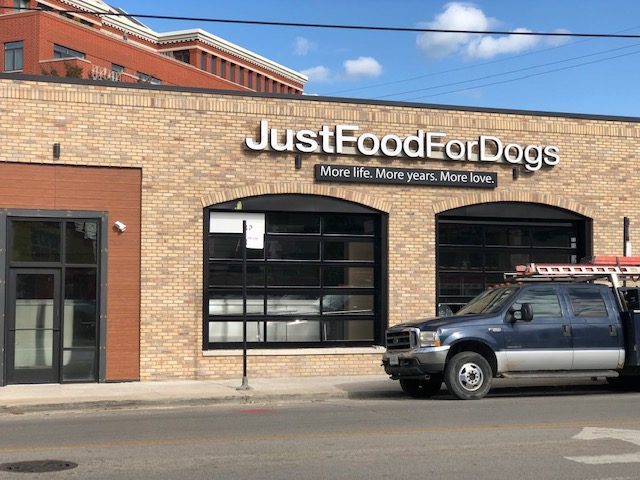
Just Food For Dogs (JFFD) based in Irvine, CA has found a way to re-think the path to market.

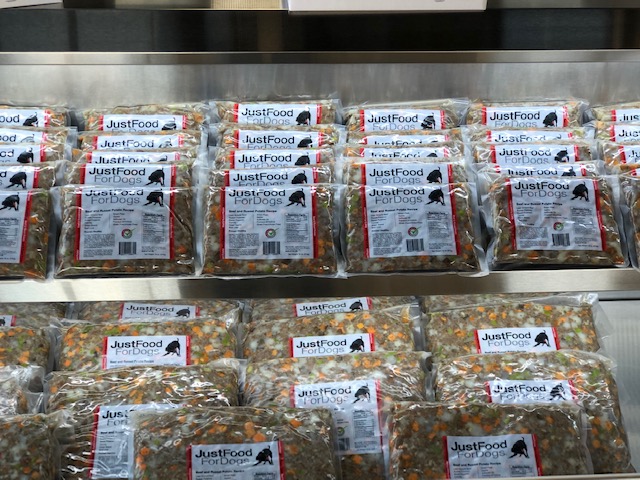
Their model involves free-standing retail kitchens that make fresh pet food on premise, a concept optimized for higher income zip codes where the cost per pound is less important to the perceived nutritional upgrade in a freshly-prepared diet. The opportunities for customization to specific pet needs is remarkable and embedded in this concept.

Company President Carey Tischler explained this is the beginning of a national expansion: “our kitchens are an incredibly effective means of showing, not just telling, pet parents how we are different – and how fresh, whole-food can change their pets’ lives. With nine open-to-the-public kitchens serving pet parents today, and several more kitchens under consideration for 2021, our national expansion is already well underway,” he said.

Human food ingredients re-purposed for pet food recipes

Their Chicago kitchen entry now under construction sits cheek-to-jowl with the city’s largest, most progressive and well-known pet rescue The PAWS Foundation – a virtual mini-industry in moving abandoned or stray pets to new homes. Ahem, that’s new food-seeking pet owners. Across the street is Petco, a retailer that is stocking a shelf-stable packaged version of Just Foods For Dogs pet food.

Is JFFD a retail pet food kitchen company with an aligned packaged business to serve consumers where no retail kitchen exists? Or a packaged pet foods company with a unique retail kitchen extension that serves as marketplace theater and demonstration of their fresh food ethos?

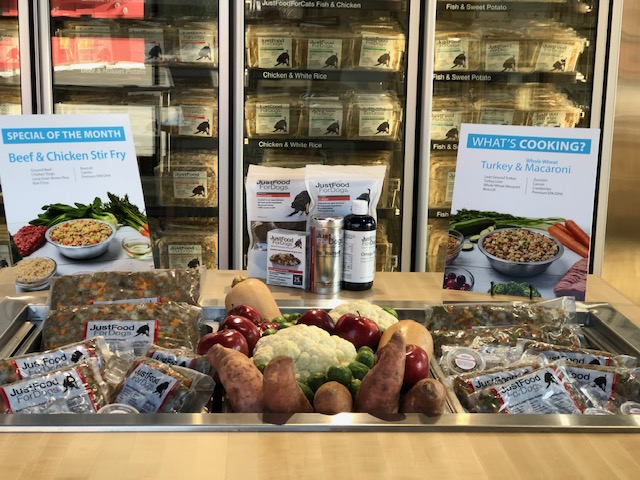
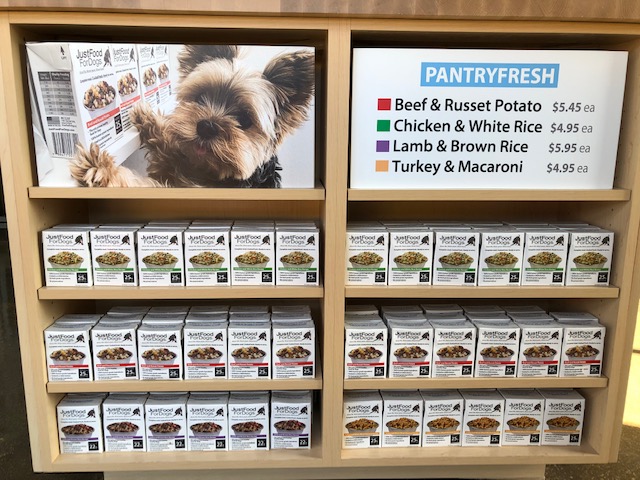
Shelf stable versions of fresh recipes

“We view our business as a direct-to-consumer ecosystem,” Tischler reports, “and manage it as such – with each channel supported by our Certified Nutrition Consultants. The kitchens are a critical part of the business model, but they work in concert with our pantries (store-in-store concept) and online offering. We have a lot of evidence these channels are synergistic and effectively support each other, driving brand awareness and offering convenience to pet parents.”

Freshly made pet foods from the kitchen

In response to pandemic impacts, Tischler says the company is leaning into curb-side pickup at their kitchen locations or home delivery through third-party providers.

What’s interesting about this approach is its relevance to a like-minded consumer who sees higher food quality as verified by the fresh ingredients and preparation techniques used to preserve nutritional density. The very same food preferences they apply to themselves can now be delivered to their pet in a Chipotle-like store setting. At the very least, it’s a disruptive idea.

  • Of note, we think Just Food For Dogs has a significant opportunity to weigh in on transparency, ingredient sourcing and food standards to further enhance their nutritional credibility story, although we haven’t seen that manifest as yet. Transparency is a unique point of competitive advantage in an industry where it’s largely a missed opportunity.

Just Food For Dogs is a marvelous study in innovation around a category governed mostly by conventional extruded solutions.

In mainstream retail FreshPet presents an interesting twist on packaged products and certainly deserves the growth they’ve experienced. However, we believe even more can be done to separate and elevate brands above the forest of sameness. Differentiation operates to attract a cohort of engaged, enthusiastic fans who have a deeper, emotional connection to the brand that is stronger, frankly, than a reason to buy focused on protein percentages.

Zig when everyone else zags

In the last seven months the pandemic has served as the most important personal priority- shifting mechanism of the last 30 years, advancing the importance of health and wellness to sheer survival. Taking care of your immune system is now a clarion example of how consumers reassert some control over their lives in an uncontrollable societal and environmental setting.

We’ve characterized this as Health is the New Wealth. Yet this development has not translated fully to pet food.

Pet lifestyle is a real thing. We believe there are ample numbers of households that operate daily around the pet-to-parent dynamic. A consumer insight-savvy brand could embrace a lifestyle platform that rises over the ubiquitous discussion of human-grade proteins and fresh vegetables ingredient trope. It would be a ‘zig’ to emerge above the endless chatter about real meat, chicken or fish and tag the emotional equation of what higher quality pet food is intended to do: The quality of the food provided is the ultimate expression of love for furry family members.

Addressing and leveraging consumer lifestyle affords a much deeper conversation on topics more relevant and resonant to the pet food buyer than food science and dietary claims. It’s also inherently an emotional construct, key to engagement and message impact.

Pandemic and purpose-based brand building

COVID-19 has operated to refocus people on their beliefs, purpose and societal values that contribute tangibly to the greater good. These considerations are influencing brand preference and purchase. Up to this point organic ingredients haven’t been widely employed outside of a handful of pet brands. The word sustainability continues in some respects as a form of check-the-box afterthought invoked like a Whole30 label certification.

Organic is really about farming methods more friendly to the environment and less damaging to our climate. Sustainability, likewise, can be viewed optically as regenerative agriculture practices that if widely adopted could help turn farmland into the world’s largest carbon sink.

These ideas can be repackaged as a move to address carbon footprint, playing a decisive role in managing the existential threat of climate change on our future wellbeing. Could this become an embedded mission for a pet food brand? We think so. Pet food is a very big user of feedlot meat and agricultural ingredients that in a larger sense of their production are among the biggest contributors to greenhouse gas on the planet.

  • Carbon footprint is starting to show up now on select human food labels. We believe this is the start of a major trend. It will be interesting to see how it translates in pet food marketing.

Whether it’s channel and business model differentiation, a switch to lifestyle marketing and communication, or embracing a mission around climate change, each of these ideas represents a potential new tool in the standard go-to-market toolbox.  Concepts that were popularized in recent years by premiumization of the pet food business and the dawn of popular grain-free formulation claims.

The latter became a herd-like move. We observed most premium brands quickly shifting to emphasize the ancestral diet blueprint.

  • Yet this becomes the very reason to consider a strategic move towards greater differentiation not less. If supporting high buyer value – moving past common ingredient stories – makes your competition less relevant wouldn’t you seriously consider it?

We know this is hard. It feels risky. It sounds like bucking category norms. Will the consumer react well to it? Of note, consumer interest is a testable proposition. In what is mostly a sea of sameness, clear observable brand distinction can be a highly prized and leverageable asset.

If exploring new thinking and fresh ideas sounds like a good conversation to have, we welcome the opportunity to think with you. Use this link to open what could be a very interesting and rewarding conversation.

Looking for more food for thought? Subscribe to the Emerging Trends Report.

Bob Wheatley is the CEO of Chicago-based Emergent, The Healthy Living Agency. Traditional brand marketing often sidesteps more human qualities that can help consumers form an emotional bond. Yet brands yearn for authentic engagement, trust and a lasting relationship with their customers. Emergent helps brands erase ineffective self-promotion and replace it with clarity, honesty and deeper meaning in their customer relationships and communication. For more information, contact Bob@Emergent-Comm.com and follow on Twitter @BobWheatley.
People want to buy their food from other people

Pandemic launches disruption of modern supermarket model?

October 14th, 2020 Posted by brand marketing, brand strategy, change, Consumer insight, Culinary lifestyle, Emerging brands, Emotional relevance, food retail strategy, Healthy lifestyle, Higher Purpose, shopper behavior, shopper experience, Supermarket strategy 0 comments on “Pandemic launches disruption of modern supermarket model?”

Symphony of logistics becomes an orchestra of societal values

For the last 30 years or more, supermarkets have operated as a highly-choreographed dance of sourcing, merchandizing and value pricing all stage-managed with intricate daily replenishing management of same. It is, in many respects, a remarkable achievement that provides the lowest cost-to-quality food on earth in an assortment depth that is the envy of the rest of the planet. The grocery store has stood as an assurance of food quality and availability, yet now arrives precariously at a moment of transformation that is far beyond the mechanics of coming in-store robots, the challenges of e-commerce friction and assorted home delivery platforms.

Strategic shift underway

Food retail may also be the most visible in-your-face demonstration of traditional brand marketing strategies borne of the post-World War II consumer packaged goods explosion; focused on a more impersonal and product feature-and-benefit form of consumer communication.

A sea change started to emerge in recent years based on an evolving consumer mindset driven about what matters most to them on the path to purchase. Witness the emergence of health and wellness as a primary driver of consumer preference, the attention now paid to transparency and supply chain integrity and a growing concern over food safety practices. All of these emerging trends have eclipsed the traditional purchase motivators of taste, price and convenience.

The Great Pandemic of 2020 pushes the envelope of change faster and farther as consumers not only connect the dots between the quality of the food they eat and their quality of life, but now see retailers and brands as active participants in their social and societal concerns and growing activism.

Two fundamental impacts of COVID 19 on behaviors and attitudes

  1. The pandemic has served to reveal the inescapable, searing questions of economic inequality, exclusion, racial prejudice and its unfairness while lighting a fire to address and solve these inequities. How this plays out will require sensitivity to the issues and strategic planning to address it openly and visibly in policy, procedure and behavior.
  2. On another front, at one time consumers aspired to improvement in their lifestyle through status signaling in conspicuous consumption of brands that elicited those feelings of aspirational identity. However, today this has fallen away, shed by a pandemic that has entirely recalibrated what matters to people. Today a brand reputation is enhanced by its social, cultural and environmental values.

Brands and retailers must add responsiveness to a requirement for higher purpose, generosity in behavior and social improvement to their actions. Do you think this transformative insight has fully translated into how brands and retailers package their story and represent themselves in the marketplace? I would say no. Or not yet, while a few are in the starting blocks and getting ready to claim their competitive advantage.

Recasting the supermarket business model

Here we find ourselves in a moment of mechanization. Robots. Digital ordering platforms. Supply chain optimization. Experiments with drones. Electronic grocery carts. Wringing more efficiency in an effort to get product A into hands B more quickly, efficiently and at lower cost.

Nothing wrong with any of this, except it may inadvertently mask the cultural trend changes that argue for a different priority around how supermarkets organize their business for success and relevance to the consumer they need to keep. Technology has its place, but there is a more human need arising that should be considered strategically, as customer-centric planning becomes a top priority.

Let’s go to the ground on this together, where the food culture ‘rubber’ meets the consumer relevance road:

For over a year we’ve been reporting on the shift to home-based meal consumption and cooking. A fair question then: what does the massive pivot to home cooking mean to supermarkets? We’re not talking about the obvious of selling more products, more often for more occasions.

The intimacy people have with food and its preparation is increasing. There’s another form of ‘closeness’ that is percolating underneath as a potential component of retail strategic uniqueness and differentiation – the two components of sustainable business growth.

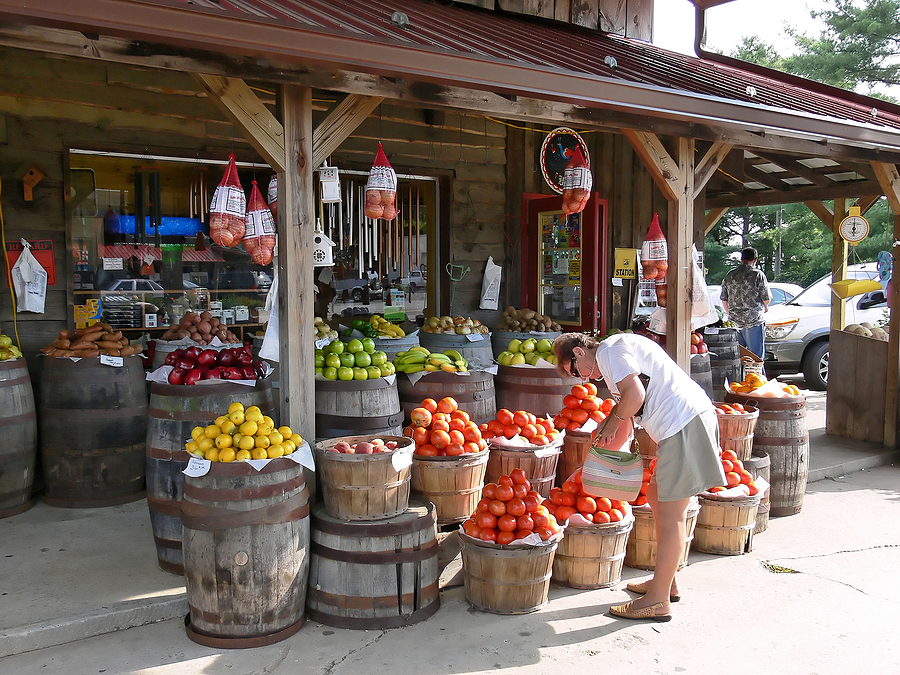
People buying food from people

You may recall there was an era prior to the maturing of efficient retail when people knew the sellers and makers.

A relevant story: awhile back I had the honor and privilege of meeting Glen Kohn and his business partner at a networking event staged by Chicago’s impressive food brand incubator, The Hatchery. Later during a deeper get acquainted meeting, Glen spoke in detail about his company Prevail Jerky, an emerging super-premium brand of clean, high quality jerky snacks offering an array of culinary forward flavors.

He told the story of how his wife had food allergy challenges. He wanted to make a jerky his wife and family could enjoy. You see Glen was a smoked meat mastermind who had a personal passion for barbecue, smoking proteins and making his own bespoke jerky. He set out to perfect this high protein snack with a recipe that stripped away the legacy bad-for-you allergenic ingredients and use of nitrates, excessive sodium, artificial flavoring and sugars that dogged this dried packaged meat category since inception.

More magical in my opinion is a preparation technique, and he won’t say exactly how he does it, that improves the eating experience by making the meat less tough and chewy. Ultimately what we have here is another improved, higher quality, better-for-you product in a legacy category, with a personal story behind it. In effect, the food quality is guaranteed through Glen’s personal journey.

Even before the Pandemic sent us behind closed doors and placed an even higher premium on human contact, personal relationships were making a comeback. People want to know who the makers of their food are, where they come from, what they are about and how that translates into the product they’ve created.

  • Increasingly, we see the aisles at food retail stocked with new brands built by a person, not an R&D lab or innovation department. What was once a hall of impersonal, faceless brands, is turning into a showcase of businesses that acquire their social value through consumers’ desire to support an actual, real-life maker.

Makers bring with them values, beliefs, mission and unique standards of quality that provided deeper meaning past the better recipe. Here’s the strategic twist: while local sourcing has been popularized recently, this nuance stretches the idea further to what we’re calling Local-ism.

People now look at purchases as a statement of what they believe is important rather than flags of social status and prosperity. They are voting their beliefs and values with their wallet. The checkout lane is a voting booth. They are electing product winners with a voice, face and story. The intimacy with food goes deeper. The sense of community building gains a whole new perspective. The store is an aggregation opportunity for these stories-as-brands and a place where they can be brought to life.

  • Now retailers have an opportunity to move past the old-school model of being a seller of boxes, cans and bags off shelves at velocity on hyper-thin margins. Food retail can disrupt itself by becoming a form of neighborhood cooking club that respects the environment and the farm while supporting people who craft new food solutions that come to market with a soul. Doesn’t sound like a distribution center for factory food, does it?

What was once impersonal, transactional and formulaic, takes on some of the pastiche of the corner market where the buyer knows the seller, meets the maker and real trusted relationships take root. This is not in conflict with technology and robotics but is rather an important reflection of consumer insight to better guide retail strategy and banner differentiation.

How to think about this: efficiency only goes so far. Becoming a more human-focused business that embraces the emotional investment people have in food, its provenance and related quality is a path to relevance that beats yesterday’s reliance on store location and lower pricing to create competitive advantage. Amazon may have a tougher time with this kind of thinking.

Recommendations on humanizing food retail

  • Optimize your aisles and product assortment to feature local and emerging brands with a maker story.
  • Use your content creation platform to provide a voice for their stories – and a real, relevant reason for your customers to feel connected to the products they buy at your store.
  • Serve this up in a context that works in people’s lives around meal and snack solutions. That’s the foundation for relevance for the food-savvy consumer.
  • Marry and merge your indulgent food strategies with better-for-you as the relationship between these two draws ever closer.
  • Look past the coupon to start creating other experiences both digital and in-store that showcase your love for food adventure and culinary creativity. Love of food is something you can immediately demonstrate to your shoppers.

When you become highly differentiated, unique and relevant to people, your need to rely on heavy advertising spend to generate traffic declines. When you become remarkable in your shoppers’ eyes, people talk about their experience. Word of mouth is still the most effective form of marketing outreach at your disposal. It is an outcome of remarkable-ness.

Changing perspective may be hard to do because retail traditions and embedded thinking are more about logistics and efficiencies than experiences and food adventures. When the name of the game for decades has been how can we deliver food most cost-effectively – somewhere, we’ve lost sight of the real people who are buying the food – and meeting their needs beyond assortment and price.

When you can see merit in bringing to life the voices and stories of food makers and create ways for buyers to meet them, it lifts your banner above competing mostly on price and product range. That’s a race to the bottom no one wins and plays right into the hands of the endless digital shelf.

A supermarket chain CEO once said to me, “if you walk our office halls on any given day you may find it hard to determine if we’re in the food or hardware business. So much of what we do is too far removed from emotional connections to food and what people use it for.”

You just need to fall in love with food and its ability to transform people’s lives.

If this conversation gets you thinking and you would like to explore it further with like-minded people, use this link to start a conversation without any expectation of a business relationship save we made new friends.

Looking for more food for thought? Subscribe to the Emerging Trends Report.

Bob Wheatley is the CEO of Chicago-based Emergent, The Healthy Living Agency. Traditional brand marketing often sidesteps more human qualities that can help consumers form an emotional bond. Yet brands yearn for authentic engagement, trust and a lasting relationship with their customers. Emergent helps brands erase ineffective self-promotion and replace it with clarity, honesty and deeper meaning in their customer relationships and communication. For more information, contact Bob@Emergent-Comm.com and follow on Twitter @BobWheatley.
Substance overtakes stunts

Substance Over Stunt: The new era of marketing

October 7th, 2020 Posted by Agency Services, brand marketing, brand messaging, brand strategy, Consumer insight, Content Marketing, Growth, Higher Purpose, Insight, Integrated Communications, Social media, storytelling 0 comments on “Substance Over Stunt: The new era of marketing”

Help not hype defines the path to engagement victory

In 2008 Johnsonville Sausage famously conducted the classic publicity stunt of outsized proportions, building a giant grill on north Michigan Avenue in Chicago, with plans to drop an equally giant brat (from a crane) on the grill to celebrate the official start of BBQ season. I saw it, my office was two blocks away. Does this qualify as different? Yes. Was it super-sized in hopes of adding drama? Yes. Was the intention to create the requisite “Buzz” in the media? Yes.

Did it fulfill its objective? I think not. Media were critical rather than faithful reporters of the intended message. The stunt was a less effective vehicle for the very reason people were increasingly interested in substance over spectacle. The event was in some ways a marker of the end of the stunt as a path to PR glory, and perhaps a harbinger of change as consumer and media interest in the more blatant forms of brand self-promotion was shifting. Aside from a few mishaps on delivery drop of said brat to grill, it was inevitably a shameless publicity maneuver.

A moment of honest reflection: during the golden era of stunt strategy, we leveraged a summertime event called Molson Chiller Beach Party in Miami for client Molson Beer. We put 10 tons of snow on Miami Beach in July, positioning a TV satellite truck on the sand to capture images of what appeared to be a snow descending on Miami Beach. Video scenes of men and women making snowmen and snow angels on the beach were edited in real time for a package we titled Freak Snowstorm in Miami. Satellited to TV stations around the country, the video story aired in more than 100 markets that day.

The real goal, though, wasn’t just simple brand awareness. We were creating a compelling, powerful story for beer distributors to demonstrate that the Molson brand was relevant and resonant in a market far from their core volume territory in nine cities close to the Canadian border. Our video drama added to the sales team presentation securing a larger Molson share and investment in their import beer programs. That was then. Now, the path to consumer engagement has changed.

Substance overtakes hoopla

The world of effective marketing has advanced. People have changed, which demands that marketing best practices advance with them. At one time, how brands typically engaged with consumers was focused on interruption, hyperbole, entertainment, assertions and at times, crazy stunts in a belief that any publicity was good publicity. Buzz was seen as a component of hype, driven often by some form of outrageous display.

Marketing that works effectively is more successful now when it coalesces on authentic help for the consumer over media hype. People lead busy and complex lives. What they need is guidance, help, advice, coaching, training, ideas, support and empowerment. Your brand’s relevance to them is connected to how you become a useful and valued partner on their life journey.

If this sounds like a more mature form of relationship, I think you would be right. We have evolved and improved in that respect – more thoughtful and interested in overcoming our problems and challenges than being influenced by headlines falling from ‘the largest, biggest, tallest______________.”

Utility = valuable-ness

Real engagement is a form of acknowledged partnership. People grant you their precious and valuable attention in return for something that makes them better. This quid pro quo is an exchange founded in reciprocity and constructed on help or community-building that satisfies our inner need to tell the world around us what we stand for, what we care how about, what our values and beliefs say about us.

A brand that has trimmed its audience definition and scope to a narrower segment of true, committed fans has a shot at mattering. This approach works because in most product categories that escape the debilitating rust of commodity sold on price, a majority of the sales and profit is delivered by a smaller cohort of engaged enthusiasts. Some examples:

  • Kitchen commanders
  • Pet lifestyle buffs
  • Outdoor adventure seekers
  • Health and wellness advocates
  • Exercise aficionados
  • Fashionistas

You get the idea. Call them geeks or fans or ambassadors, the unifying characteristic is their innate interest in and devotion to these lifestyle associations. Your goal is to get close, real close to who they are and what they care about. Your ability to walk in their shoes and operate in service of their interests is the grist for content marketing that works.

Your brand voice is optimized when you separate the help from hype, the social proof from brand assertion, earnest helpful guidance from brand self-promotion. Only then, can your brand be perceived as and appreciated for contributing in real ways to the consumer’s journey. Think about it:  what is media hype but a disposable form of awareness with no shelf life. It’s there and then gone. What has been achieved? A moment of ‘I saw you’?

  • Your desire for buzz or recognition or mention is better served by enabling and contributing to the things your best users care about.

Perhaps the most famous stunt of all time was the Stratos Jump by Red Bull when Felix Baumgartner launched himself from a helium balloon 124,000 feet above earth, televised to more than 8 million viewers many of whom might remember the stunt – but not the advertiser or product. Was the reported $65 million cost worth it? If you’re selling a product that tastes like melted gummy bears to an adventure-seeking consumer, maybe.

For the rest of us, meeting the heart and mind of your customer in authentic ways that contributes measurably to their quality of life is another form of ‘adventure’ – but decidedly more relevant and valued than simple awareness.

If you find yourself asking questions about how to build buzz, we can help you answer that objective with insight and ideas that connect at a human level. Use this link and let’s start a helpful and hype-free conversation.

Looking for more food for thought? Subscribe to the Emerging Trends Report.

Bob Wheatley is the CEO of Chicago-based Emergent, The Healthy Living Agency. Traditional brand marketing often sidesteps more human qualities that can help consumers form an emotional bond. Yet brands yearn for authentic engagement, trust and a lasting relationship with their customers. Emergent helps brands erase ineffective self-promotion and replace it with clarity, honesty and deeper meaning in their customer relationships and communication. For more information, contact Bob@Emergent-Comm.com and follow on Twitter @BobWheatley.
Pandemic influences consumer behavior

Pandemic and cultural shift combine for rapid change smackdown

October 6th, 2020 Posted by brand marketing, brand messaging, brand strategy, branded content, Consumer insight, Content Marketing, COVID-19, Emotional relevance, engagement, food retail strategy, Healthy lifestyle, Healthy Living, Higher Purpose, Marketing Strategy, Pandemic 0 comments on “Pandemic and cultural shift combine for rapid change smackdown”

We unpack handwriting on the (relevant marketing) wall

If you’re like me, you’re probably exclaiming, “so now what?” Another day and another revelation of upheaval in an era of unpredictable, unsettling events that cause you to sleep with one eye open.

In an exceptional moment of corporate disclosure, Amazon announced that nearly 20,000 of their employees tested positive for Coronavirus just hours before the President and First Lady were diagnosed with the virus. No doubt the pandemic has reached into the lives of virtually everyone with unprecedented and transformational impacts that continue to reshape the way people think, shop and live.

Within the last few days major furloughs and layoffs have been announced simultaneously by a string of companies including Disney, Allstate, major airlines and others as business shortfalls consume cash reserves leading to headcount reductions.

  • Emergent has followed these developments closely. We are examining these events to translate them for useful guidance on what food, beverage and lifestyle brands should consider in business planning and how these issues impact marketing strategy.

Here we will unpack the most significant conditions. Focusing on what informs the immediate future for companies grappling with uncertainty via new revelations surrounding the economy, the disease, climate challenges and cultural disruption – all of which are inter-related.

The end of stimulus and the start of fiscal free-fall

In June media attention shifted to the looming end of Federal stimulus programs. Millions of people who were fortunate enough to qualify for meager state unemployment benefits, saw a life-preserving $600 a week added to their stipend payments. This action temporarily closed the financial gap for families who otherwise would be facing a cliff of cash shortages. That cliff has now arrived, impacting their ability to pay the bills, especially housing and food.

It is unclear if new stimulus support will return anytime soon due to the impasse between Congress and the Senate over the size and components of a national economic support package. Even with House passage of a $2.2 trillion measure, it’s unlikely it will go any further before the election, as both sides draw hard lines in the budget sand.

Thus, the income disparity between wealthier and middle-class families is widening and becoming more obvious (visible to all). Those less impacted by the recession continue to accumulate cash due to slowdowns in spending for commuting, business or vacation travel and discretionary activity in restaurant dining, sports and entertainment. Those directly affected by the economy slowdown experience layoffs, salary or hour reductions and wholesale permanent disintermediation of their jobs, while trying to manage life with quickly dwindling cash reserves.

Middle class spending is an engine that drives the U.S. economy so what’s happening here over time has domino impacts everywhere. It is in everyone’s best interests if stimulus support is turned on, and concerted efforts made to restore jobs or create new ones.

The number one impact of all of the above: stress and anxiety

Whether it’s class polarization, economic and employment uncertainty, concerns over social justice and all-too-apparent climate eruptions, plus a surging virus – all combine with the absence of control over one’s life and surroundings to manifest in a form of anxiousness. It is showing up everywhere in what people eat.

Legacy packaged food brand resurgence is evidence of filling a need for:

  • Comfort
  • Familiarity
  • Satisfying stress eating behaviors by reaching for higher fat and carb foods that somehow make people feel better. Apparently, a bag of chips is self-medicating. However, 27% of American adults are also reporting 5 or more pounds of weight gain since March – a troubling development especially as a good portion of the country experiences declining seasonal temperatures and more inactive time spent indoors.

As a sort of ‘flip side’ of this culinary coin, stress eating behaviors leading to high fat and carb foods, has its own polar opposite: the growing search for low sugar foods in an effort to exert more control over health and wellness at a time when investments in immune system integrity are a top priority for many people.

On the retail side, we’re witnessing a related swell in transactions and channel migration to hard discount. Not a surprise under these conditions. Again, we see the presence of an alter ego for stores in higher income zip codes. These retailers may see increasing opportunities for trial and volume growth of premium indulgent food and beverages. It’s just ‘nuts’ if you get my meaning.

Work-From-Home (WFM) not going anywhere

As we pour through reports on the status of WFM, we conclude this phenomenon isn’t likely to go away anytime soon. Now breakfast and lunch are prepared and consumed at home, adding to the need for guidance, kitchen counter coaching and convenient solutions. In many places the kids remain home for school as well, adding to the pressures in meal preparation. Can you help with emotional support, menu guidance and prep ideas?

Meal kits took a beating pre-COVID due mainly to cost and complexity. Now kits are returning as a viable way to vary menus and fulfill consumer interest in sophisticated (global) flavors and restless palate syndrome borne of at-home cooking boredom. Grocery retailers have an opportunity here to showcase kits in varying degrees of ‘do-it-for-you’ to meet the interests of the scratch cookers and those who are simply exhausted with all the constant chopping and slicing.

The Wheatley kitchen is a veritable round robin of cutting boards, knives, saute’ pans, bowls and leftover containers as two teenage daughters exert control over their food preferences, while the parents handle another portion of the chores. It’s an unending cycle of cooking and cleaning. I’ve not seen teenagers with such accomplished knife skills and baking expertise except on Chopped Kids.  

  • Snacking is now a 24/7 activity. The room for brands to play here is nearly infinite. The refueling is almost non-stop, some of it functional and some indulgent.

The opportunities for brands and retailers to become a partner with people in the kitchen has never been higher, yet so few are stepping-up to the plate. Perplexing.

E-commerce crazy

Time is all we have. How we spend it is all that matters. Why will e-commerce become such a dominant channel? Because it is built to give back time. The pandemic closes the door on casual browsing and spending extra quality time in brick and mortar retail. Shopping trips are fewer and purposeful, aimed at minimizing viral exposure.

Meantime the seamless digital shopping platforms people encounter are getting better and better. We’re now at a $70 billion run rate in e-commerce transactions. Experts in the field believe once you pass 50% of typical transactions in food or lifestyle, the tipping point may very well have been reached. Not there yet, but the leaps in digital purchasing this year are significant.

At this stage, as good online experiences and comfort level take over, people begin to appreciate the time they’ve been given back by avoiding the hassle of driving to and running the cart through stores.

That doesn’t mean retail disappears, far from it! It does mean that shopping experience and environment must be on a whole other level to romance and engage people in a sought-after and magnetic reason to be inside your doors. Disney does magic well, so should you.

Shopping for what?

According to IRI data through mid-August, the top five categories in retail sales volume are:

  1. Health care products
  2. Frozen meat/poultry/seafood
  3. Personal cleansing
  4. Other refrigerated
  5. Baking

Within the top 25 categories in sales growth, frozen and refrigerated holds 14 of them. Evidence that consumers care about preserving shelf life and guarding against food waste and scarcity, while the baking binge is no fluke. It is an effort to bring control back during an era when there is a predominant feeling of none.

Strategic direction: identify passionate cohorts, apply hyper relevance

If you can step back and see your marketing and communications strategies remains widely targeted at virtually every human on earth, now is the time to prune. The need for mattering has never been greater. Achieving that enviable position isn’t easy and requires significant focus and discipline.

Step One –

Identify the most committed and passionate consumers of your product or shopper groups in your stores. What do they care about, how do they live, what are the pain points they need to solve? Your goal is to become a refined and optimal solution to their problem. To get there you need to lean hard on the strategic thinkers and those with insight to consumer behaviors on your team. This is true customer-centric planning.

Step Two –

The goal of your marketing is hyper relevance to these consumers, to the point where they see a mirror of themselves in how the brand communicates and behaves. Your values and theirs become one. You step fully into higher purpose and deeper meaning with this cohort (there may be cohorts). Whatever end of the economic spectrum, you lean in to where they live and how they feel. You’re looking for common ground and ways to be of help. Your value proposition isn’t just the product or store. It’s how you tangibly work to improve their lives.

Step Three –

Your communications and content creation should be packed with advice, guidance and counsel. You walk away from the temptation to self-promote and instead focus on them and their stories. You enable social proof mechanisms and encourage people to share experiences because you know it’s credible proof of what you want them to believe. Your storytelling expands to address the higher purpose you’ve adopted and how you are helping improve the world around us. You now know it matters to consumers who expect this of you.

We understand that people are now literally consuming their identity. What they buy is a flag and mirror of their values, beliefs and what they hold to be important. Symbolism can be everywhere in every place that consumers encounter your brand and business. Are you deploying the markers and images they will recognize of lifestyle relevance?

The horizon: climate change

Looking ahead, what’s coming is a move to connect food and beverage choices with carbon footprint and impacts on climate change through contributing to the growth of greenhouse gases. There is genuine fear among people that food production is irrevocably linked to creating damage to the climate, leading to super storms, droughts and wildfires.

This issue is going to climb in visibility and importance. Brands have an opportunity to get in front of this concern and be part of the dialogue. The roots of this will inevitably go back to supply chain decisions and how foods are farmed or raised. To that end regenerative agriculture is going to rise as a priority and people will be looking for these practices to show up in an industrialized agribusiness that isn’t operating with these principles in mind.

The great promise of this type of farming is reversal of eroding soil conditions and processes that could help farmland become the world’s largest carbon sink. This is a horizon issue now but is rapidly building momentum.

Worth paying attention to.

As you consider the path forward, if expert guidance would be beneficial in your planning use this link to open a conversation. We would be delighted to help. Emergent’s mission is to marry marketing expertise with our belief in the rising importance and value of healthy lifestyle to the future success of relevant food and beverage brands and retailers.

Looking for more food for thought? Subscribe to the Emerging Trends Report.

Bob Wheatley is the CEO of Chicago-based Emergent, The Healthy Living Agency. Traditional brand marketing often sidesteps more human qualities that can help consumers form an emotional bond. Yet brands yearn for authentic engagement, trust and a lasting relationship with their customers. Emergent helps brands erase ineffective self-promotion and replace it with clarity, honesty and deeper meaning in their customer relationships and communication. For more information, contact Bob@Emergent-Comm.com and follow on Twitter @BobWheatley.
Archives

Categories